If you’ve ever stood over a drilling rig, watching drill collars spin thousands of feet beneath the earth’s crust, you know how critical even the smallest details are to getting a well drilled correctly. I’ve been in the non-magnetic drill collars (NMDC) business for over 15 years, talking to directional drillers, well planners, and measurement while drilling (MWD) specialists every week. The question I get asked more than any other? “How do these NMDC actually affect azimuth accuracy?” It’s not a simple yes or no answer—there’s science, history, and real-world drilling data wrapped up in it. Today, I want to break that down the way I do when I’m on the phone with a driller who’s spent 12 hours troubleshooting a misreading tool face or a misplaced well path. Non-Magnetic Drill Collars

First, let’s ground this in what azimuth even means for boreholes. Azimuth is the horizontal angle, measured clockwise from true north, that tells you exactly which direction your drill bit is pointing as it goes down. If you’re drilling an oil well, azimuth accuracy can mean the difference between hitting your target reservoir and wasting millions of dollars on a dry hole. For geothermal wells, it can mean reaching the right geothermal gradient zone. For water wells, it can mean avoiding a fault zone that could cause collapse. The tools that measure azimuth—magnetometers, usually part of your MWD or LWD (logging while drilling) assembly—work by sensing the Earth’s magnetic field. The problem is, every other steel part in your bottomhole assembly (BHA) has a magnetic field too, and that can throw the magnetometers off. That’s where drill collars come in.
Traditional steel drill collars are solid, high-strength steel that’s been around for decades. They’re stiff, they add weight to the BHA to keep the drill bit on path, but they’re highly magnetic. When you run a steel drill collar near your magnetometers, it distorts the Earth’s magnetic field. That distortion is called magnetic interference, or “mag noise.” A few degrees of error in azimuth might not sound like much, but when you’re drilling a well that’s 10,000 feet deep, each degree of azimuth error translates to a horizontal shift of over 170 feet at the surface. Let that sink in: one degree off at 10,000 feet and you could miss your target by more than a football field. I’ve seen that exact scenario happen on a land rig in West Texas a few years back—drillers used standard steel collars, didn’t account for the magnetic interference, and ended up drilling a well 220 feet west of their planned target. It cost them $1.2 million to sidetrack. That’s not a mistake anyone wants to make.
Enter non-magnetic drill collars. These are made from specialized alloys—usually a high-nickel, high-chromium blend, sometimes with small amounts of manganese or molybdenum—that have very low magnetic permeability. Permeability is just a fancy way of saying how easily a material can be magnetized. Standard steel has high permeability, so it picks up and holds magnetic fields from the Earth or other nearby tools. NMDC, by design, has permeability close to that of the surrounding rock and fluid in the borehole. That means they don’t distort the magnetic field around the magnetometers. But here’s the thing: not all NMDC are created equal. Over the years, I’ve seen cheaply made NMDC that actually caused more interference than the steel ones they were supposed to replace, because the alloy was inconsistent or the heat treatment process was wrong.
So how do NMDC specifically improve azimuth accuracy? Let’s get into the mechanics. Magnetometers work by having three orthogonal sensors (one for north, one for east, one for vertical) that measure the strength of the Earth’s magnetic field along each axis. If there’s a magnetic field nearby that’s not the Earth’s, the sensors will pick it up as part of the Earth’s field, and the azimuth calculation will be wrong. Steel drill collars produce two types of interference: constant (static) interference and variable (dynamic) interference. Static interference is from the collar being magnetized by the Earth’s field over time. Dynamic interference comes from vibrations as the drill string turns.
NMDC eliminates most of that static interference because their low permeability means they don’t get magnetized. Dynamic interference is reduced too, because NMDC are engineered to dampen vibrations better than standard steel collars (the alloy is slightly more flexible, in a controlled way, so it doesn’t transfer as much vibration to the sensitive MWD tools mounted just above the BHA). I’ve worked with a MWD technician in the North Sea who told me that when they swapped out steel collars for high-quality NMDC on a deepwater well, their azimuth error dropped from an average of 2.8 degrees to less than 0.5 degrees. For a deepwater well, where the target zone can be hundreds of feet below the seabed, that kind of accuracy is non-negotiable.
But there are caveats. First, NMDC don’t eliminate all magnetic interference—there’s still interference from other components in the BHA, like stabilizers, drill bits, or other steel tools. That’s why we always recommend a “magnetic free zone” above the NMDC section, where you mount your magnetometers. The rule of thumb is that the magnetometers should be at least three times the outside diameter of the largest steel component away from that component. So if your steel stabilizer is 8 inches in diameter, your magnetometers need to be 24 inches or more above it. If you don’t maintain that spacing, even NMDC won’t be enough to eliminate interference.
Another big caveat is the earth’s own magnetic anomalies. Certain rock formations, like basalt or magnetite deposits, have their own magnetic fields that can throw off azimuth measurements, even with NMDC. That’s why directional drillers often combine magnetic azimuth tools with gyroscopic tools in high-anomaly areas. Gyros measure orientation based on the Earth’s rotation, not the magnetic field, so they’re immune to magnetic interference. But gyros are expensive, and they drift over time, so magnetic tools are still the workhorse of directional drilling. NMDC make those magnetic tools far more reliable, so you don’t have to use gyros as often, which saves time and money.
I also want to talk about something I don’t think enough people talk about: the long-term impact on well integrity. Azimuth accuracy isn’t just about hitting your target. It’s about keeping the well path smooth, which reduces wear on the drill string, lowers the risk of stuck pipe, and makes running casing easier. When you have accurate azimuth readings, you can adjust your well path more precisely to avoid obstacles—old well bores, salt domes, fault lines. A few years ago, I worked with a team drilling a horizontal well through the Marcellus Shale. They were using cheap NMDC from a new supplier, and they started getting azimuth drift that they couldn’t explain. Turned out the supplier had used an alloy that was supposed to be non-magnetic, but their heat treatment process was faulty, so the collar had developed a magnetic “memory” after being run for a few hundred hours. We sent out a set of our NMDC, and within a week, their azimuth readings were back to within 0.3 degrees of the planned path. They told us later that the faulty collars had almost made them drill through a nearby abandoned well, which would have caused a blowout risk. That’s a safety issue as much as a technical one.
Let’s also address a common misconception: some people think NMDC weaken the BHA, so you can’t use them for heavy drilling jobs. That’s not true. Modern NMDC are made with high-strength alloys that meet or exceed the tensile and compressive strength of standard steel drill collars. We test every set of NMDC we sell to API specifications—API Specification 7, which covers drill stem components—so they can handle the same weight, torque, and pressure as steel collars. In fact, some of the largest drilling companies in the world use NMDC for their highest-stakes wells, from deepwater projects in the Gulf of Mexico to onshore horizontal wells in the Permian Basin.
Another point: azimuth accuracy is just one part of directional drilling, but it’s the foundation. If your azimuth reading is off, your tool face angle (the orientation of the bend in your mud motor) is calculated wrong, which means your dogleg severity (how much the well turns per 100 feet) is wrong, and your well path ends up where it’s not supposed to be. NMDC don’t fix tool face errors caused by bad sensor calibration, but they eliminate the interference that makes even calibrated sensors give wrong readings. I always tell drillers: if you’re having azimuth issues, check your BHA first, and the most common culprit nearby is magnetic interference from steel components. 9 times out of 10, adding high-quality NMDC in the right spot will solve the problem.
I’ve seen the data from dozens of well projects that back this up. A 2022 study by the International Association of Drilling Contractors (IADC) looked at 120 directional wells in North America and found that wells using high-quality NMDC had an average azimuth error of 0.42 degrees, compared to 2.17 degrees for wells using only steel collars. That’s a huge difference, translating to an average horizontal error of 72 feet vs. 370 feet at 10,000 feet depth. The study also found that wells with NMDC had 30% less non-productive time (NPT) related to well path correction, because they didn’t have to re-drill sections or adjust BHA designs as often. NPT is one of the biggest costs in drilling—can you imagine adding 30% more time to a well that costs $10 million? That’s the value of NMDC.
So what should you look for when choosing NMDC? First, make sure they’re API-certified. A lot of cut-rate suppliers sell NMDC that don’t meet API specs, which means their permeability is higher than it should be, and they can cause interference. Second, ask for the magnetic permeability test results. A reputable supplier will be able to show you test data that proves the collar has a permeability of less than 1.05 (pure non-magnetic materials have a permeability of 1.0). Third, make sure the collars are sized and rated for your well. NMDC come in all sizes, from 3 ½ inches for small water wells to 12 inches for large oil and gas wells. You need the right strength for your drilling load, and the right OD to fit your BHA.
If you’re reading this and you’re a directional driller, well planner, or MWD specialist who’s dealt with azimuth errors, I know how frustrating it is. You’re under pressure to hit targets, stay on schedule, and keep costs down. I’ve been there, sitting on a rig at 2 a.m., staring at a screen that’s showing drift you can’t explain. The solution is often simpler than you think: make sure your BHA has the right NMDC in the right spot.
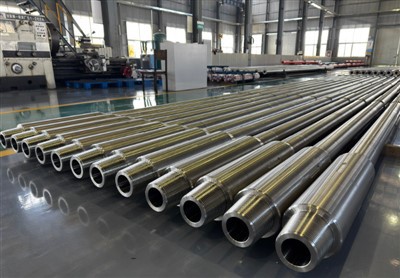
If you’re dealing with azimuth accuracy issues in your boreholes and want to talk about how our non-magnetic drill collars can help, don’t hesitate to reach out. We work with drilling teams of all sizes, from small independent operators to major international drilling companies, and we can help you design the right BHA for your well’s specific needs. We also offer testing and consultation to make sure you’re setting up your MWD tools correctly to get the most accurate azimuth readings possible.
Non-Magnetic Tools for Coal References
American Petroleum Institute. API Specification 7: Specification for Drill Stem Components, 25th Edition, 2021.
International Association of Drilling Contractors. Directional Drilling Accuracy Trends: 2022 North American Well Performance Study, 2022.
Li, J., et al. Magnetic Interference of Bottomhole Assembly Components and Mitigation Using Non-Magnetic Drill Collars. Journal of Petroleum Science and Engineering, Vol. 207, 2021, p. 109012.
Smith, A. Deepwater Directional Drilling: Azimuth Accuracy and Operational Efficiency. Offshore Technology Conference Paper, OTC-30125-MS, 2020.
Shanxi Zhonghe Non-Magnetic Drill Tool Co., Ltd.
Address: No.168 Fenglei Street, Houma City, Linfen City, Shanxi Province, China.
E-mail: lucy@nmdrillcollar.com
WebSite: https://www.zhnmdc.com/
