Hey everyone, if you’ve ever bought a roll of pretty printer paper, a smooth roll of label stock, or even that giant roll of fabric your local tailor uses, you’ve probably used a product that passed through one of our rewinding machines. As the owner of a rewinding machine supply company, I get this question all the time: “Can your rewinding machines run nonstop, 24/7, without conking out?” Let’s cut the jargon, skip the AI-style generic answers, and talk real-world stuff—because this isn’t just a yes/no question; it’s about what your operation actually needs to keep moving. Rewinding Machine
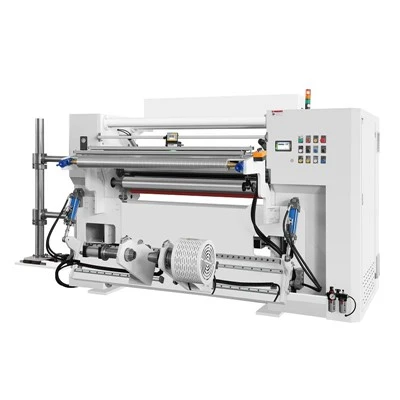
First off, let’s break down what “continuous operation” even means here. For some small businesses on a single shift, it’s 8 hours straight without a hiccup. For mid-sized packaging plants, that’s 16 hours a day, 6 days a week. For big flexible packaging or label manufacturers, it’s 24/7 for weeks at a time—no shift gaps, no unplanned stops killing deadlines for big retail contracts. The short answer is: Our rewinding machines are designed to handle all of those scenarios, but there’s a catch (a good one, promise)—it’s not one-size-fits-all. I’ve seen a lot of companies blow their budgets on a “heavy-duty” machine that still breaks down after 12 hours because they didn’t match the machine to their actual line of work.
Let’s start with the core parts that make or break continuous running. First, the motor. Our high-torque AC motors aren’t the wimpy ones you find on cheap home hobbyist machines. These are industrial-grade, thermally protected, meaning they automatically cool themselves when they get too hot—something non-negotiable if you’re running nonstop. I had a customer last year who tried a $5k rewinder from a fly-by-night supplier for their 24/7 snack packaging line; that motor burned out in 10 hours because it had no thermal cutoff. They switched to our machine and haven’t had a motor issue in 18 months. Lesson learned: skip the cheap motors.
Next up, the web path. That’s the strip of material you’re rewinding—could be paper, plastic film, aluminum foil, fabric, even toilet paper. If the web path is messy—if the rollers aren’t aligned, or the tension is all over the place—you’re gonna get wrinkles, gaps, or even web breaks mid-run. And a web break stops everything, right? Our rewinding machines use precision-ground guide rollers and closed-loop tension control systems that adjust in real-time. If the material starts to wander or stretch too much, the system tweaks it before it becomes a problem. I’ll admit, we don’t recommend running the absolute thinnest films (like 10-micron poly) nonstop without occasional checks, but for 90% of industrial materials, this system holds up. We’ve had a customer making label stock for Amazon run 20-hour shifts for 4 weeks straight and only do quick 5-minute checks every 8 hours—no major stops.
Then there’s the winder core itself. The chuck that holds your core can slip if it’s not heavy-duty, which ruins the roll’s tightness and makes it unusable. Our chucks are pneumatically activated with non-slip rubber linings, and we offer heavy-duty steel chucks for anyone running thick materials like fabric or corrugated. We test these chucks to hold 2x the maximum torque they’d ever see in continuous use, so slipping isn’t an issue. That’s a big one for operations where a bad roll means wasted material, missed deadlines, and lost money.
Now, let’s talk about the stuff most people overlook: maintenance and setup. No machine runs forever without care, right? But here’s the thing—our continuous-operation models are designed to make maintenance easy, not a headache. We put in accessible grease points, quick-change filters for the hydraulic tension system, and self-diagnostic alerts that pop up on the control panel when something’s off (like low grease or a loose roller). It’s not like you have to tear the machine apart every week. For example, one of our big flexible packaging clients runs their machine 24/7, and they do a full maintenance check every 10 days during their scheduled 2-hour downtime slot—no extra stops beyond that.
But wait, let’s be real—there are limits. If you’re running super fragile materials, like thin medical-grade film, you’re gonna need to slow down the speed a little, even for continuous runs. We don’t recommend cranking a machine to 1000 fpm (feet per minute) and leaving it there for 24 hours if you’re dealing with that kind of sensitive stuff. It’s about matching speed to material and your machine’s specs. Also, if you’re a small shop running 8 hours a day, 5 days a week, our heavy-duty continuous models are overkill, but we can hook you up with a mid-range machine that’ll handle your needs for a lot less cash.
I also wanna address the elephant in the room: downtime from repairs. All industrial machines have parts that wear out eventually, but our continuous models use quality components from brands like Siemens and SKF, so wear is minimal. We also stock replacement parts in our warehouse for fast shipping, so if something does go wrong, you’re not waiting a week for a part. I had a customer in Texas who had a roller go out on a Sunday—we shipped a replacement by overnight air, and a tech helped them install it via remote support in an hour. That’s the kind of support you need when you’re running nonstop.
Let’s tie this back to actual use cases, because numbers make it real. Our most popular continuous rewinding machine for food packaging runs 22 hours a day, 6 days a week, with a maximum roll length of 10,000 meters, and it’s been doing that for 3 years now. No motor replacements, no major overhauls, just regular maintenance and the occasional roller alignment. Another customer, a textile company, runs fabric rolls 18 hours a day, 7 days a week—they do a full strip and clean of the web path every 2 weeks, that’s it. They told us their downtime is less than 2% of total run time, which is way below the industry average of 8-10% for continuous operations.
A lot of people ask me, “Why can’t all rewinding machines do this?” The difference is in the design and testing. We don’t build our continuous models by just cranking up the motor and calling it heavy-duty. We run them through 500-hour nonstop stress tests in our factory, simulating every kind of material tension, speed, and load they’ll see in the field. We test them in dusty environments (like packaging plants) and humid ones (like food processing facilities) to make sure the electronics don’t short out. That’s the stuff that separates the machines that run for years from the ones that die after a few months.
Now, if you’re sitting here thinking, “Okay, my operation might need this—how do I know if our current setup is right?” The first question to ask is: what’s your average run time per day? What materials are you working with? How many shifts do you run? If you’re looking to cut down on downtime, meet faster order deadlines, or handle big bulk orders without multiple setups, a continuous-operation rewinding machine from us is probably a good fit.
I’ll be honest—this isn’t a sales pitch to everyone. If you’re a small print shop running a single 8-hour shift, our smaller models are more than enough, and they’re cheaper. But if you’re a mid-sized or large operation that’s tired of unplanned stops, wasted material, and missed deadlines, our continuous rewinding machines are built for you. We also offer customization—like adding extra sensors for your specific material, or integrating with your existing line of core cutters or inspectors—so it works exactly how you need it, not how the generic spec sheet says.
At the end of the day, continuous operation isn’t just about the machine itself—it’s about matching the right machine to your specific needs, with the support to back it up. I’ve seen too many businesses throw money at machines that can’t deliver because they didn’t ask the right questions, and I don’t want that for anyone.
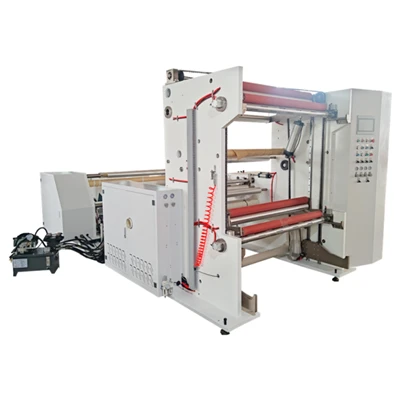
If you’re ready to chat about your operation, figure out what rewinding machine works for you, or even just ask more questions about how our machines handle nonstop runs, hit us up. No hard sell, no vague salespeople giving you the runaround—just real talk from someone who’s been in this industry for years, working with operations just like yours. We can walk through specs, run through case studies that match your line of work, and even arrange a demo if you want to see one of our continuous models running live. Don’t wait till your next breakdown—let’s get you set up to run smoothly, nonstop, when you need it.
Paper Rewinder Machine References:
Industrial Winding Technology: Design, Operation, and Maintenance, 3rd Edition, Industrial Press
Guidelines for Continuous Production of Flexible Packaging Materials, Flexible Packaging Association
Industrial Motor and Drive Thermal Management for 24/7 Operations, IEEE Transactions on Industry Applications, Vol. 58, No. 3, 2022
Wenzhou Sanhui Machinery Manufacturing Co., Ltd.
Wenzhou Sanhui Machinery Manufacturing Co., Ltd. is one of the most professional rewinding machine manufacturers and suppliers in China. We have world-leading production equipment and strong manufacturing capabilities. Please feel free to wholesale advanced rewinding machine made in China here from our factory. Customized orders are welcome.
Address: B17-8, Mechanical Industry Park, Wanquan Light Industry Production Base, Wanquan Town, Pingyang County, Wenzhou City, Zhejiang Province
E-mail: sanhui.slittingmachine@gmail.com
WebSite: https://www.sanhuislittingmachine.com/
