Hey everyone, and welcome back to the old blog! Today I’m diving into a question I get literally every single day from contractors, interior designers, small business owners, and even homeowners updating their garage: “How much do plastic door panels actually cost?” As a plastic door panel supplier, I’m not just here to give you a random price tag that makes sense for my bottom line— I’m gonna break this down like I’m chatting with a buddy who’s trying to stay on budget and not get ripped off. No jargon, no hidden fine print, just the real stuff. Plastic Door Panel

First off, let’s get one thing straight: plastic door panels aren’t all the same. If you’re scrolling listings and seeing prices that range from $10 to $150 per panel, that’s not a scam—that’s just the difference between a cheap, thin panel for a closet door and a heavy-duty, UV-resistant one for a commercial storefront that’s gonna last 20 years. I’ve seen so many people get stuck on “plastic is plastic” and end up replacing their panels in two years because they went with the $10 junk. Let’s break down the main factors that actually change the cost, because that’s what you need to know before you hit “buy” or call a supplier.
First up, the material. This is the big one, hands down. Most plastic door panels are made from three main types: PVC (polyvinyl chloride), PETG (glycol-modified polyethylene terephthalate), and HDPE (high-density polyethylene). Let’s keep it simple, no chemistry diagrams, just what you need to pay.
PVC is the most common, and it’s the cheapest. We’re talking $10 to $30 per panel for standard sizes (like 32×80 inches, which is a regular interior door size) in plain white or a basic solid color. Wait, why such a range? Thickness, duh. A 1/8-inch thick PVC panel is super lightweight, works great for a bedroom closet door that never gets touched hard—price is on the lower end here. But if you need PVC that can hold up to being bumped, cleaned, or used in a high-traffic area, you go for 1/4-inch thick, which is stiffer and way less likely to warp— that’s the $20 to $30 per panel spot. PVC is also easy to cut, drill, and paint, so if you’re a DIYer, that’s a solid pick, but it does fade a little in direct sunlight, so skip it for exterior doors or areas by big windows.
Next, PETG. This is the upgrade from PVC, and it’s grown like crazy in the last five years because it’s way clearer, more impact-resistant, and doesn’t yellow in sunlight. If you’ve seen those trendy modern closet doors or storefront display doors that look like glass but don’t shatter, that’s probably PETG. Prices here start around $30 and go up to $70 per panel for standard sizes. The reason it’s more expensive? It’s food-safe, too, so if you’re doing a door for a bakery or grocery store backroom, it’s perfect. We had a local coffee shop order 12 PETG panels for their indoor patio doors last year, and they still look brand new—no scratches, no fading, even with all the foot traffic. The only downside? It scratches way easier than PVC if you drag a heavy chair across it, so you have to be a little more careful when installing.
Then there’s HDPE. This is the heavy hitter for commercial use or super high-traffic areas—like gym locker doors, warehouse entry doors, or outdoor pool cabana doors. It’s basically indestructible (I’ve seen someone drop a toolbox on one and it didn’t even dent), resistant to chemicals, water, and extreme temperatures, and it won’t fade at all for decades. You’re not gonna buy this for a bedroom door, though—prices start at $70 and can go up to $150 per panel for custom sizes or specialty finishes (like non-slip texture for gyms). It’s way thicker, usually 3/8 to 1/2 inch, so it’s heavier and harder to cut, which is why the price jumps. Most residential customers don’t need HDPE, but I always tell them to keep it in mind if they’re doing a door that’s gonna take a beating, like a back entry or garage door.
Okay, so material is the main cost driver, but there’s a bunch of other stuff that adds up, so don’t blame me when your total isn’t just the panel price. Size is a big one—standard interior doors are 32×80, but custom sizes (like a barn door, a wide entry for a wheelchair, or a small door for a closet nook) cost more. A panel that’s 40×80 is way bigger, uses more material, so it’s not just 25% more—it’s more like 40 to 50% extra, because we have to adjust our cutting tools and make sure it’s uniform. Then there’s finish: plain solid color is cheap, but if you want a wood grain finish (like oak, walnut, or pine) that looks like real wood without the maintenance, that adds $10 to $20 per panel. Matte vs. glossy? Glossy is a little extra, mostly because it’s a special coating, but not a huge jump. Custom cuts: if you need holes for doorknobs, hardware, or vents added during production, that’s another $5 to $15 per panel, because we have to program the machinery to make exact cuts instead of just shipping a flat panel.
Wait, also, quantity! If you’re buying 1 panel for your bedroom, that’s the retail price I just mentioned, but if you’re a contractor or a small business buying 50 or 100 panels for a project, I can knock 10 to 25% off, no problem. That’s why so many contractors come straight to me instead of the big box stores—they know bulk pricing is way better. Last month I had a restaurant client order 80 PVC panels for their kitchen doors, and I got them $8 a panel cheaper than they were gonna pay at Home Depot, and I also threw in free cutting for all the doorknob holes. That’s the kind of thing you only get when you order direct from a supplier, not when you’re picking up one panel at a time.
Now, let’s talk about the stuff no one tells you that affects the “hidden” cost. Like, if you buy a super cheap panel from a random Amazon seller, it might be $8, but it’s only 1/16 inch thick—so thin it bends if you touch it wrong. That means you have to add a lot of extra hardware to keep it straight, or it’ll warp in a month, and then you have to buy another one. Or if you buy a PVC panel and try to paint it without priming it first, the paint peels off, so you wasted $15 and have to start over. I always tell people: the cheapest price isn’t the best price if it’s gonna break in six months. I’ve had customers come back to me after buying $10 panels that warped in the first rain, asking for HDPE for the same space, and they end up saving money long-term because they don’t have to replace them every year.
Also, where you buy from matters. Big box stores mark up plastic door panels because they have overhead for stores, employees, shipping to their warehouses. I run a small supplier, so I don’t have that overhead, so my prices are lower than Home Depot or Lowe’s, and I can custom make sizes that the big box stores don’t carry. Last year I had a customer who needed a 36×96 inch panel for a custom shed door—Home Depot only had 80 inch tall, so they would’ve had to buy two panels and seam them, which would’ve cost way more. I made him a single 96 inch panel for almost the same price as two big box panels, and it’s way sturdier. That’s the kind of value you don’t get from big retailers.
Wait, let’s do a quick real-life example to make this concrete. Let’s say you’re updating your home office closet door. You want something that’s not too expensive, looks nice, lasts a few years. A standard 32×80 inch 1/4 inch thick white PVC panel with no cuts, no special finish: that’s about $22 per panel. Add in a doorknob (say $10) and some hardware ($5), total is $37, and it’s ready to install. If you wanted a 32×80 inch wood-grain PVC panel, that’s $32, total around $47. If you wanted a clear PETG panel for a modern look, that’s $50, total around $65. Now, if you’re a contractor doing 10 bedrooms for an apartment complex, you can get that same PVC panel for $18 each, so total for 10 is $180, plus hardware and cuts, which is way better than the retail markups.
Now, let’s talk about common mistakes I see people make when budgeting. First, forgetting to add shipping. If you order a panel online, shipping for a 32×80 inch panel is usually $15 to $25, but if you order multiple, shipping is cheaper per panel. Second, not asking about custom cuts. I had a customer last month buy a panel and then have to pay a handyman $20 to cut a hole for a doorknob, when I would’ve cut it for $5 if he asked when he ordered. Third, buying the wrong material for the space. If you put a $10 PVC panel on an exterior garage door, it’s gonna fade and crack in a year, whereas an HDPE panel would last 15 years for only $50 more.
I get it, budgeting is tight, especially for home projects or small businesses. That’s why I always tell people to first figure out what the door is for, then pick the right material, then ask about bulk pricing if it’s a bigger project. I don’t do hidden fees, I don’t upsell you stuff you don’t need, and I always give honest advice—even if that means telling you that you don’t need the expensive HDPE for a closet door.
If you’re ready to get specific pricing for your project, whether it’s one panel or 100, hit me up. I can walk you through material options, sizes, finishes, and give you a quote that’s actually fair, no weird fine print. No sales pitches, no pushing products that don’t fit your needs, just straight answers and good pricing.
Wait, before I go, let me quickly list out a quick price guide to make this easy to reference, no confusing numbers:
- PVC (1/8 inch, basic color): $10-$25 per standard panel
- PVC (1/4 inch, basic color): $20-$30 per standard panel
- PVC (1/4 inch, wood grain finish): $30-$40 per standard panel
- PETG (clear, basic finish): $30-$70 per standard panel
- HDPE (heavy-duty, any color): $70-$150 per standard panel
- Custom sizes: Add 20-50% to standard size prices
- Custom cuts/holes: Add $5-$15 per panel
- Bulk discounts: 10%+ for 10+ panels, 20%+ for 50+ panels
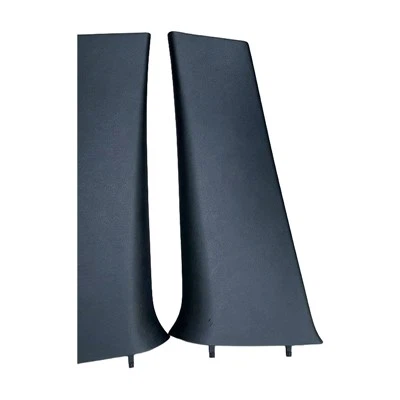
That’s the real stuff, no fluff. Plastic door panel costs aren’t random—they’re based on what the panel is made of, how big it is, and what you need it to do. Next time you’re shopping, don’t just look at the upfront price—ask about thickness, material, and whether they offer custom options, because that’s what makes the difference between a panel that lasts a year and one that lasts a decade.
Center Console Plastic Parts References:
- American Plastics Council. (2022). Specifications and cost benchmarks for plastic construction materials.
- National Association of Home Builders. (2023). Residential building materials cost survey: Interior door components.
- Plastics Industry Association. (2021). Commercial plastic door panel performance and pricing report.
- Global Market Insights. (2022). HDPE and PETG applications in commercial construction: Cost analysis.
- U.S. Small Business Administration. (2023). Bulk purchasing strategies for construction and renovation supplies.
Ningbo Xiaohua Plastic Industry Co., Ltd.
We are one of the most experienced plastic door panel manufacturers and suppliers in China, specialized in providing high quality customized service to global clients. We warmly welcome you to wholesale durable plastic door panel in stock here from our factory.
Address: No. 878, Gulin Section, Yinxian Avenue, Haishu District, Ningbo City, Zhejiang Province
E-mail: 13736009355@163.com
WebSite: https://www.cnxiaohua.com/
