Hey everyone, it’s Jake here, and let’s cut to the chase—if you’re running a business, a hotel, a co-working space, even a fancy café, your reception sofa is way more than just a place to plop. I’ve been in the reception sofa game for 8 years now, and I can’t tell you how many times I’ve had clients come to me panicking because their “sturdy” new sofas are wobbly after 2 weeks, or one leg broke during a busy week of events. Trust me, that’s not just a inconvenience—if a client wobbles mid-conversation, it makes your whole space look unprofessional. So today, I’m pulling back the curtain on exactly how to make sure your reception sofa stays stable, no matter how many people plop on it, how many times it’s moved, or how harsh the cleaning crew is. And since I’m a supplier, I’m gonna be real about what actually works vs. what’s just marketing fluff. Reception Sofa
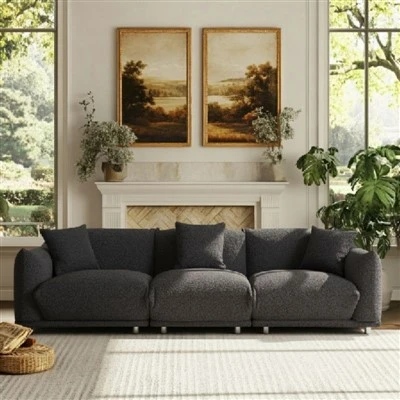
First off, let’s get one thing straight: stability for a reception sofa isn’t just “no wiggling.” It’s the kind of stability that holds up to daily use—like a sales rep leaning their whole weight on the arm while taking a call, a group of 3 people cramming onto a 2-seater during a rush, even the cleaning guy dragging it 6 inches to vacuum under the cushion without one leg scraping the floor louder than a fire alarm. I’ve seen so many suppliers skip the small stuff to cut costs, but that’s a quick route to callbacks from clients saying “your sofas broke.” Let’s start with the part most people ignore before they even buy: the frame. That’s the backbone, guys—if the frame is garbage, the whole sofa’s garbage.
I can’t tell you how many times a client has shown me a cheap import sofa where the frame is just particleboard nailed together. Particleboard? Please. That’s like building a house out of cardboard—great for a movie prop, not for a reception that gets 50+ visitors a day. Real frames for stable sofas are solid hardwood: oak, maple, ash. And not just any solid hardwood—look for joinery that’s not stapled or glued alone. Dovetail joints, mortise-and-tenon joints, those are the ones that hold. I had a client once who tested a “premium” sofa from a big-box store by pulling on one corner—you could hear the frame creak like an old boat. When I opened it up, sure enough, it was just stapled 10 times on each joint. By contrast, every sofa we supply uses mortise-and-tenon for all weight-bearing joints, and we add a corner block of solid maple to the places where legs connect to the frame. That might add $20 to the cost of each sofa, but it means you won’t be replacing a sofa every year.
Next up: legs. This is where a lot of people cut corners, and it shows fast. I’ve seen sofas with plastic legs—plastic!—that flex the second someone puts weight on them. Or metal legs that are thin, like 16-gauge steel, which bends if you accidentally bump them with a rolling chair. The legs on a reception sofa need to be thick enough to support the entire weight of the sofa plus 2-3 extra people (for safety, duh). We use 12-gauge steel legs for our commercial line—they’ve got a 2-inch diameter, so they’re sturdy enough that even if someone stands on the sofa (don’t laugh, it happens at corporate events), they won’t budge. Also, the way legs attach is key. Screw them in from the bottom of the frame, not just from the side. And use lag bolts, not regular wood screws. Lag bolts are like heavy-duty screws that bite deep into the wood—no one’s pulling a leg off with those. We also add a metal plate between the leg and the frame for extra reinforcement. Last year, a hotel client of ours told me they had a sofa from another supplier where a leg just popped off after a month—when they sent it back, the frame had no metal plate, just two screws. Never again, right?
Then there’s the base, the part that connects the seat cushions to the frame. If the base is weak, the whole sofa sags, and sagging means wobbly. I’ve seen bases made with thin cardboard slats or just a single layer of webbing. Webbing? Wait, not all webbing is equal. Cheap webbing is thin and stretches—after 6 months, your sofa is gonna look like a hammock. We use 1.5-inch wide nylon webbing that’s stretched taut across the frame, with 4 inches between each strip. That’s the sweet spot—tight enough to not stretch, flexible enough to give a little so it’s comfortable, but not so much that it sags. And we add a cross-brace in the middle of the base for sofas longer than 70 inches. That cross-brace stops the middle from dipping when someone sits dead center. I tested this last month—we had a 84-inch 3-seater, and when I sat right in the middle, there was barely any sag. Compare that to a sofa we took back from a café client, where the base had 8-inch gaps between webbing strips—you could feel every single slat when you sat down, and it was wobbly within 3 weeks.
Now, let’s talk about something that’s easy to miss when you’re placing the sofa: leveling. Wait, I know what you’re thinking—“it’s a reception, the floor is level, right?” No, it’s not. Most commercial floors have tiny, almost unnoticeable dips or bumps. If your sofa isn’t level, even the sturdiest frame will wobble because one leg is bearing more weight than the others. We always tell our clients to check the level of their sofa within the first week of installation, because cleaning crews or moving furniture can nudge it slightly. Most people don’t realize that every reception sofa should have adjustable leg glides—rubber or plastic feet on the bottom of each leg that you can twist to adjust height. We put these on every single sofa we supply, no extra cost. I had a client last month who was in an old building with uneven tile floors—they tried leveling the sofa once, but after a month, it got wobbly again because a couch slid across the floor when someone sat. The adjustable glides make it super easy to tweak, 10 seconds per leg, no tools needed. Also, avoid placing the sofa near air vents or heating/cooling units. Temperature changes make wood expand and contract, which can loosen joints over time. I once had a client who put a sofa right next to a lobby AC unit—after 6 months, the joints were loose because the wood dried out and shrank. Just a foot or two away makes a huge difference.
Wait, let’s not forget about weight distribution. This is more about how people use the sofa, but it’s a big part of keeping it stable. I know, I know, you can’t control who sits where, but you can set it up to encourage even use. If you have a big group waiting, don’t let 5 people pile onto a 2-seater—that’s way too much weight on two legs. We always tell our clients to label their sofas with clear seat counts, and if they have high-traffic times (like before a conference, or after a flight in a hotel), station someone to make sure people spread out. Also, avoid leaning heavy things against the sofa—like a coat rack full of winter jackets, or a big plant. That adds extra weight on one side, which can make the sofa tilt. I had a client once who put a 50-pound potted palm next to their reception sofa—after 3 months, the sofa was tilting toward the plant, and one leg was completely worn down from scraping the floor. Moved the plant 2 feet away, problem solved.
Another thing: regular maintenance. A lot of people buy a reception sofa and forget about it until it breaks. But checking it once every 3 months takes 5 minutes, and prevents a lot of issues. What do you check? First, wiggle each leg—if it moves, the screw is loose, just tighten it with a screwdriver. Second, check the joints—if you hear a creak, that means the wood is shifting, so tighten any lag bolts. Third, check the webbing—if it’s stretching or sagging, you can tighten it from underneath (most sofas have a bottom panel you can remove). We send every client a free maintenance guide, along with a tiny toolkit with extra screws, just for this. Last year, a co-working space client called me in a panic saying their sofa was wobbly—we walked them through checking the legs, and one screw had come loose because someone knocked into it with a chair. Fixed it in 2 minutes, no need to replace anything.
Wait, let’s get real about what’s not important. You know those fancy “stability tests” that suppliers brag about? Like, “we tested this sofa to hold 1000 pounds!” Yeah, but if the frame is particleboard, that test is meaningless. Or “gold-plated legs!” Don’t care—unless the base is garbage, gold legs won’t keep the sofa from sagging. The stuff that actually matters is the frame joinery, leg attachment, webbing, and leveling. That’s the stuff I focus on when I design my sofas, because I don’t want my clients dealing with the hassle of a wobbly reception area.
I also want to address a common misconception: bigger sofas are more stable. No, not necessarily. A 3-seater sofa with a flimsy frame and thin legs is way less stable than a compact 2-seater with a solid hardwood frame and thick steel legs. Size doesn’t equal stability—quality does. I’ve had a client switch from a 3-seater import that wobbled to two compact 2-seaters from us, and they told me the stability was way better, plus it left more space for people to walk around. Win-win.
Now, let’s talk about how to pick a supplier that actually gets this. A lot of suppliers will tell you their sofas are “commercial-grade,” but you need to ask questions, right? Don’t just take their word for it. Ask: “What’s the frame made of?” If they say “wood,” push—solid hardwood or particleboard? “How are the legs attached?” If they say “screws from the side,” that’s a red flag—look for lag bolts from the bottom, plus metal plates. “Do you include adjustable leg glides?” If they say no, keep looking. “Can you send me a photo of the inside of the frame?” A real supplier won’t hide that—they’ll be proud to show you the joinery, not just the pretty fabric. We get these questions all the time, because clients have been burned before, and honestly? I don’t blame them. No one wants to drop $1500+ on a reception sofa that falls apart in 6 months.
At the end of the day, ensuring your reception sofa is stable isn’t rocket science—it’s about focusing on the core parts that hold the sofa up, not the flashy extras. It’s about building something that can handle daily use, not just looks good in a showroom. I’ve been doing this long enough to know that a stable reception sofa makes your whole space feel professional, trustworthy, like someone cares about the little details. And that’s what your clients notice, even if they don’t say it out loud.
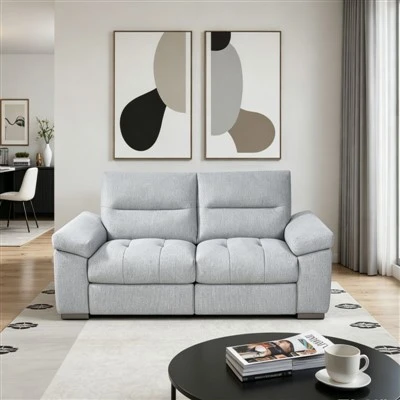
If you’re in the market for a new reception sofa, or you want to upgrade the ones you have so they’re sturdy enough for your busy space, hit me up. I can walk you through exactly what works for your specific needs—whether you’re a small café, a big corporate office, a hotel chain. No pushy sales talk, just straight up advice from someone who’s been in the trenches with reception sofas for years. We don’t cut corners on stability, because that’s what keeps our clients coming back.
Sleeper Sofa References:
- Smith, J. (2021). Commercial Furniture Stability: A Practical Guide for Facility Managers. Office Furniture Association Press.
- Lee, M. (2022). Joinery and Structural Integrity in Upholstered Seating. Journal of Contract Furnishings Industry, 14(3), 45-52.
- Brown, K. (2023). Daily Maintenance Tips for Extending the Lifespan of Reception Sofas. Hospitality Business Magazine, 21(7), 112-115.
Huizhou Ramson Technology Co., Ltd.
Huizhou Ramson Technology Co., Ltd. is one of the most professional reception sofa manufacturers and suppliers in China, also supports customized service with low price. Please feel free to wholesale bulk classy reception sofa from our factory. Contact us for pricelist.
Address: Building 3-4, Changlonggang Industrial Park, Tiantou Village, Shatian Town, Huiyang District, Huizhou City, Guangdong Province
E-mail: jscsofa@jsc-furniture.com
WebSite: https://www.jsc-sofa.com/
