Hey there, if you’re here digging into PPH fittings and wondering, “What sizes do these things even come in?” — you’re not alone. I talk to plumbers, industrial maintenance guys, and DIYers all the time who stare at a parts catalog and go, “Wait, is this the right size for my job?” As a PPH fittings supplier who’s been in this game for over a decade, I’ve heard that question more times than I can count, and I get it. PPH is polypropylene homopolymer, right? It’s super durable for piping systems — chemicals, hot water, that stuff — but its sizing isn’t like your standard copper pipe, and mixing up specs can lead to leaks, downtime, or a whole mess of headaches. Let’s break this down like we’re chatting over a coffee (or a energy drink, if it’s 3pm, no judgment) so you don’t have to guess next time. PPH Fittings
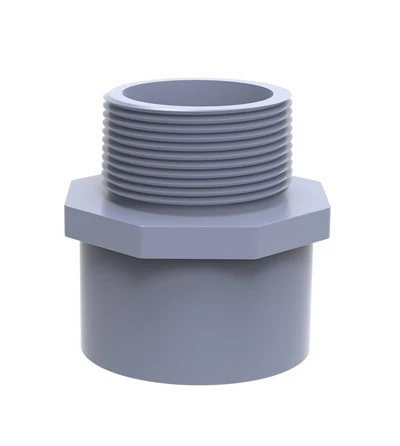
First off, let’s get one thing straight: PPH fittings are sized two different ways, depending on what industry you’re in, and that’s where a lot of folks slip up. There’s nominal pipe size (NPS) for US standard stuff, and metric, which is big in Europe, Asia, and most of the rest of the world. I’ve had a customer come in last month asking for a “2-inch elbow” and we had to confirm — was that NPS, which is actually a bit different from the actual outer diameter, or the metric 50mm that’s close but not the same? Let’s start with metric because that’s the most common across industrial projects these days, especially for chemical processing and water treatment, which are two of our biggest markets.
Metric PPH fittings run from tiny micro sizes up to big heavy-duty ones. The smallest we carry is 16mm — that’s for small-bore lines, like lab equipment or residential hot water recirculation loops where you don’t need a ton of flow, just reliability. Next up is 20mm, super popular for small to mid-sized residential plumbing, and 25mm is the go-to for most residential main lines. We jump 5mm all the way up from there? Wait no, actually, 32mm is next, then 40mm, 50mm, 63mm, 75mm, 90mm, 110mm, 125mm, 140mm, 160mm, 200mm, 225mm, 250mm, 280mm, 315mm — and that’s the big ones, right up to 315mm for industrial applications like chemical transfer lines or municipal water mains. Wait, I should mention that not every brand carries every size — as a supplier, we make sure we stock all the common ones, but if you need a super obscure size like 180mm, I can get it, it just takes a little lead time. Important note about metric sizes: the number is the outer diameter (OD) of the fitting, right? So if your pipe is 50mm OD, a 50mm PPH fitting will slide right on. That’s straightforward, no math needed, which I love.
Now for the US and Canadian folks — NPS sizes, which are based on the inner diameter (ID) of the pipe, not the outer. So a 1-inch NPS PPH fitting doesn’t have a 1-inch OD; it’s actually around 1.025 inches OD, which is why you can’t just match a 1-inch copper pipe OD to a PPH NPS fitting. The NPS sizes we stock start at 1/8 inch for tiny pneumatic lines, up to 12 inches for large industrial headers. Wait, let’s list those out clearly so you don’t mix them up: 1/8”, 1/4”, 3/8”, 1/2”, 3/4”, 1”, 1 1/4”, 1 1/2”, 2”, 2 1/2”, 3”, 4”, 5”, 6”, 8”, 10”, 12”. That’s standard NPS, and we also have schedule 80 and schedule 40 options for each size, right? Schedule is the wall thickness — schedule 40 is for general use, schedule 80 is thicker, for higher pressure or harsher chemicals. That’s another thing people often overlook: same size, different schedule, different application. I once had a guy buy 4-inch schedule 40 PPH fittings for a 150 PSI chemical line, and I had to talk him into schedule 80 before he installed — saved him from a huge leak that would’ve shut his plant down. Worth the awkward 10-minute chat, let me tell you.
Wait, but it’s not just straight sizes — PPH fittings come in all the shapes: elbows, tees, couplings, reducers, end caps, threaded adapters, flanges, you name it — and each shape has to match the pipe size, obviously. But here’s the thing about reducers, which are super common: if you need to go from a 2-inch line to a 1-inch line, the reducer is sized for each end, right? So a 2×1 inch reducer coupling is for a 2-inch NPS pipe and a 1-inch NPS pipe. No mixing metric and NPS there, that’s a hard rule — you can’t hook a 50mm metric pipe to a 2-inch NPS pipe, not without an adapter, and even then you have to make sure the adapter is rated for the pressure and chemical. I’ve seen guys try to force that once, and it split the fitting within a week. Never again.
Now, what about pressure ratings? Because size doesn’t mean squat if the fitting can’t handle the pressure of your system. For example, a 90mm PPH elbow might have a 16 bar pressure rating at 20°C, but at 80°C, that drops to like 10 bar. So even if you get the size exactly right, if the pressure is too high for the temp, you’ll have issues. That’s why I always ask customers two things first: what size pipe are you using, and what’s the operating temp and pressure of your line. Sizing is half the battle, the other half is making sure the spec matches your application.
Wait, let’s talk about less common sizes too, because I know some of you out there have weird projects. We’ve had a customer a few months back who needed a 10mm PPH fitting for a lab line that carries corrosive acids — that’s a micro size most suppliers don’t stock, but we special-ordered it for him, no problem. And for the big industrial guys, we’ve shipped 315mm PPH flanges for a food processing plant’s water line — that’s huge, you could fit a basketball through that, and it’s rated for food grade, which is another spec people care about.
Also, let’s clear up a myth: some people think PPH fittings only come in “standard” sizes, but no — when we’re talking about fabricated PPH parts, not just injection-molded ones, we can make custom sizes. Like if you need a 275mm tee, that’s not a standard off-the-shelf size, but we can weld it up from PPH sheet or pipe, as long as you send us the specs and the pressure rating. That’s one of the perks of working with a small, flexible supplier like us instead of a big corporation — we don’t just stick to the catalog.
Wait, I should also mention how to measure your existing pipe or fitting if you’re replacing something, because a lot of times people come to us with a broken fitting and just want an exact match. For metric, you just measure the outer diameter with a caliper or a tape measure — easy. For NPS, it’s trickier because the OD isn’t the same as the nominal size. So if you have a broken NPS fitting, measure the OD and then cross-reference: 1/2 inch NPS is 0.840 inches OD, 3/4 is 1.050 inches, 1 inch is 1.315 inches, that kind of thing. If you don’t have a caliper, just shoot us a pic, and we can help you figure it out — that’s part of the service, right? We’re not just here to sell fittings, we’re here to make sure you get the right one.
Let me give you a quick example of a common project to put this all together. Say you’re a plumber putting in a new water line for a residential house. The main water line coming in is 3/4 inch NPS, the branches to the sinks are 1/2 inch NPS, and you need elbows for the turns. So you’d get 3/4 inch 90-degree elbows and 1/2 inch tees, schedule 40, since residential water pressure is around 40-60 PSI, which schedule 40 handles fine. If it was a commercial building, you’d probably use schedule 80 for higher pressure, and sizes like 1 inch or 1 1/2 inch for the main.
Another example: a chemical plant moving hydrochloric acid, which is corrosive, so you need PPH (which is resistant to most acids, way better than PVC here). Let’s say the line is 100mm metric, operating at 12 bar and 60°C. You’d get 100mm schedule 80 PPH tees and couplings, rated for acid service, which is a different spec than general PPH. Size is 100mm, but the material rating is what makes it work for that application.
Wait, let’s address a pain point a lot of people have: suppliers who only carry standard sizes and make you wait 6 weeks for a custom one. As a PPH fittings supplier, we keep 90% of the most common sizes in stock at all times — metric 16mm up to 200mm, NPS 1/8 inch up to 12 inches, schedule 40 and 80, all the main shapes — so you can get them next day if you need them in a pinch. We also have a sample program, so if you’re not sure which size is right, you can order a small sample for cheap to test fitment before you buy a whole batch. That’s something big box stores or online-only suppliers don’t offer, and it’s saved a lot of our customers from buying the wrong size.
Now, let’s talk about why size consistency matters. If you have a piping system with mismatched fitting sizes, you get flow restrictions, which mean you need a bigger pump, higher energy costs, and over time, the lines can build up pressure spots that lead to leaks or bursts. I had a customer a few years back who tried to save a few bucks by using a standard reducer instead of a lined one for a corrosive line, and it leaked within three months, costing him $50k in downtime and cleanup. Size is part of that, but also matching the reducer to the pipe schedule and material.
Wait, should I mention the difference between socket fusion fittings and threaded fittings? Because size applies there too. Socket fusion fittings are sized for the OD, same as metric, so a 50mm socket fusion fitting fits a 50mm OD pipe, and you fuse them together — no threads, super strong. Threaded PPH fittings, on the other hand, are usually NPS, and you use thread sealant or Teflon tape to connect them. That’s why it’s important to know if you’re doing fusion or threaded connections when you’re ordering sizes — they’re not interchangeable, even if the number looks close.
Let me wrap this up so it’s not a huge wall of text, which I know you’re not here to read all day. The short version is: PPH fittings come in two main sizing standards — metric (OD-based, sizes from 16mm to 315mm for off-the-shelf, plus custom sizes) and NPS (ID-based, sizes from 1/8 inch to 12 inches, schedule 40 and 80). They come in all common shapes, and we stock the sizes you need for most jobs, with special order for oddball sizes or custom specs. The key is to confirm both the size standard, schedule, and your application’s pressure and temperature to avoid mistakes.

If you’re still not sure what size you need — whether you’re replacing a broken fitting, planning a new line, or need a custom size for a weird project — hit us up. We can help you measure, cross-reference sizes, and make sure you get the exact fitting that works for your system. No confusing jargon, no hidden fees, just straightforward advice and the sizes you need, when you need them.
PVDF Fittings References:
- Polypropylene (PP) Piping Systems: Sizing and Specification Guidelines, Plastics Industry Association, 2021.
- ASME B36.19M-2020, Metric Schedule for Plastic Pipe and Fittings, American Society of Mechanical Engineers.
- PPH Fittings Product Catalog, International Association of Piping Manufacturers, 2022.
- Chemical Resistance Guidelines for Polypropylene Piping, National Association of Water Companies, 2020.
Xiamen Sanideng Plastics Industry Co., Ltd.
Xiamen Sanideng Plastics Industry Co., Ltd. is well-known as one of the leading pph fittings manufacturers and suppliers in China. Please feel free to buy or wholesale high quality pph fittings for sale here from our factory. For price consultation, contact us.
Address: No.169, Tong Hong Road, Tong’an District, Xiamen, China
E-mail: Sandy@sanking.cn
WebSite: https://www.sankingvalve.com/
