Hey there, if you’ve ever worked with gas processing, dehydration systems, or even industrial drying rigs, you’ve probably heard the term “molecular sieve” thrown around—chances are you’re here because you’re wondering just how much moisture these little porous workhorses can actually suck up. As a molecular sieve supplier, I get this question all the time, and I’m not just gonna give you a vague “it works great” answer. Let’s break this down like we’re geeking out over a part we use every day. Molecular Sieve

First, let’s get one thing straight: molecular sieves aren’t your typical desiccants like silica gel or calcium chloride. Silica gel is more like a sponge that traps moisture on its surface, right? Molecular sieves are the overachievers—they have super precise, uniform pores (think tiny, consistent cages) that only grab molecules small enough to fit through. Water molecules are tiny (about 0.28 nanometers), so sieves are built specifically to lock those in, while letting bigger molecules (like nitrogen, CO2, or even ethanol, depending on the sieve type) pass right by. That specificity is why their moisture adsorption capacity is different from every other desiccant out there.
Now, the big question: what’s the actual capacity? Let’s start with the standard numbers because that’s where most folks start, but let’s add the fine print that most suppliers skip. For the most common type—Type 4A molecular sieve—this is the workhorse for general moisture removal, right? At typical operating conditions (like 25°C, or room temp, and a relative humidity of ~50%, which is like average office humidity), the equilibrium moisture capacity is around 20-22 wt%. Wait, “equilibrium” just means once it can’t hold any more water, so that’s the max it’ll grab under those specific conditions. But if the humidity is lower—say, 10% RH, which is dry desert air—that drops to like 12-15 wt%. If we bump up the temperature? Oh, big change. If it’s 100°C (212°F), that equilibrium number plummets to 5-8 wt% because heat makes water molecules move faster, so the sieve can’t hold onto them as well.
What about other types, since we sell a range here? Type 3A is for natural gas drying, because it only lets water in (its pores are smaller, 0.3 nm, so ethanol or methane can’t get stuck). Its max capacity is a bit lower—around 18-20 wt% at room temp 50% RH—since its smaller pores can’t fit as many water molecules total. Then there’s Type 5A, used for separating oxygen and nitrogen, its moisture capacity is almost the same as Type 4A, but it’s less selective for water over CO2, so if your gas has high CO2, Type 4A is better. And the big gun for super dry applications, like ultra-high purity gas processing, is Type 13X. That bad boy has bigger pores (1 nm), so its max moisture capacity is higher—up to 25 wt% at room temp 50% RH. Makes sense, more space for water molecules, right?
But wait—capacity isn’t just about the sieve type. There’s a whole bunch of factors that change how much moisture it actually adsorbs in your specific system, and that’s the part that makes or breaks whether your drying process works. First, pressure. If you’re working at high pressure, like 10 bar or more, the capacity goes up. More pressure crams water molecules closer, so they can fit more into the sieve’s pores. If you’re at vacuum? Capacity drops, because there’s fewer water molecules around to grab onto. That’s a big one—someone might come to us saying “I need 20 wt% capacity” but they’re running at 5 bar, so actually Type 4A at that pressure will hit 23 wt%, so they need less sieve than they thought.
Then there’s the thing we see all the time as a supplier: pre-treatment of your gas or air. If your feed has oil, dust, or heavy hydrocarbons, those will clog the sieve’s pores before it can even touch water. That kills capacity fast—we’ve had customers come to us upset that their “20 wt% sieve” is only holding 5 wt%, and it turns out their compressor oil was coating the beads, blocking the pores. So pre-filtration and oil removal aren’t just nice to have—they’re critical to getting the full advertised capacity.
Another big one is cycle time if you’re using a pressure swing adsorption (PSA) system, which is the most common way to regenerate molecular sieves (you heat them or drop pressure to release the water so you can reuse them). If you run your PSA cycle too fast—only letting the sieve adsorb moisture for 10 minutes before regenerating—it won’t reach equilibrium, so the actual capacity is lower, like 10-15 wt% instead of the max 22 wt%. Slow down the cycle to 30 minutes, and you hit way closer to that full number. That’s why we work with every customer to tweak their cycle, not just sell them sieve and dip.
Let’s also talk about what “capacity” actually means in real-world use, because not all numbers are created equal. Some suppliers will quote “static capacity,” which is lab-measured in ideal conditions with only pure water vapor, no other gases. That’s the max, but it almost never happens in industrial settings. We quote “dynamic capacity” too, which is what you’ll actually get in your system—accounting for pressure, temperature, flow rate, and other components in your feed. That’s the number you should care about, not the lab stat. I’ve had customers try to buy the cheapest sieve that only lists static capacity, and they end up having to buy twice as much as they needed because they don’t understand the difference.
Now, let’s clear up a common myth I hear all the time: molecular sieves don’t “run out” forever—they’re regenerable. Depending on the sieve type and how you operate, you can reuse them hundreds of times. Type 4A, for example, can be regenerated 500+ times if you do it right, losing only like 0.1-0.2 wt% capacity each regeneration. That’s a huge deal, because even though they cost more upfront than silica gel, the lifespan means they’re cheaper long-term. Silica gel might be $2 a kg, but it only lasts a month; molecular sieve is $5 a kg, lasts a year—way better total cost.
As someone who’s been selling these for 8 years now, the biggest mistake customers make is not calculating their actual required capacity before buying. Like, a food and beverage customer came to us last year needing to dry CO2 for carbonation, thought they needed Type 13X because it has the highest capacity, but their CO2 feed was only 30% RH at 25°C, and they were running at 2 bar. Turned out Type 4A was perfect, because at that RH and pressure, its capacity was 14 wt%, which was exactly what they needed—Type 13X would’ve been overkill and cost them 30% more. That’s why we always ask for the deets of their system: feed gas composition, pressure, temp, flow rate, required final moisture level—so we can tell you exactly which sieve will give you the capacity you need, no waste.
Wait, let’s get back to the science for a sec, just to make sure this isn’t all sales talk. The adsorption mechanism here is physical adsorption, right? The sieve’s pore walls have a negative charge (from the aluminum and silicon in the zeolite structure), and water molecules are polar, so they stick to the wall via van der Waals forces and hydrogen bonds. That’s why higher pressure helps—more water molecules to bond to the walls. That’s also why heat breaks those bonds, which is how regeneration works. If the pores were too big, those forces would be weaker, so capacity would be lower, which is why the different sieve types have different capacities based on pore size.
Another thing that affects capacity: bead size. Smaller beads have more external surface area, so they can adsorb a tiny bit more moisture faster, but if you have too small beads, they’ll plug up your filters in your system. Larger beads have less surface area, so slower adsorption, but last longer and don’t plug. We have every size from 1/16 inch to 1/4 inch beads, so we can match the bead size to your system to maximize actual capacity in your setup.
So putting it all together: the “moisture adsorption capacity of a molecular sieve” isn’t a single number—it’s a range, dependent on sieve type, operating conditions, pre-treatment, and system design. The advertised static max is 18-25 wt% for common types, but the real-world capacity you’ll get is 5-20 wt% depending on how you run your process. As a supplier, our job isn’t just to hand over a bag of beads—it’s to help you figure out what number you actually need, so you don’t overspend or underperform.
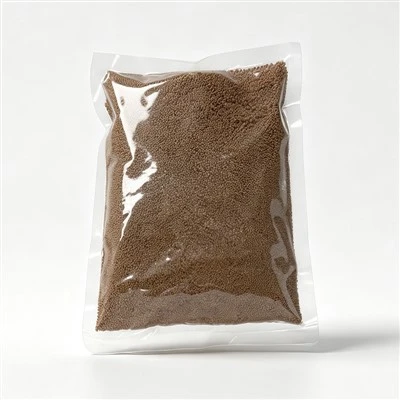
If you’re currently dealing with low drying efficiency, constantly needing to replace desiccant, or just want to make sure you’re getting the right capacity for your project, hit us up. We can walk you through your system, share data from similar setups we’ve worked on, and make sure you’re using the right sieve for your needs. No pressure, no sales pitch that skips the fine print—just real answers based on what works in the field.
Plastic Corner Key References:
- Ruthven, D. M. (1984). Principles of Adsorption and Adsorption Processes. John Wiley & Sons.
- Zeolites and Molecular Sieves: Science and Technology. (2007). Elsevier.
- Molecular Sieves: Properties and Industrial Applications. (2019). CRC Press.
- “Adsorption Isotherms of Water on Type 4A and Type 13X Molecular Sieves.” Industrial & Engineering Chemistry Research, vol. 52, no. 35, 2013, pp. 12567-12574.
Renqiu City Xinjian Metal Products Co., Ltd.
Renqiu City Xinjian Metal Products Co., Ltd. is one of the most professional molecular sieve manufacturers and suppliers in China. With abundant experience, we warmly welcome you to wholesale customized molecular sieve from our factory. If you have any enquiry about free sample, please feel free to email us.
Address: Caicun Dajie Village, Changfeng Town, Renqiu City, Hebei Province China
E-mail: melody@xinjianmetal.com
WebSite: https://www.xjglassspacer.com/
