If you’ve ever stood in a warehouse on a humid summer morning, watching pallets of bulk goods sit under tarps or wrapped in flimsy plastic that’s already starting to warp, you know how frustrating it is to trust packaging with moisture-sensitive products. As someone who’s been supplying PP woven bags for 12 years—right here in the industrial packaging space—I get more questions about moisture-proof performance than any other part of our products. Customers often show up nervous, having dealt with loads of fertilizer turning clumpy, rice sprouting prematurely, or plastic pellets getting corroded before they even hit the retail shelf. Today, I’m pulling back the curtain on what actually makes a PP woven bag moisture-proof, what myths are floating around out there, and how to pick one that actually works for your specific needs. PP Woven Bag
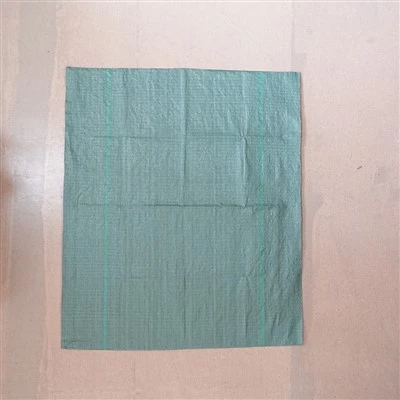
First, let’s start with what PP woven bags are, because a lot of folks don’t realize how the tiny details of their construction make all the difference. PP (polypropylene) is a non-porous thermoplastic resin, which on its own repels water. But the standard PP woven bag most people picture—with interwoven polypropylene filaments—isn’t solid. Those thin filaments are pressed into flat strips, stretched into long threads, and woven together like fabric, leaving tiny gaps between them. On a basic level, that structure means an untreated PP woven bag isn’t fully moisture-proof. It’s water-resistant, meaning it can hold up against light rain or a damp loading dock floor for a short time, but if you leave it sitting in 90% relative humidity (RH) for weeks, or submerge it in water, moisture will work its way through those gaps. That’s where treatments come in, and they’re not all created equal.
Let’s talk about the three main ways we treat our PP woven bags to boost moisture performance, because this is where most suppliers cut corners, and customers end up paying the price. The first is lamination. We use high-density polyethylene (HDPE) film laminated to the inside of the PP woven fabric. The HDPE acts as a complete barrier, sealing every gap between the woven PP strands. This is a big one for products that need long-term protection against moisture—like 50kg fertilizer bags, coffee beans, or bulk grains that can absorb moisture and lose value if they get even a little damp. When you laminate properly, the HDPE is bonded evenly across the entire inner surface, no bubbles or thin spots, so water vapor can’t penetrate. The second treatment is coating, usually a PE or acrylic coating applied to the outer surface of the PP fabric. Coating is thinner than lamination, so it’s a lighter option, good for products that don’t need full submersion protection but do need to repel light humidity, dust, and occasional splashes—like seed packets, animal feed, or small hardware parts. The third is extrusion coating, where we melt PE and coat it directly onto the woven PP in a thin, uniform layer, similar to lamination but with a slightly thinner barrier, more flexible for lighter loads.
Now, let’s get into the science of moisture performance, because it’s not just about slapping a treatment on. There’s a term we use in the industry called moisture vapor transmission rate (MVTR), which measures how much water vapor passes through a material over a set period of time, usually grams per square meter per day (g/m²/day). For untreated standard PP woven bags, the MVTR is around 200–300 g/m²/day. That means if you have a square meter of this bag sitting in a 90% RH environment, almost 300 grams of water vapor will pass through it every single day. After a month, that’s 9kg of moisture moving through, which is enough to turn a 25kg bag of rice into a clumpy, moldy mess. Now, if we add a PE lamination, the MVTR drops to less than 5 g/m²/day—some of our heavy-duty laminated bags get as low as 1 g/m²/day, which is comparable to a lot of rigid plastic containers. That’s the difference between a bag that works for 30 days in a humid warehouse and one that works for 6 months.
But here’s the thing I tell every customer who calls me asking for a “100% waterproof PP woven bag”: there’s no such thing as 100% waterproof packaging, at least not in the real world. Even our laminated bags aren’t impermeable forever. If you leave them submerged in water for weeks, water will get through, especially at the seams—another part that a lot of people overlook. Seam construction is huge for moisture performance. If we use a basic straight stitch on a laminated bag, that seam is the weakest point; it can have tiny gaps where the lamination pulls away, letting moisture in. That’s why we use ultrasonic welding for seams on our highest-grade moisture-proof bags. Ultrasonic welding melts the lamination and PP together so seamlessly that there’s no gap, and the seam is actually stronger than the bag body itself. For lower-grade coated bags, we use a locked stitch that seals the edges tightly to prevent gaps, but it’s not as effective as welding for long-term moisture protection.
I’ve seen a lot of customers make the mistake of buying the cheapest PP woven bag they can find, assuming the treatment is the same across the board. Last year, we had a customer who ran a small rice mill in Louisiana—super humid, with frequent summer thunderstorms. He bought a batch of unlaminated coated bags from a supplier halfway across the country, thinking the coating would be enough. Within two months, 12% of his rice bags had visible moisture inside, the rice was sprouting at the edges, and he lost almost $15,000 in product. He called me panicking, asking what went wrong, and it all came down to MVTR. That cheap coating had an MVTR of over 100 g/m²/day, which meant moisture was seeping through the thin layer every day, even in normal warehouse conditions. We swapped him to our standard laminated PP woven bags, which have an MVTR of 3 g/m²/day, and he hasn’t had a moisture issue since. That story sticks with me, because it’s not about the label on the bag—it’s about the actual performance of the materials and the construction.
Another common myth I hear is that color affects moisture performance. No, it doesn’t. PP is naturally clear, and we add colorants during the extrusion process, which are just pigments that don’t alter the polymer’s properties or the effectiveness of our laminations or coatings. That said, if a bag is dyed a dark color, it does absorb more heat from sunlight, which can raise the temperature inside the bag a little. Higher temperatures can increase MVTR slightly, but that’s a minor effect compared to the treatment itself. I always tell customers not to pay more for a colored bag “because it’s more moisture-proof”—that’s just a sales tactic some suppliers use to overcharge.
Now, let’s talk about when you need what type of moisture performance, because that’s the key to picking the right bag, no matter your product. If you’re packaging something sensitive to moisture but will store it in a cool, dry environment for less than 3 months—like small hardware parts, light seed lots, or craft supplies—our basic coated PP woven bags are perfect. They’re lightweight, easy to handle, have an MVTR around 80 g/m²/day, and cost 30% less than laminated bags, so you don’t overspend on protection you don’t need. If you’re storing or transporting products for 3+ months, in humid climates, or in conditions where the bags might get splashed or exposed to rain—like bulk grains, fertilizer, coffee beans, or pet food—our laminated PP woven bags are the way to go. The HDPE lamination seals out almost all moisture vapor, and with ultrasonic welded seams, they can even hold up for short periods of time submerged, like if a pallet gets caught in heavy rain while being loaded onto a ship. For products that need extra protection, like pharmaceutical ingredients or specialty chemicals, we offer a heavy-duty laminated version with an extra thick HDPE layer, pushing MVTR below 1 g/m²/day.
I also want to mention factors that affect how long a moisture-proof bag actually lasts, even the best ones. UV exposure is a big one. If a bag is left outside in direct sunlight for weeks, the PP and PE materials can degrade, making the lamination or coating crack, which lets moisture in. That’s why all our moisture-proof bags, even the standard coated ones, have UV stabilizers added during production. Our UV-stabilized bags can last up to 6 months in direct sunlight, whereas untreated bags degrade in 2–3 months. Another factor is storage conditions. If you stack a heavy pallet of bags on a damp concrete floor without a pallet liner, the moisture from the ground can wick up through the bottom of the bags, even if they have a lamination. That’s a small detail, but it’s one that a lot of customers don’t think about, and it can make a good bag perform poorly.
Over the years, I’ve worked with customers across industries, and the number one mistake I see is choosing a bag that’s either too much protection (wasting money) or not enough (losing product). It all comes down to knowing your specific needs: how long will the product be in the bag? What’s the humidity level of your storage and transport environment? Is the bag going to be exposed to rain or sun? If you’re not sure, that’s what I’m here for. I don’t push our most expensive bag on every customer—if a simple coated bag will work for their needs, I’ll tell them that. If they need something heavy-duty, I’ll explain why that’s necessary.

At the end of the day, PP woven bags are one of the most versatile, cost-effective packaging solutions out there, but their moisture performance isn’t a one-size-fits-all. A lot of people write them off as flimsy, unreliable packaging, but that’s only because they’ve bought the wrong kind. For us, every bag we supply is tested for MVTR and seam strength before it leaves our facility, so our customers don’t have to worry about the same issues that other suppliers’ customers face. If you’re in the market for PP woven bags and want to talk through what’s right for your products, don’t hesitate to reach out to discuss your specific requirements.
References
Industrial Woven Bags ASTM International. (2019). Standard Test Method for Water Vapor Transmission Rate of Plastic Film and Sheeting. ASTM E96/E96M-19.
The Society of Plastics Engineers. (2021). Polypropylene Woven Packaging: Properties and Applications. SPE Industrial Plastics Handbook.
National Agricultural Statistics Service. (2020). Packaging Performance for Bulk Agricultural Commodities in Humid Climates. USDA Agricultural Packaging Report.
Jining Shunxing Plastics Co., Ltd.
Jining Shunxing Plastics Co., Ltd. is one of the most professional pp woven bag manufacturers and suppliers in China, featured by quality products and low price. Welcome to buy discount pp woven bag in stock here and get pricelist from our factory. We also accept customized orders.
Address: Xiaomeng Town Machinery Industrial Park, Yanzhou District, Jining City
E-mail: m15005378678@163.com
WebSite: https://www.sxwovenbag.com/
