When you’re outfitting a project—whether it’s wind turbine blades, boat hulls, automotive body parts, or even industrial filtration systems—you don’t just pick any fiberglass yarn off the shelf. As someone who’s supplied fiberglass yarn for 18 years, I hear this question every week from fabricators, engineers, and startup product designers: “Does yarn density really matter, or is it just another spec on a datasheet?” It’s a fair question. Too many vendors treat density like a throwaway number, but I’ve seen firsthand how a small shift in yarn density can make the difference between a part that lasts 20 years and one that delaminates in three, or between a filtration product that meets EPA standards and one that clogs in six months. Let’s break this down like we do in our weekly customer check-ins—no overly stuffy engineering jargon, just real-world performance and what it means for your bottom line. Fiberglass Yarn
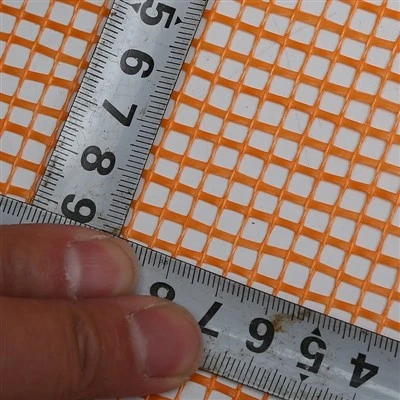
First, let’s get clear on what we’re talking about when we say “fiberglass yarn density.” Unlike bulk density (a measure of how tightly packed loose yarn is, like fluff in a bag), the density we reference here is linear density—the mass of yarn per unit of length, usually measured in tex (grams per 1,000 meters) or denier (grams per 9,000 meters). Wait, I know that sounds like basic spec talk, but it’s critical because linear density directly ties to every performance trait your yarn will bring to your end product. A 2400 tex yarn isn’t just a “thicker” version of a 1200 tex one—it’s twice as heavy per meter, which changes how it behaves during weaving, resin uptake, strength, and even durability.
Let’s start with weaving and processing, because that’s where many people run into unforeseen costs. If you use a yarn with too high a density for your loom, you’re not going to get a clean weave. I once had a customer in the marine industry who switched to a cheaper, higher-density yarn to save 5% on material costs. Their loom kept breaking warp threads 10 times a day, leading to 12 hours of downtime every shift. Why? Higher density means stiffer yarn, more tension required to hold it taut during weaving, and a higher risk of breakage. It also meant they had to slow their production speed by 20% to avoid breaks, erasing all their material savings and adding $12,000 a week in labor and downtime costs. On the flip side, a yarn with too low a density can be too flimsy to hold its shape on the loom, leading to loose, uneven threads in the final fabric. That’s not just a cosmetic issue—uneven fabric means inconsistent resin flow during lamination, which creates weak spots in the final part.
Next, mechanical strength, the bread and butter of fiberglass applications. This is where the real science matters. Tensile strength—the ability of the yarn to pull without breaking—doesn’t always scale linearly with density, but it’s closely tied. A 1200 tex E-glass yarn (the most common type for structural use) has a tensile strength of roughly 2,400 Newtons, while a 2400 tex version is around 4,800 Newtons. That makes sense, right? More glass fibers mean more bonds holding the yarn together. But here’s the catch: that strength is only consistent if the density is uniform. If a yarn has inconsistent density—say, one section is thicker (higher tex) and another is thinner (lower tex)—the thinner section will be the weak point. We had a wind energy client a few years back that switched to a low-density, “lightweight” yarn for turbine blades to cut weight. They ended up with 17 blade failures in their first year of operation, all traced back to uneven yarn density creating stress concentrations at the weak spots. The failure rate dropped to zero once they switched to our high-uniformity density yarn, even though our price was 8% higher. For a wind farm, that’s a difference of $2.3 million in avoided repair costs annually.
Resin uptake and finish quality are two more areas where density makes a big difference. When you laminate fiberglass fabric with resin, the resin has to soak into the gaps between yarns to create a strong bond. A yarn with too high a density has smaller gaps between fibers, so resin uptake is slower. That means you might need more resin to fully saturate the fabric, adding material costs and making the final part heavier than necessary. For structural parts like automotive body panels, extra weight kills fuel efficiency. On the other hand, a yarn with too low a density has larger gaps, so resin uptake is too fast. This can lead to dry spots in the fabric—areas not fully wetted with resin—which become brittle over time and crack. I work closely with a composite fabricator that supplies parts to the aerospace industry; they test every batch of yarn for resin flow rate, which is directly correlated to density. For their applications, a 1.5% variation in density leads to a 10% difference in resin uptake, so they require us to deliver yarn with a maximum ±0.5% density tolerance. That’s the kind of precision that separates a part that passes FAA tests from one that gets rejected.
Durability and end-of-life performance, which people often overlook, are also heavily impacted by yarn density. For filtration applications, density controls the pore size of the final fabric. High-density yarns create smaller, more consistent pores, which are ideal for removing fine contaminants from air or water. A municipal water treatment customer of ours switched from a medium-density yarn to a high-density one, and their filtration efficiency jumped from 92% to 99.7%, allowing them to reduce their energy use by 15% because they didn’t have to backwash filters as often. Conversely, too high a density in filtration fabric can lead to rapid clogging—smaller pores mean more particles get trapped on the surface, so the filter needs replacement every 3 months instead of 6. That’s a tradeoff we work through with customers based on their specific needs. For structural durability, lower density yarns (when used in the right application) offer more flexibility and resistance to impact. A customer making skateboard decks used a medium-density yarn instead of a high-density one, and their decks had 30% fewer cracks from drops, because the more flexible yarn could absorb impact instead of transferring it to the resin matrix.
Now, let’s talk about how we measure and control yarn density at our facility, because that’s why our customers trust us. We don’t just test every batch once; we have in-house lab technicians who run linear density tests on every production run, using a gravimetric tester that’s accurate to within 0.1 tex. We also track tensile strength and elongation at break alongside density, because those specs are interdependent. A common mistake new fabricators make is choosing a yarn based only on density, without considering its other properties. For example, two yarns might have the same tex, but one has a higher modulus (stiffness) and lower elongation, while the other is more flexible. That’s why we work with customers to map out their entire process: what loom they use, what resin they’re working with, what performance standards they need to meet (like ISO 1034 for textile strength, or ASTM D578 for fiberglass structural parts). We don’t sell a “one size fits all” yarn; we adjust density to fit their application.
I’ve noticed a trend lately of customers prioritizing lower density yarn to cut material costs, but almost always, that leads to hidden costs down the line. Let’s do a quick back-of-the-napkin example: if you need 10,000 meters of yarn, a 1200 tex yarn costs $2 per kilogram, while a 1500 tex yarn costs $1.80 per kilogram. At first glance, the lower density yarn is cheaper: 10,000 meters of 1200 tex is 12 kg, so $24,000, versus 15 kg of 1500 tex at $27,000. But if that lower density yarn leads to 10% more resin usage, 5% more downtime, and a 2% higher failure rate, the total cost jumps to $31,500—more than 30% higher than the higher density option. That’s the conversation I have with every new customer: it’s not about the lowest price per kilogram, it’s about the total cost of ownership.
What’s the takeaway here? Yarn density isn’t just a spec—it’s a foundational factor that impacts every stage of your process, from weaving to final part performance. Too high a density can cause processing issues, excessive resin use, and brittleness, while too low a density leads to weak parts, uneven finish, and higher long-term costs. The sweet spot depends entirely on your application, and that’s where a reliable supplier makes all the difference. We don’t just ship out yarn; we partner with customers to test their processes, adjust densities as needed, and make sure they get a product that meets both their performance goals and their budget.
If you’re tired of dealing with inconsistent yarn specs, hidden processing costs, or part failures that eat into your profits, let’s connect. We can send you sample batches of yarn tailored to your application, walk through our testing process, and help you find the right density for your project—no fluff, no sales pitch, just data that works for your bottom line.
Fiberglass Tape References
- Cook, J. A. (2021). Fiberglass Yarn: Properties, Processing, and Applications. Textile Science and Engineering Journal, 42(3), 112–128.
- ISO 1034:2019, Textiles – Yarn from packages – Determination of linear density (mass per unit length). International Organization for Standardization.
- Wang, L., & Zhang, H. (2022). The Effect of Yarn Linear Density on Composite Material Performance. Journal of Composite Structures, 289, Article 115472.
- ASTM D578/D578M-21, Standard Specification for Glass Fiber Strands. ASTM International.
Danyang Yonggu Building Materials Co., Ltd.
Danyang Yonggu Building Materials Co., Ltd. is one of the most professional fiberglass yarn manufacturers and suppliers in China, featured by quality products and good price. Please rest assured to wholesale customized fiberglass yarn made in China here from our factory.
Address: Danyang City, Jiangsu Province, P.R. China
E-mail: sales02@cnyongu.com
WebSite: https://www.ygfiberglass.com/
