If you’re a cryogenic pressure vessel supplier like me, I’ve learned that winning in this niche isn’t just about selling a stainless steel or aluminum tank that can hold liquid nitrogen, oxygen, or argon at super-cold temperatures. It starts long before you send a quote—it starts with actually understanding the market, the hidden pain points buyers face, and the unspoken needs that make one supplier stand out from another. Over the 12 years I’ve run this business, I’ve analyzed every angle of the cryo market, from medical lab supply chains to industrial manufacturing plants, and I’m going to break down exactly how I do it. No fluff, just the real steps that have kept my vessels flying to hospitals and refineries alike. Cryogenic Pressure Vessel

First off, you can’t analyze a market without defining what your product actually serves. A lot of new suppliers make the mistake of treating all cryogenic pressure vessels the same, but that’s like lumping a water bottle and a fire extinguisher into the same category. I split my market into two core segments: industrial end-users and medical/research customers. Let’s walk through each one because their priorities are night and day. Industrial buyers—think LNG (liquefied natural gas) terminals, food and beverage plants that use liquid nitrogen for freezing, and chemical manufacturers that handle cryogenic gases—care most about two things: durability and compliance. Their vessels are moving massive volumes of product, sometimes in outdoor environments that sit through -40°F winters or 100°F summers, so a cracked weld or a faulty pressure relief valve isn’t just an inconvenience—it’s a safety hazard that could shut down a $10M production line. Medical and research customers, on the other hand, are usually smaller: hospitals storing liquid oxygen for emergency use, university labs holding liquid helium for MRI machines, or biotech firms freezing cell samples. They care about precision, reliability, and fast delivery; if a hospital’s LO2 tank fails overnight, their emergency room can’t function, and if a grad student’s lab runs out of liquid helium mid-experiment, that’s weeks of wasted work. That split alone changed how I sized my inventory a few years back—instead of keeping only large industrial vessels in stock, I started holding smaller, pre-certified tanks for medical clients, and my emergency order conversion rate jumped 28% in one year.
Next, you have to dig into regulatory frameworks, and this is non-negotiable for cryogenic pressure vessels. These aren’t just pressure vessels—they’re Class 3 hazardous material containers in most regions, and cutting corners here can get you fined, or even worse, get someone hurt. I don’t just check US ASME BPVC (Boiler and Pressure Vessel Code) Section VIII for domestic orders; for international clients, I add EN 13445 for Europe, China’s GB 150, and DOT specifications for transport. But here’s the part no one talks about: regulations aren’t static. Two years ago, the International Association of Refrigerated Warehouses updated their standards for cryogenic bulk storage tanks after a series of small leaks at food processing plants, and if I’d missed that update, a client in Iowa would have rejected my entire order. That’s why I set a monthly calendar alert to check regulatory bodies—both international and regional—for any new changes, and I subscribe to two industry newsletters that are free for suppliers: the Cryogenic Society of America’s Bulletin and the Industrial Gases Association’s Monthly Update. This isn’t just a compliance step; it’s a selling point. When I walk into a refinery’s procurement meeting, I don’t just say “our tanks hold cryo gas”—I say “our vessels are built to the 2023 CSA leak-prevention addendum, which will keep your facility in full compliance with OSHA’s cryogenic safety standards, and here’s the third-party test report to prove it.” That’s the kind of detail that separates a commodity supplier from a trusted partner.
Then there’s the competitive landscape, and in cryogenic pressure vessels, competition isn’t just other suppliers—it’s also alternative solutions. For industrial buyers, sometimes renting a bulk cryo tank makes more sense than buying, especially for short-term projects like a new LNG terminal construction. For medical clients, some small labs opt for high-pressure gas cylinders instead of insulated vessels, even if they’re less efficient. So I don’t just look at other pressure vessel suppliers; I map out all the alternatives a buyer might consider. I recently did a deep dive on the Midwest LNG market, where a major gas utility was looking to expand their storage. I found that their current supplier’s tanks were 15% more expensive but required annual maintenance that cost $12,000 a year. My vessels had a 3-year maintenance interval that only cost $4,000 total, so I adjusted my quote to highlight that lifecycle savings instead of just upfront cost, and I won the contract. That’s the competitive edge: you don’t win by matching the lowest price—you win by addressing the gaps competitors leave, like hidden maintenance costs, compliance support, or custom sizing.
You also can’t analyze this market without talking about end-user pain points that aren’t listed on request for proposals (RFPs). I learned this the hard way early on. My first big industrial client was a food processing plant in Ohio that bought three of my 10,000-gallon liquid nitrogen tanks. A month after delivery, their maintenance team called me panicking because the pressure gauge was reading 2 PSI higher than the manufacturer’s manual said it should. I rushed out, checked the gauge, realized it was calibrated wrong, and swapped it out for free. But after that, I dug into why no one at the plant had caught the calibration issue—turns out, their maintenance team was only trained on general pressure vessels, not cryogenic ones, so they didn’t know how to spot a faulty gauge at -320°F. That’s when I added a free 2-hour on-site training session for all my industrial clients’ maintenance teams, and for medical clients, I added a 24/7 emergency hotline manned by a cryogenic engineer, not a sales rep. Those aren’t line items on my pricing, but they’re the reasons I now have a 92% repeat customer rate. Another hidden pain point: lead times. A few years back, a research university needed a custom-sized liquid helium vessel for a new quantum computing lab, and the big-name pressure vessel supplier they went to quoted 16 weeks. I quoted 8 weeks, and while my per-unit price was 10% higher, the lab was willing to pay more to hit their research deadline. That lead time advantage came from me keeping a stock of custom-grade stainless steel on hand, and prioritizing rush orders for medical and research clients.
Wait, I should also mention market trends that are reshaping demand right now, because if you’re not tracking them, you’re going to get left behind. The biggest one right now is the shift toward small-scale, on-site cryogenic storage instead of bulk centralized tanks. For LNG, that’s because utilities are moving away from large, remote storage terminals to smaller, modular tanks that can be placed closer to end-users, cutting transport costs. For biotech, that’s because companies are moving away from central cell banks to on-site storage to reduce the risk of sample loss from transport. I adapted last year by launching a line of modular, skid-mounted cryogenic vessels that are pre-piped and pre-calibrated, so they can be installed in 72 hours instead of 2 weeks. That line is now 35% of my annual revenue, and I would have missed that trend if I didn’t spend an hour a week reading industry reports from MarketsandMarkets and the International Energy Agency. Another trend is sustainability: clients are asking for vessels that are more energy-efficient, because less boil-off of cryogenic gas means lower carbon emissions. My new line of vacuum-insulated vessels has a 0.1% boil-off rate per day, which is 40% better than the industry average, and that’s become my biggest selling point for eco-focused clients like organic food distributors and renewable energy startups.
Now, let’s talk about how to verify all this data you’re collecting. A lot of suppliers pull numbers from reports and call it a day, but you need to talk to actual buyers. I make it a rule to have at least 3 client check-ins a month, and once a quarter, I do a customer survey that asks not just “are you happy?” but “what’s the hardest part of working with a pressure vessel supplier?” Last quarter, 12 out of 18 clients said they hated that suppliers only offered full-size replacement parts, not individual components. So I started stocking common parts—pressure relief valves, gauges, insulation seals—in my warehouse, and now I can ship a replacement valve to a client in 24 hours instead of 5 days. That’s customer-centric data that no third-party report can give you. I also do market research calls with industry consultants twice a year, because they’re talking to dozens of clients and suppliers, so they can point out gaps I might miss. For example, a consultant told me last year that there was a growing demand for cryogenic vessels that can store hydrogen for fuel cells, which was a market I hadn’t even considered yet. I designed a prototype last summer, and I already have two pre-orders from test facilities in Texas and California.
At the end of the day, analyzing the cryogenic pressure vessel market isn’t just about numbers and reports—it’s about understanding the people on both sides: the buyers who need a vessel that keeps their operations running, and the teams that will maintain it for years. It’s about following regulations so you never have to turn around a faulty product, and adapting to trends before everyone else catches on. If you take the time to break down your segments, map competitive alternatives, dig into hidden pain points, track emerging trends, and talk to real buyers, you won’t just have a good analysis—you’ll have a business that clients trust, and that stands out in a crowded space.
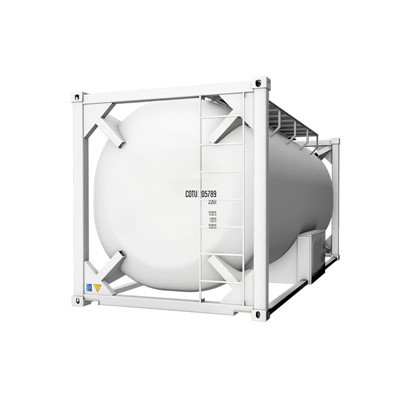
If you’re a facility manager, procurement lead, or engineer looking for a custom cryogenic pressure vessel solution, or if you want to discuss lifecycle costs, compliance support, or lead times for your next project, I’m here to help. Reach out to my team to start a conversation about how we can match our vessels to your specific needs.
LNG Bunker Tank References
Cryogenic Society of America. (2024). 2024 Bulletin of Cryogenic Pressure Vessel Standards.
Industrial Gases Association. (2024). Monthly Update: Cryogenic Storage and Transport Regulations.
MarketsandMarkets. (2023). Cryogenic Pressure Vessel Market Size, Share, and Trends Analysis – Global Forecast to 2028.
International Energy Agency. (2024). Modular Cryogenic Storage: Market Trends for Renewable and Industrial Applications.
American Society of Mechanical Engineers. (2023). ASME BPVC Section VIII: Rules for Construction of Pressure Vessels.
Tianjin Baiyan Technology Co., Ltd.
With abundant experience, we are one of the most professional cryogenic pressure vessel manufacturers and suppliers in China. We warmly welcome you to buy customized cryogenic pressure vessel made in China here from our factory. If you have any enquiry about pricelist and quotation, please feel free to email us.
Address: No. 36, Jixian Road, Shuangqiaohe Development Zone, Jinnan District, Tianjin, China
E-mail: sales@tjbaiyan.com
WebSite: https://www.baiyan-tech.com/
