Hey folks, I’m Jake, a sales lead here at a rack and pinion actuator supply company that’s worked with medical device teams for over a decade. Let’s cut to the chase—if you’re building medical equipment, slapping a random actuator on it and calling it a day is a fast track to headaches. From surgical robots to patient bed adjusters, the gear you pick can’t just move things; it has to meet super specific, non-negotiable rules, especially for rack and pinion setups. I’ve seen too many teams skip these requirements, then deal with recalls, regulatory fines, or even worse—equipment failing mid-use during a procedure. So let’s break down exactly what you need to nail if you’re using a rack and pinion actuator in medical gear, no jargon overload, just the stuff that matters. Rack And Pinion Actuator

First up, compliance. If you’re working in the medical space, this isn’t a “nice to have”—it’s the first box you have to tick. I’ve had engineers come to me saying, “We just need something that moves 50 pounds, can we grab a standard actuator?” and I have to stop them right there. Medical devices live and die by FDA (for US markets), CE (for EU), and ISO 13485 certifications, period. Let’s talk numbers: ISO 13485 is the global quality management system for medical devices, and if your actuator doesn’t have that, you can’t sell it to hospitals or clinics, full stop. We only source our rack and pinion actuators from manufacturers that pass ISO 13485 audits, because cutting corners here just means your team will waste weeks going back through regulatory paperwork.
Then there’s materials safety. Medical equipment touches patients—sometimes for hours, sometimes during invasive procedures—so the stuff your rack and pinion is made of can’t leach chemicals, harbor bacteria, or cause allergic reactions. Standard steel racks and pinions? Bad news. If they rust, even microscopically, those metal particles can contaminate a sterile surgical site. Most of our medical-focused actuators use 316L stainless steel, which is super corrosion-resistant, and some even get a passivated finish to smooth out tiny gaps where germs can hide. We also offer options with food-grade or biocompatible coatings for patient beds or diagnostic equipment that’s in constant contact with skin. No cheap zinc plating here—those wear off quick and leave residue that can irritate patients, especially those with sensitive skin.
Next, precision. Medical gear doesn’t have room for fumbling moves. Take surgical robots, for example—they need to adjust by millimeters to not nick tissue. A rack and pinion actuator’s gear has to deliver consistent, repeatable motion every single time. I once worked with a team building a portable ultrasound machine that used a rack and pinion to tilt the scanning arm; their first actuator was off by 2mm every few uses, which made ultrasound images blurry. They switched to our custom-machined racks with a backlash of less than 0.05 degrees, and that fixed it instantly. Backlash is the gap between the rack and pinion teeth—too much, and motion is inconsistent. For medical uses, you want a backlash so small you can’t feel it with a calliper, basically. Also, positional accuracy matters: if a patient’s MRI table isn’t positioned exactly where it’s supposed to be, you get bad scans and have to re-run the test, which is a hassle for patients and a cost for hospitals. Our rack and pinion actuators are calibrated to hold a positional tolerance of ±0.1mm, which checks that box every time.
Reliability and durability are non-negotiable too. Medical equipment isn’t a throwaway gadget—surgical robots, intensive care beds, and dialysis machines need to run 24/7 in some cases, and they can’t fail. Think about a patient’s bed that adjusts height: if the actuator locks up mid-adjustment, that’s a safety hazard. We test all our medical rack and pinion actuators to survive 1 million+ cycles, which is way more than the average consumer actuator. How do we do that? We use hardened alloy steel for the pinion and rack teeth, so they don’t wear down after thousands of uses. We also add sealed bearings to keep out dust, moisture, and cleaning chemicals—hospitals use harsh disinfectants, so an actuator that can’t handle being wiped down with bleach or alcohol is useless. One of our clients makes mobile operating tables that get cleaned 10+ times a day; their old actuator failed after 6 months because water seeped into the gear, but ours are rated to IP65, meaning they’re totally dust-tight and can handle high-pressure washes. That’s the level of durability you need here.
Safety is another big one, and it’s not just about the actuator itself—it’s about how it interacts with the medical device’s system. Medical gear has to have fail-safes, right? If power cuts out, the actuator shouldn’t drop a patient’s bed or a surgical arm. Our rack and pinion actuators come with built-in brake options—spring-loaded brakes that engage automatically when power is lost, so there’s no sudden movement. We also make sure the load capacity is rated with a 3:1 safety factor, meaning if the actuator is rated for 100 pounds, it can actually handle up to 300 pounds before failing. Why? Because some teams overload actuators without realizing—maybe a surgeon adds extra tools to a robotic arm, or a patient is heavier than average. A safety factor prevents that from causing an accident. Also, no sharp edges anywhere on the actuator—hospitals have strict rules about equipment that can cut or snag staff or patients, so all our medical units are rounded and have no exposed metal edges.
Compatibility is often overlooked, but it’s a huge headache if you skip it. A rack and pinion actuator is only as good as how it works with your device’s control system. Most medical equipment uses PLCs (programmable logic controllers) or custom microcontrollers, so your actuator needs to be compatible with standard voltage ranges—12V DC, 24V DC, that’s the sweet spot for most portable and bedside gear. We also offer customizable feedback options, like encoders that tell your control system exactly where the actuator is at any time. That’s critical for things like linear stages in blood analyzers, where the actuator has to stop at a specific point to load a sample. If your encoder is incompatible, you’ll end up with a device that either stops too early or goes past the sample well, ruining a test. We also can adjust the stroke length of the rack to fit your exact device size—no forcing a 10-inch rack into a 8-inch slot, that’s a waste of time and materials.
Wait, let’s talk about cleaning and maintenance too. Medical equipment has to be easy to sanitize, because hospitals have to prevent cross-contamination. Our rack and pinion actuators don’t have any crevices where bacteria can hide—no open gear casings, no loose screws, all parts are sealed. We don’t use any lubricants that break down when exposed to disinfectants, either. Most consumer actuators use regular grease that turns gummy after a few months of cleaning, but we use NSF H1 food-grade lubricants that are approved for incidental food contact, which means they’re safe for medical use and won’t degrade with harsh chemicals. Also, maintenance should be minimal—hospitals don’t have time to take apart actuators every month to re-lubricate them. Our medical rack and pinion units are designed to be maintenance-free for at least 5 years under regular use, which cuts down on downtime and costs.
Now, let’s bust a common myth: you don’t have to go for the most expensive actuator to meet these requirements. A lot of engineers think “medical grade” means top-tier pricing, but we work with teams of all sizes, from small startups building portable diagnostic devices to big companies making operating rooms equipment. We can tailor a rack and pinion actuator to your exact needs without overspending—no need to pay for features you don’t use, like extra high load capacity if you only need 20 pounds of force. Just tell us what your device does, the environment it’s in, and your regulatory requirements, and we can build something that fits.
If you’re in the middle of designing a medical device right now, and you’re wondering if your current actuator checks all these boxes, I’d encourage you to reach out. We’ve helped hundreds of teams avoid costly mistakes—like one startup that was about to launch a portable orthopedic surgical table with a standard actuator, which would have failed their FDA inspection because it didn’t have a biocompatible coating. We swapped it out in a week, got them back on track, and saved them tens of thousands in delays. No sales pitches, no confusing jargon—just straight talk about what your medical gear needs to be safe, compliant, and reliable.
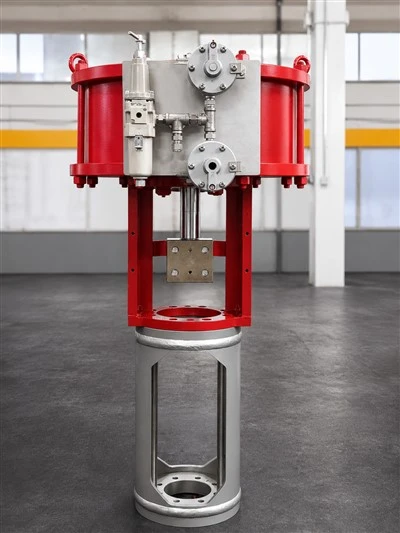
If you’ve got questions, want to walk through your specific project, or need a custom rack and pinion actuator quote, don’t hesitate to connect with our team. We’re here to make sure your medical equipment works when it matters most.
Pneumatic Rotary Actuator References
- ISO 13485:2016, Medical devices — Quality management systems — Requirements for regulatory purposes
- FDA 21 CFR Part 820, Quality System Regulation for Medical Devices
- "Design and Selection of Linear Actuators for Medical Applications", Motion System Design, 2022
- "Biocompatibility Requirements for Medical Device Components", Journal of Medical Engineering & Technology, 2021
- IP Rating Standards for Enclosures, International Electrotechnical Commission (IEC) 60529, 2020
Zhejiang Bigtork Valve Automation Co., Ltd.
Zhejiang Bigtork Valve Automation Co., Ltd. is one of the leading rack and pinion actuator manufacturers and suppliers in China. We warmly welcome you to buy customized rack and pinion actuator at competitive price from our factory. Contact us for more details.
Address: 98 Yuanqu Avenue,Anfeng Industrial Zone,Oubei,Yongjia,Zhejiang,China.
E-mail: sales@bigtork.com
WebSite: https://www.bigtork.com/
