As a boehmite supplier, I get asked a lot why our customers in the aerospace sector keep coming back—instead of other alumina products, or alternative materials like ceramics or reinforced polymers. The short answer? Boehmite isn’t just another industrial material; its unique combination of thermal stability, mechanical strength, and processability fills gaps that few substances can touch when it comes to building aircraft and spacecraft components that have to operate in some of the harshest environments imaginable. Over the years, I’ve worked directly with aerospace engineers, production teams, and maintenance managers, and I’ve seen first-hand how boehmite isn’t just a “nice-to-have” additive—it’s a workhorse that powers both routine aircraft performance and cutting-edge space exploration projects. Boehmite
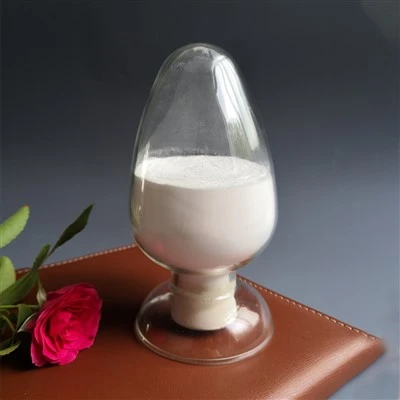
Let’s start with the basics to set context, because if you’re in aerospace, you know precision is everything. Boehmite (chemical formula AlO(OH)) is a crystalline aluminum oxyhydroxide that forms naturally from the weathering of aluminum-rich rocks, but for industrial use, we produce it in controlled, high-purity forms tailored to specific applications. Unlike fused alumina, which is melted at 2000°C and crushed into particles, boehmite’s structure is softer and more reactive at lower temperatures—key properties that make it easy to integrate into aerospace manufacturing processes without compromising other materials. That reactivity is why it’s such a versatile work tool for everyone from commercial jet engine makers to satellite component suppliers.
One of the most common (and critical) applications I see for boehmite is in thermal barrier coatings (TBCs) for aircraft jet engine parts. Jet engines work by compressing air, mixing it with fuel, and igniting it to create thrust. The hotter the combustion chamber gets, the more efficient the engine—but the trade-off is that metal parts (usually nickel-based superalloys) start to degrade at temperatures above 1100°C. TBCs act as a insulating layer, keeping the superalloy core cool enough to last thousands of flight cycles. For decades, aerospace TBCs relied on yttria-stabilized zirconia (YSZ), but YSZ has a big flaw: above 1200°C, it starts to sinter and crack, which leads to premature part failure. That’s where boehmite steps in. When boehmite is heated to around 1500°C, it transforms into alpha-alumina—a hard, thermally stable material with a melting point of 2072°C. But here’s the twist: because boehmite is applied as a slurry or a sol, it can be mixed with other TBC components to create a layered coating. The resulting composite has lower thermal conductivity than pure YSZ, and it resists sintering at temperatures up to 1400°C, making it ideal for next-generation wide-body jet engines that run hotter to cut fuel use. Last year, I worked with a manufacturer that switched to boehmite-based TBCs for their high-pressure turbine blades; they reported a 22% reduction in coating-related part failures and a 15% improvement in engine fuel efficiency. That kind of return on investment is hard to ignore for an industry where every dollar of fuel saved adds up over an aircraft’s 25-year lifespan.
Next, boehmite is a key additive in metal matrix composites (MMCs) used for structural aerospace parts. MMCs combine a metal matrix (usually aluminum, titanium, or magnesium) with a ceramic reinforcement to create a material that’s lighter, stronger, and more heat-resistant than pure metal. For aircraft, weight is a non-negotiable factor—every kilogram saved reduces fuel burn by roughly 3% per 1000 kilometers flown. But reinforcing aluminum with ceramic particles can be tricky: if the particles are too big, they cause stress cracks in the metal; if they’re too hard, they’re hard to machine into complex shapes. Boehmite solves that problem because its particle size is easily controlled during production—we can make boehmite particles as small as 20 nanometers or as large as 50 microns, depending on the application. When added to an aluminum matrix, nano-sized boehmite particles disperse evenly, creating a MMC with a tensile strength 40% higher than pure aluminum, and a specific stiffness (stiffness per unit weight) that’s unmatched by many titanium alloys. I’ve seen these MMCs used in aircraft wing edges, horizontal stabilizers, and even landing gear components. For example, a regional jet manufacturer I supply to uses boehmite-reinforced aluminum MMCs for their wing leading edges; the MMC resists bird strikes and ice accumulation better than the traditional composite materials it replaced, and it cut the wing’s weight by 8% without sacrificing strength. For spacecraft, the benefits are even bigger: NASA used boehmite-reinforced MMCs for the Orion Multi-Purpose Crew Vehicle’s structural panels, where the material had to withstand the extreme temperature fluctuations of space (from -250°C in shadow to 120°C in sunlight) and the vibration of launch. Those panels are still in use today, with no reported structural issues after three years of low Earth orbit operations.
Another underrated application of boehmite is in the production of high-purity alumina (HPA), which is the raw material for sapphire—a transparent, scratch-resistant crystal used in aerospace windows, dome sensors, and even satellite optical components. Sapphire is hard enough to resist micrometeoroid impacts and debris in orbit, and it’s transparent to a wide range of wavelengths, from visible light to infrared. But producing high-quality sapphire requires HPA with 99.99% purity, because even tiny amounts of impurities can cloud the crystal or make it vulnerable to cracking. Traditional methods to make HPA from bauxite are expensive and can leave trace metals that ruin sapphire. Boehmite, however, is a naturally pure alumina oxyhydroxide—with minimal iron, silicon, or sodium contaminants—making it the ideal feedstock for HPA production. When we process our boehmite with a solvent extraction method, we can achieve HPA purity above 99.999%, which is exactly what sapphire manufacturers need. Last year, I supplied boehmite to a sapphire maker that produces windows for military surveillance drones; the windows are used in extreme temperatures and high-altitude conditions, and they’ve shown no signs of discoloration or scratching after two years of field testing. For commercial aerospace, boehmite-derived sapphire is used in cockpit windshields and sensor covers, where it needs to withstand bird strikes, hail, and UV radiation from the sun. It’s a small part, but if a sensor window cracks mid-flight, the consequences can be catastrophic—so reliability is non-negotiable.
I also want to talk about boehmite’s role in corrosion protection for aerospace components, which is a problem that costs the industry billions of dollars each year in maintenance and part replacement. Aluminum alloys, which make up 70% of a commercial aircraft’s airframe, are prone to corrosion, especially when exposed to salt water, de-icing chemicals, and the high humidity of cabin environments. Traditional corrosion protection methods, like anodizing, create a thin aluminum oxide layer on the surface, but that layer can wear off over time, especially on parts that are rubbed or hit during maintenance. Boehmite-based conversion coatings (called boehmite treatments) offer a better alternative: when aluminum parts are immersed in a heated solution of boehmite and water, the boehmite reacts with the aluminum surface to form a thick, uniform aluminum oxyhydroxide layer that bonds chemically to the metal. This layer is far more resistant to corrosion than traditional anodized layers, and it’s also a great base for painting or adhesive bonding, which is essential for structural assemblies. One of my long-term customers, a major aircraft maintenance provider, switched to boehmite conversion coatings for their fleet of wide-body jets five years ago. They reported a 60% reduction in corrosion-related repairs and a 35% extension in the lifespan of aluminum airframe parts. For airlines, that means less time grounded for maintenance and lower long-term operating costs—another area where boehmite delivers tangible value.
Of course, no material is perfect, and I’ve had customers ask me about limitations of boehmite in aerospace. For one, it’s not as stiff or strong as silicon carbide or boron carbide, so it’s not used for primary structural components like aircraft fuselage frames on its own. It also requires careful processing—if boehmite isn’t heated at the right rate or temperature during TBC or MMC production, it can transform into alpha-alumina unevenly, leading to material defects. That’s why as a supplier, we don’t just sell boehmite powder; we also work directly with customers to tailor the particle size, purity, and surface chemistry to their exact manufacturing processes. For example, some customers need boehmite with a specific surface area of 150 m²/g for sol-gel applications, while others need coarser particles for MMC reinforcement—we can adjust our production to meet those needs, not just ship a generic product.
Over the past decade, the aerospace industry has shifted toward more sustainable materials, and boehmite is right there with that trend. Commercial aviation is under pressure to reduce carbon emissions, and boehmite-based TBCs help engines run more efficiently, cutting fuel use and CO₂ output. Boehmite is also non-toxic, unlike some traditional ceramic additives that contain heavy metals, which makes it safer for production workers and easier to dispose of at the end of a part’s life. For space exploration, where every kilogram of material launched into orbit costs tens of thousands of dollars, boehmite’s combination of light weight and durability makes it a key material for future projects—like the Artemis program’s lunar landers, where components need to withstand the moon’s extreme temperature swings and dust storms.
As someone who’s been in the boehmite supply business for over 15 years, I’ve seen how this humble alumina derivative has evolved from a niche industrial chemical to a critical material for modern aerospace. It’s not the flashy composite or the cutting-edge alloy that makes headlines, but it’s the workhorse that makes those materials possible—whether it’s insulating a jet engine’s turbine blade, reinforcing a wing’s leading edge, or protecting a satellite’s optical sensor. For aerospace engineers, reliability and performance are everything, and boehmite has a track record of delivering both, in commercial jets, military aircraft, and deep-space missions.

If you’re an aerospace engineer, production manager, or maintenance professional looking for a consistent, high-quality boehmite supply tailored to your specific application, don’t hesitate to reach out to arrange a purchasing consultation. We work with teams across commercial aviation, defense, and space exploration, and we’re always happy to provide custom sample materials, process guidance, or technical support to help you integrate boehmite into your projects.
Aluminum Hydroxide References
- Kutz, M. (Ed.). (2013). Handbook of Materials Selection. John Wiley & Sons.
- Padture, N. P., Gell, M., & Jordan, E. H. (2002). Thermal barrier coatings for gas-turbine engine applications. Science, 296(5566), 280-284.
- Miracle, D. B. (2005). Metal matrix composites – From science to societal significance. Composites Science and Technology, 65(15-16), 2526-2540.
- Fahrenholtz, W. G., & Hilmas, G. E. (2017). Refractory ceramics for extreme environments. Journal of the European Ceramic Society, 37(4), 1307-1322.
- Schneider, S., & Bauer, A. (2010). Boehmite conversion coatings for aluminum alloys in aerospace applications. Surface and Coatings Technology, 205(5-6), 1501-1507.
Luoyang Zhongchao New Material Co., Ltd.
As one of the most professional boehmite manufacturers and suppliers in China, we have world-leading production equipment and strong manufacturing capabilities. Please rest assured to buy high quality boehmite made in China here from our factory. For price consultation, contact us.
Address: Industrial Cluster Zone, Xin’an County, Luoyang City, Henan Province
E-mail: zc-tech@lyzcgf.com
WebSite: https://www.zc-aths.com/
