If you’ve ever stood on a shop floor next to a gear skiving machine, you’ve probably wondered: why does this thing move so fast some days and feel so sluggish on others? As a gear skiving machine supplier who’s worked on these things for over a decade, I get that question all the time—and it’s not just a random “how quick is it?” query. Productivity here isn’t just about how fast a machine cuts a tooth; it’s a mix of part complexity, setup time, tool life, and even the little tweaks you don’t notice until production grinds to a halt. Let’s break this down like we would on the shop floor, no fancy jargon that makes you nod and pretend you get it. Gear Skiving Machine
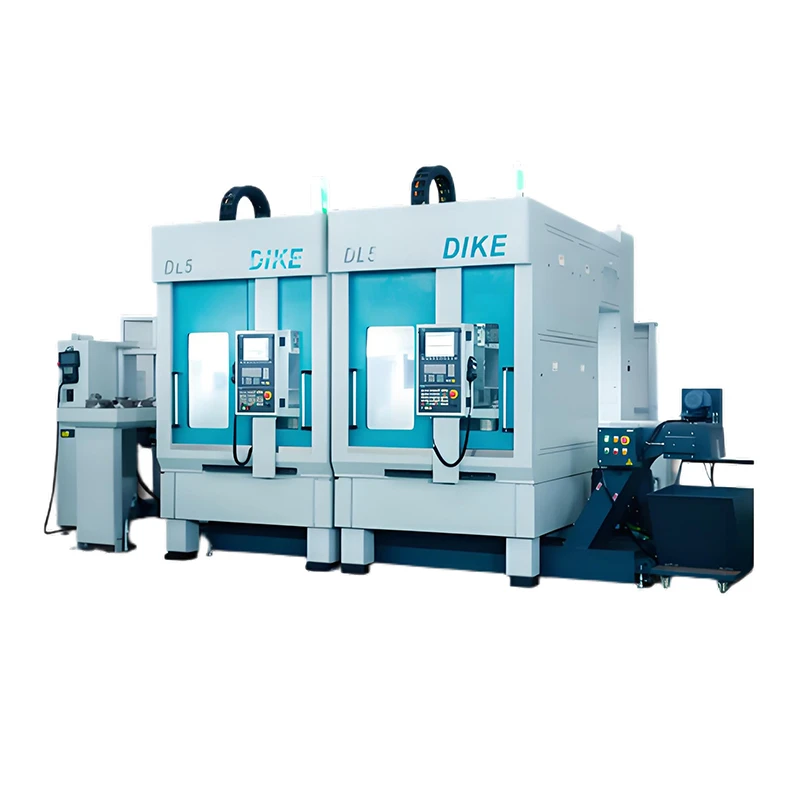
First off, let’s stop mixing up “speed” with “productivity.” A lot of guys new to gear manufacturing see a skiving machine moving at 1,500 strokes per minute and think that’s the end-all. But here’s the thing: a skiving machine’s actual productivity is all about how many finished, good gears it spits out per hour, not how fast it can swing its cutter. I’ve seen a machine cranking out 800 small lawnmower gears an hour but only 120 big truck transmission gears, even if the stroke rate is the same. That’s where the real productivity math lives.
Let’s start with the basics that every operator deals with: part type and complexity. Small, simple external gears—like the ones for power tools or bicycles? Those are a breeze. A good mid-sized skiving machine will knock out 500 to 1,000 of those an hour, depending on the module (that’s gear talk for tooth size, for the uninitiated). But when you get into internal gears, or gears with tight tooth profiles (like for automatic transmissions, where a tiny misalignment causes slipping), everything slows down. Internal gears are trickier because the cutter has to reach inside the gear blank, so stroke rate drops, and you can’t rush the feed without getting chipped teeth. I’ve had customers tell me their internal gear productivity is 30-50% lower than external gear productivity on the same machine—and that’s not the machine being bad, that’s just the part being more work.
Then there’s tooling, which is the unsung hero here. You can have the fanciest skiving machine on the market, but if your cutter is cheap or dull, productivity plummets. A high-quality solid carbide cutter for gears will last 1,500 to 3,000 pieces before needing a regrind, while a budget HSS cutter might only make 500. Dull cutters don’t just slow down—they cause scrap. I’ve seen a shop go from 600 good gears an hour to 380 when they switched to cheap cutters, because every 5th or 6th gear had a chipped tooth. That’s not just slower; that’s wasted material and labor. The best shops I work with keep spare cutters on hand and change them on schedule, not when the cutter starts to feel off. That small routine tweak boosts productivity by 10-15% easy.
Setup time is another big one that people sleep on. If your operator spends 2 hours getting the right fixture, calibrating the cutter angle, and testing the first 3 gears before production starts, that’s 2 hours where the machine isn’t making money. On simple gears, setup might take 15 minutes, but on complex gears with tight tolerances, it can take 2-3 hours. The smart suppliers (like us, hint hint) build machines with quick-change fixtures and automatic calibration tools that cut setup time by half. I had a customer last year who was spending 2.5 hours per setup on a new transmission gear; after they upgraded to our skiving machines with automated setup, they got that down to 45 minutes. Suddenly their daily productivity went from 1,200 gears to 1,900—no extra shifts, just less time waiting for setup.
Wait, let’s talk about stroke rate and feed, because that’s where a lot of machines differ. A lot of entry-level skiving machines max out at 1,000 strokes per minute, while mid-range can hit 1,800, and high-end industrial models go over 2,000. But that’s only useful if the feed rate (how deep the cutter cuts per stroke) matches. If you crank the stroke rate to 2,000 but set the feed too shallow, you’re taking way too many passes per gear. Too deep, and you break the cutter. The sweet spot for most external gears is 1,200-1,500 strokes per minute with a feed rate of 0.1-0.2 mm per stroke. For internal gears, it’s 800-1,200 strokes, because you have to move the cutter in a tighter arc. I’ve watched operators mess this up by cranking the speed to impress the boss, only to have a cutter break every 10 minutes, costing way more downtime than the extra production they gained.
Then there’s material. Gear blanks aren’t all the same. Soft steel (like 1020) is easy to cut, so you can run faster. But hardenable steel (like 4140) or cast iron is tougher, so stroke rate drops, and you need more passes. I had a customer running cast iron gears for construction equipment; their productivity was only 300 an hour, but when they switched to a harder grade of steel that could be cut at a slightly higher speed, they got 420 an hour. That’s a 40% jump just from material choice. And don’t forget about coating on the cutter: a TiAlN coating can let you run 20% faster than an uncoated cutter without wearing out. Again, that ties back to tooling—small changes add up.
Now, let’s get real about what a customer can actually expect. If you’re making small external gears with a mid-range skiving machine, good quality tooling, and smooth setup, you’re looking at 600-1,000 pieces per hour. If it’s complex internal gears, make that 250-500. For large gears (like tractor transmission gears, 200mm+ diameter), it’s way lower—around 80-150 an hour, because you’re not making hundreds, you’re making a dozen, and each one takes time. A lot of suppliers will brag about a 2,000 stroke rate, but they don’t tell you that’s for tiny test gears, not the actual parts you’re running. I always tell customers: ignore the stroke rate number, ask for the actual part count per hour for your specific gear. That’s the only productivity number that matters.
Wait, what about downtime? No machine runs 24/7 without issues. If your shop has old machines that break down every other day, that’s a huge productivity killer. I’ve seen a shop with a 10-year-old skiving machine have 4 hours of downtime a day, bringing their effective productivity down to 40% of what it should be. Newer machines have predictive maintenance sensors that can tell you when a cutter is going bad, or a bearing is wearing out, before it causes a breakdown. We build that into our machines, so customers can cut unplanned downtime by 70% easy. That’s not a small thing—if you’re making 1,000 gears a day and losing 400 to downtime, that’s a lot of lost revenue.
Let me give you a quick example from a recent customer. They were making automotive input gears, external, 50mm diameter, module 2. They had an old skiving machine cranking out 320 gears a day (8 hours of production, minus 2 hours of downtime and setup). They switched to our mid-range skiving machine, upgraded to solid carbide coated cutters, and used our quick-change fixtures. Now they’re making 780 gears a day, same shift, same number of operators. That’s not magic—it’s fixing the things that kill productivity, not just cranking the speed.
A common mistake I see: people equate machine productivity with worker productivity, but they’re not the same. A good operator can tweak the feed and speed to get an extra 50 gears an hour, while a bad operator might run a good machine into the ground, causing more scrap and downtime. That’s why we offer operator training when we sell machines—because a machine is only as productive as the person running it. We teach guys how to check cutter wear, adjust the stroke rate for their part, and minimize setup time. That training alone boosts productivity by 10% for most shops.
Another thing: batch size. If you’re making a 1,000-piece batch, the productivity is way higher than a 100-piece batch, because you don’t waste time setting up and changing cutters every few parts. I’ve seen a shop go from 200 gears an hour on small batches to 550 an hour on large batches, just because they don’t stop as much. That’s a big one for job shops that do lots of small runs vs. high-volume production lines.
So, to wrap this up: the productivity of a gear skiving machine isn’t a one-size-fits-all number. It depends on your gear’s size, type (internal vs. external), complexity, the tooling you use, how fast you can set up, and how much downtime you have. As a gear skiving machine supplier, we don’t just sell you a machine and walk away—we work with you to figure out what your actual productivity goals are, and tweak the machine, tooling, and processes to hit that. If you’re tired of underperforming machines, or want to upgrade your productivity without buying a whole new line, reach out. We can help you figure out exactly what you need to get more good gears out the door, faster.

If you have questions about productivity for your specific gear type, or want to demo a machine, don’t hesitate to connect with our team. We’re here to make your shop run smoother, not just sell equipment.
Double-spindle CNC Lathe References
- Gear Manufacturing Technology: Principles and Practice, Society of Manufacturing Engineers, 2021.
- "Productivity Metrics for Gear Skiving Operations," Journal of Manufacturing Processes, Vol. 45, 2020.
- Tooling Best Practices for High-Volume Gear Production, Gardner Business Media, 2022.
Wuxi DIKE CNC Technology Co., Ltd.
As one of the most professional gear skiving machine manufacturers and suppliers in China, we have world-leading production equipment and strong manufacturing capabilities. Please feel free to buy customized gear skiving machine at competitive price from our factory. Also, pricelist is available.
Address: No. 2, Xianshan Road, Qianqiao Street, Huishan District, Wuxi City, Jiangsu Province, China
E-mail: wxdk@wxdike.com
WebSite: https://www.dike-cnc.com/
