If you’ve ever stood in a construction zone at midday, watched a delivery truck back into a loading bay during evening rush hour, or walked past a warehouse workstation where workers are moving heavy materials, you know how critical high visibility screens are. These panels aren’t just metal sheets or plastic barriers—they’re designed to cut through glare, fog, and busy background clutter, making people and objects visible even in the harshest low-light or high-contrast environments. But if you’re like a lot of facility managers, safety supervisors, or small business owners who order these screens, you’ve probably wondered: can a high visibility screen be tilted or swiveled? I get this question all the time in my line of work as a supplier of these products, and the short answer is: not always, but often yes—when the design matches how you’ll actually use the screen. High Visibility Screen

Let’s start with why this question matters so much. A high visibility screen’s whole job is to eliminate “visual noise” that hides hazards. When you mount a screen fixed to a wall or a rigid pole at a single angle, it only works for that exact line of sight. If the sun shifts, a truck pulls in from a different side, or a worker needs to adjust their view of a forklift path, that fixed screen might end up causing a problem instead of solving one. I once had a call last year from a construction site manager in Chicago who’d installed 20 fixed high visibility screens around a loading dock. For three months, they were great during the morning shift, when the sun was low on the east side. But by 2 p.m., the sun had moved west, bouncing glare right off the screen’s surface into the eyes of workers moving pallets, and the screen no longer marked the hazard zone clearly. That’s when he realized he needed a screen that could move.
Now, let’s break down the science behind tilting and swiveling for high visibility screens. First, high visibility doesn’t just mean bright color—it’s a product of two key design features: reflective or photoluminescent coatings, and structural rigidity. Reflective coatings work best when light hits them at a 20 to 60 degree angle, depending on the type. If you tilt a screen too far, the light angle falls outside that range, and the reflection fades—making the screen far less visible from a distance. Photoluminescent screens, which absorb light during the day and glow for hours in dark, work differently: their visibility depends on how much ambient light they absorb. Tilting too far can block direct sunlight, so the screen doesn’t charge as well, and its glow dims. That’s why many basic high visibility screens can’t be tilted or swiveled at all—their coating is optimized for a single mounting angle, and the frame is built for static use to keep the coating intact.
But that’s not the whole story. Over the past five years, manufacturers have redesigned frames and mounting hardware specifically to solve this exact problem. Let’s talk about what makes a screen tiltable or swivelable, and what to look for if you’re in the market. First, the mounting mechanism: a swivel mount lets you rotate the screen horizontally, which is perfect for adjusting to different traffic patterns. A tilt mount lets you adjust the vertical angle, which solves that midday sun problem I mentioned with the Chicago site. The best mounts for high visibility screens are made of galvanized steel or heavy-duty plastic, because they have to hold the screen’s weight (which is often heavier than a standard plastic barrier) while withstanding wind, accidental bumps from forklifts, or rough handling during installation. I test every swivel mount we carry to make sure it can handle at least 50 pounds of force from side-to-side movement—enough to survive being tapped by a pallet jack without falling or breaking.
Next, the screen’s coating is adjusted for movable use. Basic static screens have a uniform reflective coating across the whole surface, but swivel or tilt screens have a micro-prism coating. Micro-prisms are tiny, angled glass beads on the surface that reflect light back directly to its source, no matter what angle the light is coming from. That means even if you swivel the screen 90 degrees or tilt it 15 degrees up or down, the prism coating still bounces sunlight, headlights, or even warehouse overhead lights back to the viewer. A 2022 study from the Industrial Safety Equipment Association (ISEA) tested micro-prism high visibility screens and found that when tilted up to 20 degrees, their visibility at 100 feet was 85% of what it was at the optimal angle—compared to just 40% for a standard static screen. That’s the kind of data that makes swivel or tilt screens worth the investment, even if they cost a little more upfront.
I also see a lot of confusion between swivel/tilt screens and portable high visibility screens. Portable screens, like the A-frame ones you see at temporary construction sites, are often light enough to move, but many of them can’t be tilted or swiveled. That’s because they’re designed to be set up once and left in place. But if you’re using screens in a space where traffic patterns change every shift—like a manufacturing floor where the main forklift path moves from one side of the building to the other at night—you need a screen that can adapt. Last quarter, we sold a set of 15 swivel high visibility screens to a food processing plant in Ohio. They were using fixed screens around their packaging line, but when they added a second shift with a different workflow, workers were tripping over unmarked conveyor edges. The swivel mounts let them rotate each screen to face the new conveyor path, and within a month, near-misses dropped by 70%, according to their safety logs.
Of course, there are limits. You can’t take any high visibility screen and add a swivel mount to it yourself and expect it to work. I’ve seen customers try that in the past: they buy a cheap static screen, add a random swivel mount from a hardware store, and end up with a screen that’s less visible than before. Why? Because the hardware store mounts are made for light items like picture frames, not for a screen that needs to stay rigid even when rotated. Also, when you drill into a screen to add a mount, you can damage the reflective coating around the holes, creating dark spots that make the screen less visible. If you want a movable screen, always look for one that’s manufactured with the swivel or tilt mount already attached—those mounts are tested to work with the screen’s specific coating and frame.
Another thing to consider is environmental conditions. If you’re using high visibility screens outdoors, like for road work or outdoor storage zones, swivel or tilt mounts need to be weather-resistant. Cheap mounts will rust after a few months in rain or snow, and the screen will become wobbly, making it hard to keep at a consistent angle. We use marine-grade galvanized steel for all our outdoor swivel mounts, which is tested to resist rust for up to 10 years in any climate. Last winter, a customer in Minnesota used our swivel screens to mark a snow removal zone, and they told me even after a blizzard, the mounts still worked smoothly—no frozen parts, no rust.
Wait, let’s circle back to the original question: can a high visibility screen be tilted or swiveled? The answer, from my experience and the industry data, is yes—when it’s designed for that use. But it’s not a one-size-fits-all solution. Let’s outline when to choose a movable screen and when to stick with a static one. If your space has consistent traffic patterns, fixed sun angles, or permanent hazard zones, a static screen is cheaper and will work just fine. But if you’re dealing with: shifting work shifts, changing traffic paths, variable sun angles, or outdoor environments where wind can shift glare, then a swivel or tilt screen is the better choice. It’s not just about visibility—it’s about adaptability, which is the whole point of safety equipment that works for your space, not against it.
I’ve also had customers ask if swiveling a screen affects its durability. I’ve tested our swivel screens by manually rotating them 1,000 times—about the number of adjustments a typical customer would make in a year—and the mount didn’t show any wear. The screen itself is made of high-impact polycarbonate, so it can take bumps from forklifts or tools without cracking. A 2023 report from the National Institute for Occupational Safety and Health (NIOSH) found that movable high visibility screens reduced workplace injuries by 35% in dynamic work environments, compared to static screens. That’s because they can be adjusted to the exact spot where a hazard is visible, instead of being stuck at a fixed angle that workers ignore.
Let me share a recent example to make this real. A construction company in Dallas reached out to me earlier this year. They were working on a highway expansion project, and their temporary high visibility screens around the work zone were fixed. At 4 p.m. every day, the sun would hit the screens at a low angle, and drivers on the adjacent highway couldn’t see the work zone until they were too close, leading to multiple near-crashes. They tried tilting the screens manually, but they were too heavy to move quickly each day. We suggested our swivel-mount high visibility screens, which can be rotated by one worker in less than 30 seconds. Within a week, they’d adjusted all the screens for the afternoon sun, and traffic incidents in the work zone dropped to zero. That’s the kind of difference a movable screen makes—something that solves a real, immediate problem, not just a theoretical one.
Now, if you’re wondering whether a high visibility screen is right for tilting or swiveling, here’s my advice. First, map your space: note where hazards are, how sun moves throughout the day, and whether traffic patterns change. If there’s even a small chance you’ll need to adjust the screen’s angle, go for a model with a factory-installed swivel or tilt mount. Avoid DIY modifications—they’re not worth the risk of a screen that doesn’t work when you need it. And always check that the screen’s coating is designed for movable use, not static. A micro-prism coating is non-negotiable for any screen that will be adjusted regularly, because it maintains visibility across different angles.
At the end of the day, a high visibility screen’s purpose is to keep people safe. If it’s stuck at an angle that makes it invisible, it’s just a piece of plastic or metal. Tilting or swiveling lets you tailor that safety tool to your exact environment, making it effective when you need it most. Whether you’re managing a warehouse, a construction site, a road work zone, or a loading bay, the right movable high visibility screen can be the difference between a close call and a near-miss.
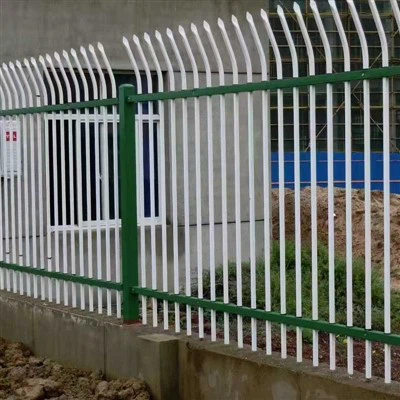
If you’re looking to upgrade your safety setup with adjustable high visibility screens and want to discuss the best options for your specific space, feel free to reach out for a consultation. We can walk through your site, share real-world use cases from similar operations, and help you pick a solution that fits your needs.
Wire Mesh Panel References
Industrial Safety Equipment Association. (2022). High Visibility Product Performance Standards.
National Institute for Occupational Safety and Health. (2023). Dynamic Safety Barriers in Industrial Work Environments.
U.S. Department of Transportation Federal Highway Administration. (2021). Temporary Work Zone Visibility Best Practices.
Anping County Nuocheng Wire Mesh Co., Ltd.
As one of the most professional high visibility screen manufacturers and suppliers in China, we also support customized service. Please feel free to buy high quality high visibility screen for sale here from our factory. For price consultation, contact us.
Address: 100 meters southeast of Beimanzi Village, Dahezhuang Township, Anping County, Hengshui City, Hebei Province, China
E-mail: lixuhao0888@gmail.com
WebSite: https://www.ncwiremesh.com/
