Hey there, it’s Mike from the screw chillers supplier team, and let’s cut to the chase—if you’re here, you’re probably digging into industrial cooling gear and wondering why noise from screw chillers is such a big deal. I get it: you’re not here for a textbook, you’re here for real, actionable stuff, not just jargon. So let’s break this down straight. Screw Chillers
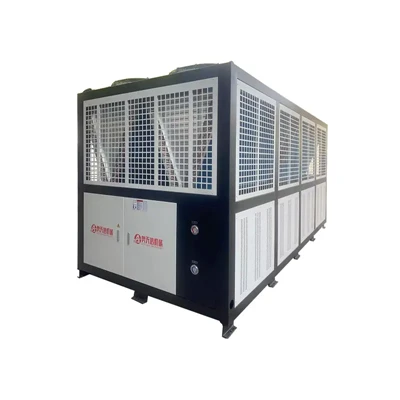
First off, let’s set the scene: noise level for screw chillers isn’t just some random number. It’s measured in decibels (dB), but not just any dB—A-weighted decibels (dBA) because that’s the scale that matches what our ears actually pick up. A quiet library is around 30-40 dBA, a normal conversation is 60 dBA, a busy office is like 70 dBA, and a garbage truck idling is roughly 80 dBA. That’s the baseline to keep in mind.
Now, what’s the actual noise level of a typical screw chiller? From what we see on our end and from industry data, most standard air-cooled screw chillers sit between 75 and 85 dBA. Water-cooled ones? Usually a tick lower, like 70-80 dBA, because the water jackets muffle some of the compressor and motor rumble. Wait, but hold on—this isn’t one-size-fits-all. A 10-ton small screw chiller is going to be quieter than a 200-ton industrial workhorse, right? Size, compressor type, insulation, and whether it’s mounted on a noise-dampening base all shift that number up or down.
Let’s talk about why this matters beyond just “annoying noise.” If your chiller is sitting right next to a break room, a control cabin, or even residential areas nearby (some factories are tucked close to neighborhoods), that 80 dBA can turn into a noise violation faster than you think. We’ve had clients come to us because their old chiller was pushing 88 dBA, and they were getting complaints from staff who couldn’t focus on their tasks—85 dBA for more than a few hours starts to cause fatigue, and over time, even mild hearing strain. That’s not something to sleep on.
Now, let’s dive into where that noise comes from, because knowing the source helps you fix it. Screw chillers’ main noise culprits are two things: the screw compressor itself, and the fans (for air-cooled units) or water pumps (for water-cooled). The screw compressor has two rotors that mesh together—they’re efficient, but they do create some mechanical vibration and air pulsations that turn into noise. Older units didn’t have great insulation around the compressor shell, so that noise would seep out. Newer models (including the ones we supply) use heavy-duty acoustic insulation, rubber vibration isolators under the unit, and sometimes even variable-speed drives that cut down on fan noise when load is low.
Wait, here’s a myth I hear a lot: “All screw chillers are louder than scroll chillers.” Yeah, maybe a tiny bit, but not by much. A top-tier screw chiller with good noise reduction specs will be within 2-3 dBA of a high-end scroll. The difference is negligible for most applications—like, you won’t notice it unless you’re standing right next to both. Scroll chillers are usually for smaller spaces, so their noise might feel more noticeable in tight spots, but screw chillers’ noise is spread out a bit more with their larger footprint.
Another thing: installation location changes noise. If you mount a chiller on a rooftop with no isolation, that 80 dBA might bounce off the building and seem 5-10 dBA louder when it reaches a ground-level walkway. But if you put it on a rubberized pad, or even a small concrete base with isolators, that same 80 dBA drops almost back to its natural level. We’ve had clients who moved their chiller 10 feet farther from the main entrance and added a simple acoustic barrier (like a metal panel with insulation behind it) and cut the perceived noise by a full 10 dBA—huge difference.
Now, let’s get specific about the units we supply. We don’t just sell a one-size-fits-all chiller—we have options for different noise needs. For client sites where noise is a top priority, we offer our “quiet-rated” screw chillers that hit 70-75 dBA. Those come with a fully insulated compressor, variable-speed fans, and extra vibration dampeners. For heavy industrial sites where the chiller is in a separate mechanical room (and noise doesn’t impact staff much), we have standard units in the 80-85 dBA range, which are more cost-effective but still meet OSHA noise safety limits (OSHA’s 8-hour time-weighted average limit is 85 dBA, so even our standard units stay right at that line—no overages).
Wait, let’s confirm that OSHA part—super important. If you’re a factory owner, you have to track noise exposure for your workers. A screw chiller at 85 dBA is exactly the limit, so if there’s any other noise source nearby (like a conveyor belt), that could push it over. That’s why we always recommend clients share their full site layout when they reach out—we can suggest a chiller that fits their noise requirements, not just the cooling capacity they need.
I also want to mention measurement caveats. Noise levels are often measured at a distance of 1 meter or 3 meters from the unit, right up against the enclosure walls. If you’re measuring from 10 meters away, that same 80 dBA becomes around 65 dBA—about the same as a background hum in a quiet office. That’s a big mistake clients make: they look at the manufacturer’s spec (usually at 1m) and panic, but when you measure from where people actually stand, it’s way quieter.
Another common question: can you reduce noise on an existing screw chiller? If it’s the older type with thin compressor insulation, yeah, you can add an acoustic jacket to the compressor shell, swap out standard fans for low-noise ones, and add vibration isolators. We’ve done retrofits for clients who didn’t want to replace their whole chiller, and those tweaks usually cut noise by 5-10 dBA. But if your unit is over 15 years old, replacing it with a new, quieter model is often more cost-effective than retrofitting—old units are less energy-efficient anyway, so you kill two birds with one stone: lower noise and lower utility bills.
Let’s wrap this up with real-world examples. Last quarter, we had a food processing client who needed a screw chiller for their production line, but their facility is near a residential neighborhood. Their old chiller was 86 dBA, and they were getting noise complaints. We supplied them with our quiet-rated air-cooled screw chiller, which came in at 74 dBA at 1m, and added a small acoustic barrier between the unit and the neighbor’s fence. After installation, the neighbor’s complaint rate dropped to zero, and the client’s maintenance team said they could now hold conversations right outside the mechanical room without raising their voices. That’s the kind of result we’re after.
So, to answer the original question: screw chiller noise levels are generally 70-85 dBA, depending on size, type (air vs water-cooled), noise reduction features, and installation. It’s not a fixed number, but something you can adjust with the right unit and setup.
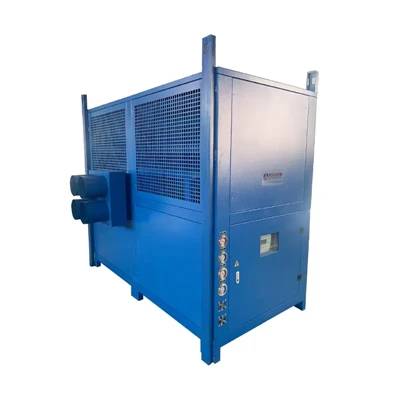
If you’re in the market for a new screw chiller, or you’re looking to fix a noisy existing one, don’t guess—reach out to us. We can walk you through your site’s noise needs, recommend the right model, and even give tips on installation tweaks to keep noise where it belongs: out of your way. No hard sell, just straight talk from a supplier who’s been doing this long enough to know that noise matters as much as cooling performance.
Industrial Air Cooler References:
- Air-Conditioning, Heating, and Refrigeration Institute (AHRI). Screw Chiller Noise Level Standards.
- Occupational Safety and Health Administration (OSHA). Noise Exposure Limits for Industrial Facilities.
- Carrier Global Corporation. Industrial Chiller Noise Reduction Technologies.
- Trane Technologies. Screw Chiller Performance and Noise Specifications.
Kunshan Aotianxin Machinery Co., Ltd.
We’re well-known as one of the most reliable screw chillers manufacturers in China. With abundant experience, our factory offer high quality screw chillers made in China with low price. If you have any enquiry about quotation and free sample, please feel free to email us.
Address: 550 Shengguang Road, Bacheng Town, Kunshan City, Jiangsu Province
E-mail: 1516722561@qq.com
WebSite: https://www.atxks.com/
