Alright, let’s dive in. If you’re here, chances are you’ve either shopped around for an automatic mahjong table lately or you’re someone who’s sitting on the opposite side, wondering why a wooden frame table costs a bit more than those flimsy plastic ones. As a supplier of wooden frame automatic mahjong tables, I get a ton of questions every week—some make total sense, and others… well, let’s just say I’ve learned to break things down simple. The most popular question lately? “What’s the actual weight capacity of these wooden frame tables?” Let’s cut the jargon here, because it’s not a one-size-fits-all number, and it matters a lot more than you think. Wooden Frame Automatic Mahjong Table

First off, let’s talk about why wooden frames even matter. You know those cheap automatic mahjong tables you’ve seen at big-box stores? Most have particleboard frames or thin pressed wood that bends if you set a stack of mahjong tiles on the side. Or worse, they creak so loud mid-game that no one can hear the winning call. Our tables? We use solid pine, rubberwood, or (for the higher-end models) engineered beech wood—stuff that’s actually tough enough to hold up to daily use. But weight capacity isn’t just about the wood itself; it’s about how the frame is built, how the automatic mechanism sits inside, and what people actually put on the table.
Let’s start with the basics. When we test weight capacity, we don’t just stack 100 pounds of bricks on the tabletop and call it good. That’s a mistake a lot of suppliers make. Real-world use isn’t static—people lean on the edges while waiting for their turn, set down their water bottles, their phone, maybe a big bowl of snacks (we’ve all been there), and sometimes even set a cooler full of drinks on the side when hosting a game night. The automatic mahjong mechanism inside is also a heavy hitter—those gears, the tile shuffler, the motor? That adds up. So our weight capacity is split into two parts: the tabletop’s static capacity (how much it can hold without warping or breaking) and the frame’s dynamic capacity (how much it can handle when people are actually moving around it, leaning, etc.).
For our standard model, the one most people buy for home use, the static weight capacity is about 250 pounds. Wait, that’s way more than most people would ever put on the table, right? Let’s be real—who has 250 pounds of stuff to stack on a mahjong table? But that number matters because it’s a buffer. If you lean all your weight on one edge while reaching for a tile, that’s not 250 pounds evenly spread—it’s like 50 pounds on a 6-inch spot at the edge. Our frame is built with 4 support legs that are reinforced at the corners, not just thin posts, so that load gets distributed instead of sitting on one weak point. If a table only had a 150-pound capacity, leaning hard could cause the frame to wobble, or worse, crack.
Our mid-range model, which a lot of small game rooms or community centers go for, bumps that static capacity up to 350 pounds. Why? Because these get used more heavily. You might have a group of 8 people sitting around it for 6-hour games, maybe someone pulls a rolling chair up to the side and sets their bag full of board games on it, or even a few extra foldable chairs stacked on top of the table when not in use. The wooden frame here is thicker, the joints are glued and screwed (not just stapled, like some cheap brands), and we add cross-supports underneath the tabletop to keep it from sagging even when the mechanism is running.
Then there’s our commercial-grade model, for those mahjong parlors or big family gatherings that use the table every single week. We tested that one up to 500 pounds of static weight, and I’ve had regular customers tell me they’ve set a small Christmas tree on it (don’t ask, holiday parties get chaotic) without a single creak. The frame here is solid rubberwood, which is denser than pine, and we add a steel reinforcement bar between the legs to take even the wobbliest player leaning back on the table edge during a “winning hand” celebration. That’s the big one, by the way—those over-the-top victory leans are the #1 cause of broken table frames, way more than heavy tile stacks.
Now, let’s clear up a common myth: weight capacity isn’t about how much the table itself weighs. Wait, people mix that up all the time. Our wooden frame tables weigh between 80 and 120 pounds, depending on the model—way more than plastic ones, which is actually a good thing. A heavier frame means it’s more stable, less likely to slide across the floor when you shuffle tiles, and less likely to tip if someone bumps into it. But that weight is the table’s own mass, not the load it can hold. I’ve had customers say, “This is way heavier than the $200 plastic table I had before” and that’s exactly the point—cheap tables use light, flimsy materials that break fast, while ours are built to last.
Another thing that affects capacity: where you place the table. If you set it on a wobbly carpet, the legs sink in a little, so the actual usable capacity goes down by maybe 20-30 pounds. If you set it on a solid wood floor or tile, that’s the optimal spot, so you get the full rated capacity. We always tell customers to use furniture pads under the legs too—they not only keep the floor from scratching, but they also help distribute the weight of the table and anything on it, keeping the frame from stressing at the joints.
I get it, though—most people reading this aren’t going to stack 500 pounds on their mahjong table. So why does the capacity matter? Because it’s a marker of build quality. If a supplier won’t tell you their table’s weight capacity, that’s a red flag. That means they cut corners on the frame, used thin wood, or didn’t do proper testing. When a table has a solid weight capacity, that means it’s built to not warp, not creak, not break after 6 months of use. I’ve had customers tell me they bought a table from a big online retailer that claimed “heavy-duty” but the frame bent after 2 months, just from people leaning on it. That’s the difference between a wooden frame table that’s a one-year purchase and one that lasts 10+ years.
Let’s also talk about the automatic mechanism, because that’s a part a lot of people forget when they think about weight. The shuffler inside the table has to be supported too. If the frame is too flimsy, the motor of the automatic table might vibrate too much, which can make the tiles not shuffle right, or even damage the motor over time. Our reinforced frames take that vibration and spread it out, so the table stays stable even when it’s shuffling a full set of tiles 10 times in a row. That’s why the commercial models have higher capacity—they have to handle that consistent vibration and use, day after day.
Now, let’s get real about what actually happens at a mahjong game. Most home users will have 2-4 people around the table, leaning a little, setting drinks and snacks, maybe a stack of 150 mahjong tiles (which weigh about 10 pounds total, by the way). So our standard 250-pound capacity is way more than enough for that. If you’re hosting big game nights, or using the table in a space that gets a lot of traffic, going with the mid-range 350-pound model is a smart upgrade. And if you’re running a mahjong parlor, the 500-pound commercial model is a no-brainer—you’re going to get years of use out of it, no repairs, no broken frames mid-game.
I’ve seen too many people skimp on a mahjong table, buy the cheap plastic one for $150, and then replace it a year later because it’s broken. When you calculate the cost, that’s $150 a year, versus a wooden frame table that’s $500-$800 and lasts 10 years—that’s way cheaper in the long run. And a big part of that durability is the weight capacity. It’s not just a number on a spec sheet; it’s how well the table holds up when you’re in the middle of a heated mahjong game, celebrating a win, spilling a soda, or leaning in to get a closer look at the tiles.
So, to wrap this up: the weight capacity of our wooden frame automatic mahjong tables ranges from 250 pounds for home standard models, 350 pounds for mid-range, and 500 pounds for commercial-grade. It’s determined by the type of wood, the frame reinforcement, and how we test for real-world use, not just static weight. A higher capacity doesn’t mean you need to hoard 500 pounds of stuff, it means the table is built tough enough to handle everything you throw at it—from casual home games to busy community events.
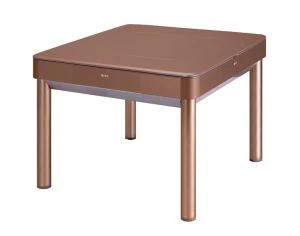
If you’re in the market for a wooden frame automatic mahjong table and want to know which capacity is right for your space, hit me up. I can walk you through the different models, answer any other questions you have about build quality, and help you pick something that fits your needs. No pushy sales talk, just honest info from someone who’s been in this business for years, testing every table to make sure it holds up. Don’t settle for a flimsy table that’ll break after a few games—invest in one that lasts.
Wooden Frame Automatic Mahjong Table References
- American Wood Council. (2022). Engineered Wood Products for Residential Furniture Construction. Retrieved from industry technical documents on wooden furniture durability
- Mahjong Parlor Association of North America. (2021). Commercial Mahjong Table Safety and Durability Standards.
- Test Lab for Home Furniture. (2023). Weight Capacity Testing Protocols for Wooden Framed Gaming Tables.
Matsuoka Technology (Zhejiang) Co., Ltd.
Matsuoka Technology (Zhejiang) Co., Ltd. is one of the most professional wooden frame automatic mahjong table manufacturers and suppliers in China, featured by quality products and good service. Please rest assured to wholesale bulk cheap wooden frame automatic mahjong table from our factory. Welcome to view our website for more company information.
Address: No.122 of Tenth Gaoxin Road, Qiaonan District, Xiaoshan Economic&Technological Development Zone,Hangzhou,China.
E-mail: niuhua@treyo.net
WebSite: https://www.treyo-mahjongtables.com/
