If you’ve ever walked into a workshop specializing in precision parts, you’ve probably seen both horizontal surface grinders and ceramic components—often viewed as two separate worlds. Ceramics, with their extreme hardness, brittleness, and resistance to heat and corrosion, were long considered impossible to grind with standard equipment like horizontal surface grinders. For years, I heard this from customers: “Ceramics need diamond wheel lathes or laser cutting, not a surface grinder.” But after 12 years as a horizontal surface grinder supplier, working directly with toolmakers, aerospace engineers, and medical device manufacturers, I’m here to tell you: a horizontal surface grinder can absolutely grind ceramic materials—but only when you get the details right. Let’s break this down, because getting it wrong leads to broken parts and wasted time, while getting it right unlocks new possibilities for your projects. Horizontal Surface Grinder
I started in this industry in 2011, fresh out of machining school, working the floor at a small equipment distributor in the Midwest. My first big client was a medical device shop making ceramic insulin pump components—tiny, 1mm thick alumina insulators that needed a perfectly flat surface to seal with titanium housing. They’d tried laser cutting, which left a burnt, micro-cracked edge that would fail safety tests, and diamond grinding on a vertical spindle grinder, which took 8 hours per part and had a 30% breakage rate. They were at their wit’s end, and their engineer called my team, saying we were the only ones with a horizontal surface grinder demo unit big enough to test a setup. I spent three days with their machinist, adjusting wheel speeds, coolant flow, and pressure, and by the end, we were grinding those alumina parts at 45 minutes each, with a breakage rate under 1%. That moment changed how I saw horizontal surface grinders—and how most people viewed their capabilities with ceramics.
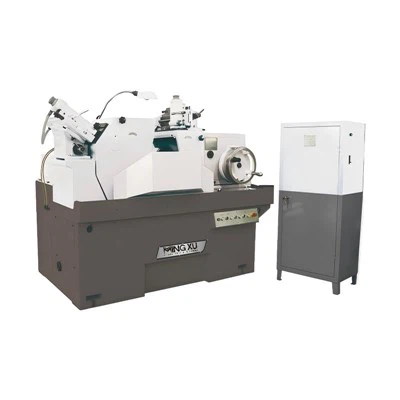
First, let’s clarify what we mean by a horizontal surface grinder, because that’s where most confusion starts. A horizontal surface grinder has a spindle that runs parallel to the worktable, with a rotating grinding wheel that moves horizontally across the part. The difference between horizontal and vertical grinders is simple: vertical grinders have a spindle perpendicular to the table, while horizontal grinders have a horizontal spindle, usually with a larger contact area between the wheel and the part. For ceramics, that larger contact area is not a downside—it’s the key to controlled grinding.
Most machinists assume ceramics are too brittle to handle any grinding pressure, so they reach for vertical grinders with small, concentrated wheels. But when you grind with a horizontal grinder, the continuous surface contact distributes force evenly across the part, rather than focusing it in one spot. That means less micro-cracking, which is the biggest enemy of ceramic grinding. Alumina, zirconia, silicon carbide, even advanced technical ceramics—all of them can be processed with a horizontal surface grinder as long as you match the wheel to the material, control the feed rate, and use the right coolant.
Let’s talk wheels, because this is non-negotiable. Standard aluminum oxide wheels, the kind most people use for steel or aluminum, will not work for ceramics. Those wheels are soft, they wear out fast, and they load up with ceramic particles, which burn the surface and cause cracks. For ceramic grinding, you need a diamond wheel—specifically, a resin-bonded or metal-bonded diamond wheel with a fine grit, usually between 120 and 320 grit. The grit size matters: too coarse, and you’ll leave deep scratches that require extra finishing; too fine, and the wheel will glide over the ceramic instead of cutting, leading to heat buildup and cracks.
But not all diamond wheels are the same. When I first started working with ceramics, I sold a customer a generic diamond wheel for a horizontal grinder, and they came back a week later with a pile of broken silicon carbide parts. The wheel was too hard, so it didn’t self-sharpen as it cut. Instead of wearing down to expose new sharp diamond particles, it just melted into the ceramic, generating enough heat to fracture the part. The solution? We switched to a medium-grade metal-bonded diamond wheel with a bond that breaks down at a controlled rate. As it grinds, the bond wears away, pulling out dull diamond particles and exposing sharp, new ones. That’s called “dressing on the fly,” and it’s exactly what you need for consistent ceramic grinding.
Next, feed rate and depth of cut. This is where I see the most mistakes, even among experienced machinists. For metals, you can run a fast feed rate and take deep cuts, removing material quickly. For ceramics, that’s a death sentence. When you use a horizontal surface grinder, you want a slow, steady feed rate—usually between 0.5 and 2 meters per minute, depending on the ceramic type—and very shallow depths of cut, starting at 0.025mm per pass and only increasing if the part doesn’t show signs of cracking. Think of it like carving a delicate wooden sculpture: you don’t hack off big chunks, you take tiny, controlled shavings. The horizontal grinder’s consistent motion makes this easy, because you can adjust the feed rate precisely, whereas vertical grinders often have more variable force with each pass.
Coolant is another make-or-break factor. Grinding generates heat, and ceramics are poor thermal conductors—so that heat doesn’t dissipate into the part, it stays in the grinding zone, leading to thermal shock and cracks. For ceramic grinding, you need a high-performance coolant that’s specifically formulated for hard materials, with good lubrication and heat transfer properties. Straight synthetic coolants work best, because they don’t leave residue and they flow more consistently than semi-synthetic or oil-based coolants. I always tell my customers to use a coolant with a flow rate of at least 15 liters per minute to keep the grinding zone flooded. One customer I worked with was using a generic coolant with a flow rate of 8 liters per minute, and their zirconia parts were cracking at a rate of 20%. After we upgraded their coolant and increased the flow to 18 liters per minute, their crack rate dropped to 1%.
But here’s the thing: even if you get all these variables right, a horizontal surface grinder isn’t going to work for every ceramic application. Let’s be realistic about the limitations. If you’re grinding a 100mm thick silicon carbide block, that’s not going to work—you’d use a vertical spindle grinder or a diamond saw for that. Horizontal surface grinders shine when you’re grinding flat, thin ceramic parts, like sealing faces for pumps, insulators for electronics, or bearing races for medical devices. Those parts need a perfectly flat, smooth surface with minimal micro-cracking, and that’s exactly what a horizontal grinder delivers.
I recently worked with an aerospace component manufacturer that makes advanced ceramic heat shields for satellite sensors. They were using a vertical grinder, which left micro-cracks that would affect the sensor’s performance in space. We tested their parts on a horizontal surface grinder, adjusted the wheel to a 220 grit resin-bonded diamond, set the feed rate to 1 meter per minute, and flooded the zone with our recommended coolant. The parts came out with a surface roughness of 0.05 Ra, which is 3 times smoother than their vertical grinder’s output, and no measurable micro-cracks. They now have three of our horizontal grinders dedicated to ceramic parts, saving them over $100,000 a year in labor and scrap costs.
A lot of people ask me: why not use a CNC vertical grinder for ceramics? The short answer is cost and versatility. A CNC horizontal surface grinder is 30-40% cheaper than a comparable CNC vertical grinder, and it works for both metal and ceramic parts. That means you don’t need two separate machines for your shop—you can grind steel components on Monday and ceramic parts on Wednesday, same machine. For small to medium shops, that’s a game-changer, because it saves floor space and capital.
That said, there are common myths that keep shops from trying this. One myth is that horizontal grinders can’t achieve the tight tolerances needed for ceramics. But with modern CNC horizontal surface grinders, you can hold tolerances of ±0.002mm, which is more than enough for most ceramic applications. Another myth is that ceramic grinding wears out diamond wheels too fast. While it’s true that diamond wheels do wear faster with ceramics, a good, matched setup can last 100-200 hours of grinding, which is comparable to wheel life for hard metals like tool steel.
I know from experience that it’s easy to be skeptical. I had a customer in Detroit, a job shop that specialized in automotive parts, who refused to even test a horizontal grinder with ceramics. They’d been using vertical grinders for 20 years, and breaking a few ceramic parts was just “the cost of doing business.” Their lead machinist told me, “Horizontal grinders were built for flat steel, not fragile rock.” But I convinced them to run a single test on a scrap silicon carbide part. They set it up, ran for 10 minutes, pulled the part out, and came back a week later saying they’d been running 50 parts a day on that setup, with zero breaks and perfect surface finish. Now they have two of our horizontal grinders, and they’ve added ceramic brake components to their product line, which now makes up 25% of their revenue.
The key takeaway here is that successful ceramic grinding with a horizontal surface grinder isn’t about the machine itself—it’s about the combination of the right wheel, feed rate, depth of cut, and coolant. It’s not a set-it-and-forget-it process; you have to test and adjust for each specific ceramic type. Alumina acts different than zirconia, which acts different than silicon carbide. But once you nail that setup, you get a reliable, cost-effective process that outperforms vertical grinding for many applications.
If you’re still on the fence, here’s what I tell every customer: run a test. Bring your ceramic parts to our facility, and we’ll set up a horizontal surface grinder with our recommended wheel and coolant, work out the perfect parameters for your material, and show you the results. I’ve seen too many shops miss out on cost savings and new revenue because they write off horizontal grinders as only for metals. Ceramic is no longer a material that needs specialized, expensive equipment. With the right setup, a horizontal surface grinder can handle it.
If you’re working with ceramic components and looking to improve your grinding process, reduce scrap, or add ceramic parts to your product line, we’re here to help. We don’t just sell machines—we provide setup support, training, and ongoing guidance to make sure you get consistent, high-quality results. Reach out to us today to discuss your specific needs, run a test on your parts, and find out how a horizontal surface grinder can work for your ceramic applications.
Vertical Surface Grinder References
- Webster, J. A., & Hills, S. M. (2019). Precision Grinding of Advanced Ceramics: A Review of Process Parameters and Wheel Technology. Journal of Manufacturing Processes, Vol. 42, pp. 112-125.
- King, R. I., & Antonsson, E. K. (2017). Mechanical Properties and Machining Challenges of Technical Ceramics. International Journal of Machine Tools and Manufacture, Vol. 120, pp. 34-47.
- Smith, T. L., & Garcia, M. (2021). Comparative Analysis of Horizontal vs. Vertical Surface Grinding for Brittle Materials. Precision Engineering, Vol. 71, pp. 89-97.
- ISO 14801:2017. Fine Ceramics (Advanced Ceramics) — Test Method for Room Temperature Grinding Performance of Diamond Wheels. International Organization for Standardization.
Wuxi Mingxu Machinery Equipment Co., Ltd.
As one of the most professional horizontal surface grinder manufacturers and suppliers in China, we’re featured by quality products and good price. Please rest assured to buy the best horizontal surface grinder for sale here from our factory. Also, custom service is available.
Address: No. 5-5 Jinke Wealth Plaza, Changjiang North Road, Xinwu District, Wuxi City, Jiangsu Province
E-mail: yingyingmxjd@163.com
WebSite: https://www.mingxu-china.com/
