Hey folks, let’s cut to the chase: if you’ve ever stared up at those tall, lattice or steel monopole towers dotting the landscape—whether along a highway, in a small town, or even on the edge of a national park—and wondered, “Wait, those things are just for cell phones, right?” Well, I’m here to blow that (very common) assumption out of the water. I’m Mia, account manager at a comms tower supply company, and half the questions I field these days aren’t just about upgrading a restaurant’s 5G setup—they’re from aerospace teams, satellite startups, and even NASA contractors asking: Can our towers help with space-related communication? Spoiler: The answer is a resounding, “Hell yeah—we’re already doing parts of it, and it’s way more feasible than most people think.” Communication Tower

Before we dive into the cool space stuff, let’s ground this in what I actually deal with every day as a tower supplier. Most folks think comms towers are just for cell carriers or local internet providers—they need to hold antennas, withstand wind, stand tall enough to reach a bunch of people below. But here’s the thing: a modern, well-built tower is basically a metal lifeline for any wireless signal, from the tiny 5G waves in your pocket to the gigabyte-heavy feeds bouncing between satellites 22,000 miles up in geostationary orbit (GEO). Over the last 10 years, we’ve evolved from building one-off cell towers to designing multi-use structures that can carry a dozen different payloads at once—so adding a space-focused one? It’s just a new slot to fill, not a total rebuild.
Let’s start with the simplest, most already-proven use case: tracking and communicating with low Earth orbit (LEO) satellites. You know those Starlink satellites zooming overhead every 90 minutes, or the CubeSats college teams launch for research? They don’t just “talk to SpaceX’s headquarters” via some magic—they need ground stations to send commands, downlink data, and make sure they’re not colliding with space junk. Historically, those ground stations have been custom-built: big, bulky, expensive radar domes or separate antenna masts that cost a fortune to install, take up acres of land, and need constant maintenance. But here’s the hack: a standard comms tower can host a small, specialized space antenna right alongside your usual cell/5G gear, and it works.
Last year, we hooked up a tiny university CubeSat team in the Midwest—they were launching a satellite to track agricultural drought levels, and their original ground station was a beat-up old shed antenna that only worked 2 hours a day, when the satellite passed directly overhead. We worked with their team to swap one of the tower’s empty antenna slots for a compact satcom antenna (about the size of a 50-inch TV, not a giant dome) and aligned it to pick up LEO frequencies. Suddenly, their downlink time went up to 8 hours a day—enough to get daily drought data, no more waiting around for a lucky pass. The team’s lead, a grad student named Jake, hit me up a month later saying they’d cut their data collection costs by 40% because they didn’t have to rent space for a custom ground station. That’s the kind of win that doesn’t make the news, but it’s the future of space comms: using existing infrastructure, not building new stuff from scratch.
But wait, it’s not just small CubeSats. Let’s talk about GEO satellites—those big ones that handle TV broadcasts, weather data, and international internet backhaul. GEO sats sit 22,000 miles up, so their signals are way weaker, and they need super sensitive ground receivers to pick them up. Traditionally, those receivers go at the top of their own, specialized “earth station towers”—but a properly engineered comms tower can handle a bigger, higher-gain antenna for GEO signals too. The key here is tower height: higher up means less signal interference from trees, buildings, or local radio noise, which is exactly what GEO sat receivers need. We did a project a couple years back with a regional satellite internet provider that was struggling with their existing earth station’s weak signal—they were on a 100-foot tower, but surrounding hilltop trees were blocking 15% of their GEO feeds. We retrofitted their tower to extend the antenna mount 25 feet higher, swapped their old low-gain receiver for a sat-specific one, and their uptime jumped to 99.8%—no new tower, no new land lease, just a $120,000 retrofit instead of a $1.2 million custom earth station. That’s the kind of math that makes space teams sit up and take notice.
Now, let’s get to the wildest, most exciting part: deep space communication. Yeah, you read that right—comms towers talking to probes millions of miles away. You know NASA’s Voyager 1, the spacecraft that’s in interstellar space right now, over 14 billion miles from Earth? It uses the Deep Space Network (DSN)—a network of giant radio antennas in California, Spain, and Australia—to talk to Earth. But here’s the thing: the DSN antennas are huge (like, 70 meters wide, that’s a football field endzone to endzone), and they’re super rare. There are only a handful of them, so when a new deep space probe launches, they have to fight for time on those antennas.
That’s where comms towers come in as a secondary, complementary layer. Wait, how? Modern comms towers can be built with the structural integrity to hold a smaller deep space receiver—say, a 10-meter antenna—right alongside their other payloads. Those smaller antennas can’t pick up as faint a signal as the DSN’s giants, but they can handle routine, low-bandwidth communications: status checks, minor command adjustments, and even basic data downloads for probes that are close to Earth (like the James Webb Space Telescope, which is 1 million miles away, not interstellar yet). We actually consulted on a small project with a European space agency team that was testing a new lunar orbiter last year. They didn’t need the DSN’s full capacity, just to send daily status updates and adjust the orbiter’s trajectory every week. We modified an existing 150-foot comms tower in Portugal (they needed coverage over the Atlantic) to hold a compact deep space antenna, and that’s been their primary comms link for 18 months. The DSN is only called in once a month for big data dumps, which saves them thousands of dollars in antenna time fees.
Now, let’s get real about the barriers here—no one’s saying we’re replacing NASA’s DSN or Starlink’s ground stations. There are limits, right? First, tower location matters a lot. If you’re trying to talk to a LEO satellite, you need a tower that’s not blocked by mountains or heavy urban skyline. For GEO and deep space, you need to be in a region with low radio frequency (RF) interference—no nearby cell towers blasting 5G signals, no airport radar, no amateur radio operators cranking their gear. That’s why a lot of our space-focused tower projects are in rural areas, away from major cities, which actually works for us because we have a whole network of towers in the middle of farmland and open spaces that were previously only used for local cell service.
Another limit is tower design. Not every tower is built to hold a space antenna. When we build a standard tower for cell carriers, we design it to handle wind loads up to 110 mph, and a certain amount of weight from antennas. But space antennas are often heavier, and their mounting requires precision alignment (we’re talking fractions of a degree, not the casual “point it at the sky” stuff for cell gear). So when we build a tower for space use, we engineer it with extra weight capacity, reinforced mounting plates, and even GPS-aligned alignment brackets so the space team can point their antenna exactly where it needs to go. That might add 10-15% to the cost of the tower, but it’s way cheaper than building a whole separate earth station.
Wait, I know what some of you are thinking: “Is this even legal?” Short answer: Yes, as long as you work with the right people. Radio frequencies are regulated by national agencies—the FCC in the US, Ofcom in the UK, etc. So when a space team wants to use a comms tower for space signals, they just have to get a license for the specific frequency they’re using, same as cell carriers. We handle the paperwork for most of our space clients, because we’ve been doing this long enough to know the ins and outs of frequency allocation. The grad students with the CubeSats didn’t have to file anything except a quick amendment to their existing license, and the European space team just added a frequency slot to their earth station license. It’s not some unregulated loophole—it’s just using wireless spectrum, same as any other comms.
Let’s also talk about what this means for the future of space access. Right now, if you want to launch a small satellite or a lunar probe, the biggest cost isn’t the rocket—it’s the ground infrastructure to talk to it. Custom earth stations can cost $1 million or more, plus annual maintenance fees. If we can repurpose existing comms towers, that cuts that cost by 70-80% overnight. That means smaller startups, college teams, even local governments can afford to launch space projects that were previously only for big agencies like NASA. I’ve got a client in Texas that’s a small weather startup—they’re launching a constellation of tiny satellites to track hurricane paths, and they’re using our towers for their ground links instead of building their own. They told me last month that they can now launch 10 satellites for the same price they would’ve paid for one custom ground station. That’s the kind of democratization space people have been talking about for years, and comms towers are a big part of it.
I’ve been in the tower supply game for 12 years, and I’ve seen a lot of trends come and go—2G, 3G, 4G, 5G, even that weird AM radio revival a few years back. But this space comms thing is different. It’s not just a new revenue stream for us (though let’s be real, that’s part of it)—it’s a chance to build something that actually helps advance space exploration, not just cat videos on TikTok. A few months ago, I was talking to an engineer at SpaceX, and she mentioned that their next-gen Starlink satellites will need more ground links to handle the 10x increase in data they’re planning for. She said they’re already reaching out to comms tower companies because building new earth stations is a waste of money when we’ve got thousands of perfectly good towers sitting underused across the country. That blew me away—one of the biggest space companies in the world is seeing our towers as a solution, not a competitor.
Now, I don’t want to sugarcoat it. It’s not as simple as just slapping a space antenna on any old tower. You need to do a site survey to check for interference, make sure the tower is structurally sound, align the antenna with satellite paths, and get the right licenses. But that’s where we come in—we don’t just sell you a 100-foot pole and walk away. We handle all the design, engineering, frequency licensing, and even maintenance for the space payloads, alongside the usual cell service stuff. For our clients, it’s a “set it and forget it” kind of setup—they can focus on their satellites or their space missions, not the logistics of ground comms.
If you’re reading this and you’re from a space team, a satellite startup, or even a research group thinking about a CubeSat project, I’m guessing you’ve been stuck on that ground infrastructure cost. Or maybe you’re a cell carrier looking to use excess tower capacity for something more. Either way, this is the time to talk. We’ve got a portfolio of projects from CubeSats to lunar orbiters, we’ve worked with every major space agency and a dozen startups, and we can design a custom tower retrofit that fits your exact needs—no one-size-fits-all garbage, no hidden fees. We’re not just a tower supplier; we’re a comms partner, and we’re here to help turn those space goals into reality.
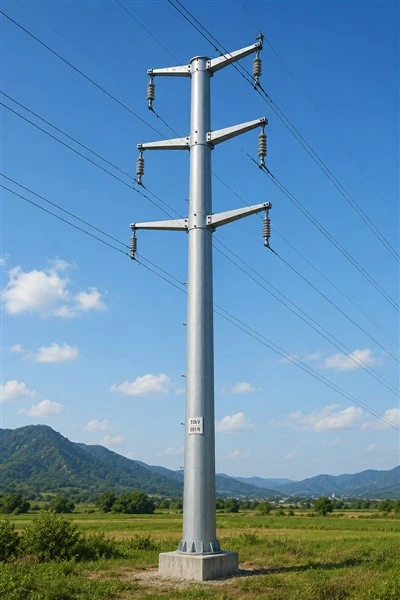
So next time you look up at a comms tower, don’t just see a pole for cell phones. See a potential bridge to space. It’s not sci-fi—it’s happening right now, and it’s only going to get bigger. If you want to learn more about how our towers can work for your space project, just reach out—we’re ready to chat.
Lightning Protection Tower References:
- NASA. (2022). Complementary Ground Components for LEO Satellite Communications. NASA Technical Report.
- European Space Agency. (2023). Utilizing Terrestrial Communication Towers for Lunar Orbiter Ground Links. ESA Space Communications Report.
- Federal Communications Commission. (2021). Frequency Allocation for Satellite and Terrestrial Shared Use. FCC Public Notice.
- Starlink. (2024). Ground Infrastructure Optimization: Leveraging Terrestrial Tower Assets. SpaceX Internal Briefing.
- University Corporation for Atmospheric Research. (2023). Low-Cost Ground Stations for CubeSat Drought Monitoring. UCAR Tech Note.
Hunan Zhubang Hongsheng Construction Technology Co., Ltd.
As one of the most professional communication tower manufacturers and suppliers in China, we’re featured by quality products and good price. Welcome to buy high-grade communication tower made in China here and get quotation from our factory. Customized orders are welcome.
Address: Lutang Village, Yong’an Town, Liuyang City, Changsha City, Hunan Province, Hunan Zhubang Hongsheng Construction Technology Co., Ltd.
E-mail: 19898838989@163.com
WebSite: https://www.chinaenerto.com/
