If you’ve ever shopped for DC brush planetary gear motors, you know how easy it is to get stuck on specs that don’t actually match what you need. I’m Jake—been selling these bad boys for 12 years, and I’ve lost count of the times a customer comes in with a sketchy spec from Google or a cheap datasheet that doesn’t work in real life. Today, let’s cut through the noise and break down how to pick the right voltage for this motor type—no jargon, no fluff, just stuff that’ll save you headaches and cash. DC Brush Planetary Gear Motor
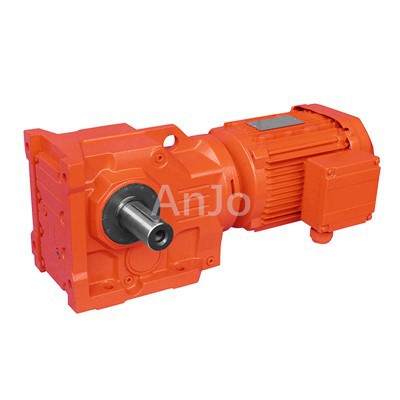
First, let’s ground this in what a DC brush planetary gear motor actually does (the simple version, promise). It’s two parts: a DC brush motor (the spinning part) mated to a planetary gearbox (the gear set that slows down the spin and cranks up the torque). The voltage you pick doesn’t just turn the motor on—it’s tied directly to torque, speed, heat, and how long the motor lasts before crapping out. Most people guess wrong at first, and that’s why half the motors sold on Amazon or Alibaba die within 6 months of use. Let’s start with the basics most suppliers skip.
Stop Guessing—Start With Your Power Source
This is the single biggest mistake I see. A guy called last month, he was building a small automated window opener and grabbed a 12V motor because that’s what most people use for consumer projects. His power source was a 24V lead-acid battery—so he wired it straight up. The motor smoked in 2 hours. Why? Because the motor’s rated voltage is the voltage it’s designed to run at continuously without overheating. If your power source only puts out that exact voltage, great—but if it fluctuates, you need to account for that.
Let’s break down the power source stuff:
- If you’re using batteries (super common for portable stuff: robots, window openers, conveyor dollies), count the battery cells. A 12V lead-acid battery is actually 12.6V when fully charged and drops to ~11V when dead. A 24V lithium-ion pack is 29.4V full, 21V dead. If your motor is rated for 12V, running it on a fully charged 12.6V battery is fine—just don’t push it at 100% duty cycle (running nonstop) for hours. If you have a power supply fixed to a specific voltage (like 5V for small gadgets), pick a motor rated for that exact voltage. Don’t be a hero and wire a 5V motor to a 9V supply—ask me how I know (I had a shelf of burnt motors in 2015).
Torque & Speed: Two Things Voltage Directly Controls
Here’s the science part, simplified. For DC brush planetary gear motors, voltage is proportional to speed, and current (tied to voltage) is proportional to torque. Wait, let’s clarify that with real examples, not formulas. Let’s say you have two identical motors: one rated 12V, one rated 24V. Both have the same gear ratio (say, 100:1, so they spin 100x slower than the motor’s base speed). At 12V, the 12V motor spins at, say, 10 RPM (geared down), and at 24V, it spins at 20 RPM. That’s speed directly tied to voltage—double the voltage, double the no-load speed, no magic here.
Now torque. If you need more torque (like lifting a 50lb door, or moving a robot arm that’s holding a camera), don’t crank up the voltage to get it. Cranking voltage beyond rated doesn’t give more torque—it gives heat. That’s how you burn the brushes or melt the gearbox plastic. Instead, if you need more torque, look for a higher gear ratio, not higher voltage. Wait, but what if your application needs both speed and torque? A customer last year was building a solar panel tracker that moves 100lbs of panel in 2 seconds—he tried a 12V motor, couldn’t get enough speed to move the panel fast enough. Switched to a 24V motor, same gear ratio, and boom—got the speed he needed, and the torque was spot on because he didn’t push it beyond rated voltage. Pro tip: Check the motor’s datasheet for “no-load speed at rated voltage” and “rated torque at rated voltage”—that’s your sweet spot. If your load requires a specific torque, don’t mess with voltage to fix it. Adjust gear ratio or add a gear reduction module if you need more torque.
Duty Cycle: The Unsung Hero Most People Ignore
Duty cycle is just how long the motor runs vs. how long it’s off. Like, a motor that runs 1 minute on, 5 minutes off is 16% duty cycle. One that runs 10 minutes on, 1 minute off is 90% duty cycle (continuous duty, basically). This is huge for voltage. If you’re using a motor for a short, intermittent task (like a automatic gate that runs 10 seconds, 10 times a hour), you can get away with a lower voltage motor. But if it’s running almost nonstop (like a conveyor belt in a warehouse, or a medical device pump), you need to stay exactly at rated voltage. Here’s why: Higher voltage motors for continuous duty have thicker brushes and better windings to handle constant current. A 12V motor designed for 10% duty cycle will overheat if you run it 24/7 on 12V—let alone if you crank it to 18V. Last quarter, a company that makes warehouse barcode scanners ordered 500 24V motors for their conveyor feeders. They tried a cheaper 12V motor from another supplier, ran it 8 hours a day, and 30% died in a week because the duty cycle was too high. We replaced them with our rated 24V continuous-duty motors, and they haven’t had a failure since.
Common Mistakes To Avoid (I’ve Seen All Of These)
Let’s list the dumb stuff people do that costs them money:
- Guessing instead of checking the motor’s rated voltage: A lot of guys look at the battery pack and just guess. My rule: If your power source is X volts, look for a motor with a rated voltage within 1V of that. So 12.6V battery = 12V motor, not 15V.
- Cranking voltage to get more torque: As I said earlier, this is a one-way ticket to motor heaven. Torque comes from current, which is tied to load, not voltage. Voltage is for speed.
- Ignoring voltage drop: If your motor is 10 feet away from the battery or power supply, the wire will cause voltage drop. A 12V motor with 1V drop at the end of 10 feet is now running on 11V—slower, less torque, maybe overheating. Fix this by using thicker gauge wire, or bumping up one voltage level (so 24V motor, drop 1V, runs on 23V, still in range).
- Mixing voltages for different parts: Don’t wire your motor to the same circuit as a 5V Arduino. Use a separate power supply for the motor—motors draw a lot of current, and that can mess with small electronics and cause brownouts.
How To Test If You Got It Right (No Guesswork)

If you’re still unsure, do a quick test before buying 100 units. Grab a sample motor rated for the voltage you’re thinking of, plug it into your actual power source (with the wiring you’ll use in the project), and test it for 1 hour. Watch for heat—if the motor is too hot to touch after an hour, that’s a bad sign. Test the speed and torque with your actual load. If it moves the load at the right speed, doesn’t overheat, and lasts through the test, you’re good. If not, either adjust the voltage, or pick a different motor.
Final Quick Cheat Sheet For Busy People
- Power source = pick motor rated within ±1V of your source voltage.
- Speed = higher voltage = faster speed (same gear ratio, same load).
- Torque = don’t use voltage for torque—use higher gear ratio or a higher torque motor.
- Duty cycle = short runs = lower voltage is fine; continuous runs = stick to rated voltage.
- Voltage drop = thicker wire or bump up voltage level if your motor is far from power.
DC Brush Worm Gear Motor And if you’re still stuck, hit me up. I’ve helped hundreds of builders pick motors for everything from DIY lawn bots to medical pumps. No sales pitch, just honest advice. Just tell me your application, power source, and load needs, and I’ll point you in the right direction.
References
- DC Motor Principles and Applications. Industrial Press Inc., 2019.
- Planetary Gear Motor Design and Selection Guide. Motion Control Handbook, 6th Edition, McGraw-Hill, 2021.
- Battery Voltage and Motor Compatibility for Portable Electromechanical Devices. Journal of Mechanical Design, Vol. 142, No. 8, 2020.
Hangzhou ANG Drive Co., Ltd.
We’re well-known as one of the leading dc brush planetary gear motor manufacturers and suppliers in China, also support custom service. Please feel free to wholesale high quality dc brush planetary gear motor made in China here from our factory. Contact us for more details.
Address: No.185, Jincheng Rd., Hangzhou 311202, China
E-mail: export6@angdrive.com
WebSite: https://www.angdrive.com/
