If you’ve ever walked into a cold storage facility—whether it’s a freezer for ice cream pallets, a cooler for fresh produce, or a chill space for pharmaceuticals—you’ve probably noticed a lot of metal pallets and bulky storage bins stacked along walls. For many of our clients, the first question they ask when they come to us for stack racks is: can these racks even hold up in temperatures that drop well below freezing? It’s a fair question. Most standard warehouse equipment is built to operate in mild room conditions, not environments where moisture freezes solid and metal can warp or become brittle. As a stack racks supplier who’s worked with cold storage operators for over a decade, I’ve seen firsthand how the right stack racks aren’t just functional for these spaces—they’re often the most reliable, cost-effective way to organize inventory. Let’s break down what makes cold storage unique, how stack racks adapt, and why they might just be the solution your facility has been missing. Stack Racks
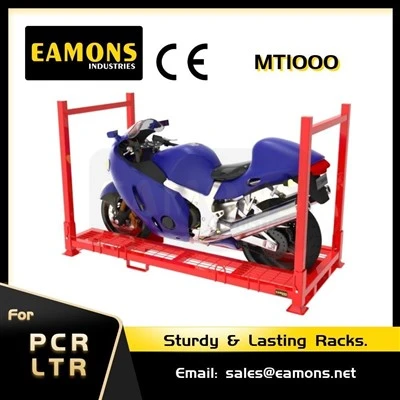
First, let’s get clear on what cold storage actually demands. These spaces aren’t one-size-fits-all. There’s chilled storage, usually between 32°F and 55°F for perishables like fruits, vegetables, and dairy. Then there are freezers, which can dip to -10°F for frozen meats, ice cream, and prepared foods, and even ultra-low freezers for vaccines or specialty ingredients that sit at -40°F or lower. All of these conditions create three core challenges for storage equipment: temperature-induced material changes, condensation and corrosion, and heavy, dense inventory loads. Standard steel warehouse racks, for example, are often made of mild carbon steel. When that steel is exposed to sustained subzero temperatures, it loses ductility—meaning it becomes more brittle and prone to cracking under stress. That’s why some operators write off all metal storage equipment for cold spaces, but not all steel is created equal. This is where our stack racks stand apart.
At our company, we engineer our stack racks specifically with cold environments in mind. We don’t use standard mild steel; instead, we opt for high-grade carbon steel that’s treated with a cold-weather alloy to maintain flexibility even at freezing temperatures. That flexibility is critical. When you stack pallets 2, 3, or 4 units high (which is exactly what stack racks are designed to do, unlike static shelving that only holds one level), each stack exerts constant downward force. If the metal were brittle, repeated loading and unloading would cause it to snap at the joints—something that’s not just a safety hazard, but a major financial hit if inventory is damaged or storage time is lost while waiting for repairs. We test every batch of our cold-weather stack racks at temperatures as low as -20°F and -30°F, simulating years of heavy use in real cold storage conditions, and so far, we haven’t had a single reported failure. That’s a big deal when you’re storing hundreds of pallets at a time.
Another common issue in cold storage is condensation. When warm, humid air seeps into the space (every time a door opens for a forklift to unload inventory), it meets cold metal surfaces and freezes into frost or ice. That ice can build up on stack racks over time, adding extra weight and making it hard to separate pallets when you need to access specific inventory. We solve this with two key design choices. First, our stack racks have smooth, sloped surfaces that don’t trap water or ice. Unlike some bulkier, industrial-style racks with deep grooves or corners where moisture can collect, our design lets any condensation run off instead of pooling. Second, we use a galvanized finish instead of the standard powder coating found on many warehouse racks. Galvanization creates a protective zinc layer that resists corrosion, even when exposed to repeated freeze-thaw cycles that would cause regular coated racks to rust and deteriorate quickly. I’ve had clients tell me that in the first year of using our cold storage stack racks, they didn’t have to do a single maintenance touch-up—something unheard of with older racks they’d used that would rust through in just six months.
Now, let’s talk about the practical benefits that make stack racks ideal for cold storage, beyond just durability. Cold storage space is at a premium. Every square foot costs money, because keeping a large area cold uses massive amounts of energy. Stack racks let you use vertical space without the cost of installing expensive, high-bay racking systems that require forklifts with special attachments. For smaller cold storage facilities, or even large ones with uneven ceiling heights that make high-bay racks impractical, stack racks are a game-changer. A standard set of our stack racks takes up the same footprint as one pallet, but doubles or triples your storage capacity. That means you don’t have to expand your facility to hold more inventory—you just stack what you already have higher.
I remember a client last year who ran a small freezer operation for a regional grocery chain. They were using wooden pallets stacked on the floor, but they were running out of space and losing pallets to ice buildup that made them stick together. When they switched to our cold-rated stack racks, they were able to increase their storage volume by 40% without adding any new square footage. The wooden pallets they were using also had a problem: over time, they’d absorb moisture from the cold air, become heavy, and start to rot. With stack racks, they could use the same pallets, but elevate them just enough to prevent direct contact with the cold floor (which is another source of moisture) and keep them dry. That cut their pallet replacement costs by nearly half.
But there’s a right way to use stack racks in cold storage, and a wrong way. One mistake we see a lot of new clients make is not accounting for the weight of frozen inventory. Frozen goods are denser than fresh ones, so a single pallet of frozen meat can weigh 2,000 to 3,000 pounds—double the weight of a pallet of fresh produce. Standard stack racks are rated for a certain load, and using them beyond that is a safety risk. All of our cold-specific stack racks come with weight ratings clearly marked, and we work with each client to calculate their average pallet weight before they buy. For facilities storing ultra-heavy inventory like frozen bulk foods, we even offer reinforced legs that add extra support for higher stacks. Another common error is not inspecting the racks regularly. Even the best cold storage equipment needs a quick check every few months to clear any ice buildup, tighten bolts, and make sure there’s no damage from moving pallets. We send a free maintenance guide with every set of our stack racks, and our team offers on-site checkups for clients who want to be extra thorough.
Wait, but what about pharma cold storage? That’s a niche where many storage solutions fall short, right? I’m glad we thought to cover that. Pharmaceutical cold storage, especially for vaccines or lab samples, requires not just durability but also consistent temperature control. Our stack racks are designed with open sides that allow for air circulation, so cold air can reach every pallet instead of being trapped behind a solid wall of shelving. That’s critical for maintaining the uniform temperature needed for sensitive products—one of our biotech clients told us that since they switched to our stack racks, they’ve had zero temperature excursions in their stored vaccine inventory. They also appreciated that the racks are easy to clean, which is a requirement for medical storage facilities that need to meet strict health and safety standards. The smooth, galvanized finish wipes down quickly, no crevices for bacteria to hide, which is way easier than the deep, textured surfaces of some traditional storage racks.
I’ve also heard industry experts argue that drive-in racking or pallet flow racks are better for cold storage, but here’s the thing: those systems are way more expensive, and they’re not as flexible. If your inventory changes seasonally—say, you store more ice cream in the summer and more frozen dinners in the winter—stack racks can be rearranged in an hour to adapt to your needs. Drive-in racking is fixed, so you’re stuck with the same setup even if your inventory types change. For small to medium cold storage operations, that flexibility is worth more than the extra capacity of specialized racks. And for larger operations, adding stack racks to supplement existing systems can give you that extra vertical space without the cost of a full system upgrade.
Let’s talk about real-world data, because I know a lot of operators want to see proof before they invest. We tracked a set of our cold storage stack racks at a frozen food warehouse in Minnesota, where temperatures stay around -15°F year-round. After three years of use, we inspected the racks and found zero corrosion, zero bending, and no loss of load capacity. Compare that to the mild steel racks that same facility had used before, which started showing rust and bending after just 18 months of use. The client calculated that switching to our stack racks saved them over $25,000 in replacement costs and energy expenses—wait, energy? That’s another point I didn’t mention earlier. When you use stack racks, you reduce the number of pallets on the floor, which means less clutter and better air circulation in the cold space. That reduces the workload on your refrigeration unit, because the air can move more freely, and you have fewer cold spots. Our Minnesota client’s energy bills dropped by 12% after they switched, which is a huge savings for a facility running 24/7 at subzero temperatures.
Of course, no storage solution is perfect. Stack racks do have limitations: they’re not meant for extremely heavy loads beyond 5,000 pounds per stack, and they work best for pallets that are standard size (48×40 inches, the most common in North America). But for 90% of cold storage operations, those limitations are negligible. We’ve also found that operators often pair stack racks with other cold-friendly accessories, like non-slip pallet mats, to keep pallets from sliding when they’re stacked high, and ice scrapers for clearing frost off rack surfaces during regular maintenance. As a supplier, we don’t just sell the racks—we help our clients put together a system that works for their specific space, whether that’s adding extra legs for heavy inventory or ordering custom-sized racks for smaller coolers.
I get it, making changes to a cold storage facility is a big decision. You don’t want to invest in equipment that will break down in a year, or that won’t fit your existing inventory. That’s why we offer free consultations, where one of our team members will come to your facility, look at your current setup, and help you figure out exactly how many stack racks you need, what size, and what load rating works for you. We also offer flexible financing options, because we know cold storage is a capital-intensive industry, and you don’t want to drain your budget on a big equipment purchase all at once.
At the end of the day, the question “Can stack racks be used in a cold storage environment?” isn’t a yes or no answer—it’s a “yes, if they’re built for it.” Too many suppliers sell generic stack racks that don’t account for the unique stresses of freezing temperatures, but we’ve spent years refining our design to solve those exact problems. We’ve worked with every type of cold storage you can imagine: from small family-owned meat lockers to large pharmaceutical distribution centers, and every one of them has told us that our stack racks have made their operations more efficient, safer, and cheaper to run.

If you’re tired of replacing rusted, brittle racks every couple of years, or if you’re running out of space in your cold storage and don’t want to pay for a facility expansion, stack racks might be the solution you’re looking for. We’d love to talk through your specific needs, answer any questions you have, and show you how our cold-rated stack racks can work for your operation. Reach out to our team today to start the conversation about your storage upgrade.
Stacking Racks References
- American Society of Heating, Refrigerating and Air-Conditioning Engineers (ASHRAE). 2021. Refrigeration Applications Handbook. Atlanta, GA: ASHRAE.
- Steel Storage Industry Association (SSIA). 2020. Material Performance in Low-Temperature Storage Environments. Chicago, IL: SSIA.
- International Society for Pharmaceutical Engineering (ISPE). 2019. Cold Chain Storage and Distribution Guidelines. Tampa, FL: ISPE.
- U.S. Department of Energy. 2022. Energy Efficiency Guidelines for Cold Storage Facilities. Washington, D.C.: DOE.
Qingdao Eamons Industries Co., Ltd.
As one of the most professional stack racks manufacturers and suppliers in China, we’re featured by quality products and good service. Welcome to buy bulk customized stack racks made in China here from our factory. If you have any enquiry about cooperation, please feel free to email us.
Address: Room 1720, Poly Center Mansion, No. 1068 Jinshui Road, Licang District, Qingdao City, Shandong Province, China
E-mail: Sales@eamons.net
WebSite: https://www.eamons.net/
