When I first started hearing from small-scale production operators — craft coffee roasters, artisanal pet food makers, and small-batch agricultural suppliers — asking if a gross weighing bagger was worth the investment, I’ll admit my initial reaction was: “Wait, gross weighing? For someone putting out 500 units a week, not 50,000?” Three years of working directly with these operators, and troubleshooting their bagging lines, has completely flipped that assumption on its head. Let me walk you through what I’ve learned, why gross weighing baggers are far more versatile than most small producers think, and how they fit — actually, excel — in spaces people often write off. Gross Weighing Bagger
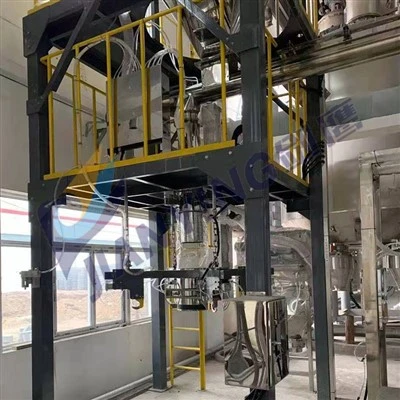
First, let’s clarify what a gross weighing bagger actually is, because terminology gets muddy. A lot of people mix it up with checkweighers, which operate on the opposite principle: they measure the weight of a packaged product after it’s bagged, then adjust or reject units that fall outside a set range. Gross weighing baggers, on the other hand, weigh the entire package plus its contents mid-bagging, adjusting the fill as you go to hit your exact target weight. For small producers who’ve been doing bagging by hand, or using a sub-$1,000 volumetric filler that spits out inconsistent weights, this is a game-changer — but only if you understand the right use cases.
Let’s start with the pain points small-scale producers face that I see every day. Most small operations I work with don’t have dedicated packaging teams. One person does production, inventory, and shipping all in a single 10-hour day. Last month, I visited a craft granola maker in rural Ohio who was running a hand-scoop and seal line. She told me she spent 2 hours every day just re-scooping bags that were too light, or throwing out ones that were overfilled and made her lose margin. “I thought buying a ‘machine’ would make this easier,” she said, “but the small tabletop fillers I tried were so finicky with my chunky granola mix that half the bags came out wrong.” That’s a common story: small producers often test low-cost filling solutions that don’t account for the quirks of their product — especially things with irregular densities, like roasted nuts, dried fruit, or seed blends, which volumetric fillers (the ones that fill a fixed volume, not weight) mess up all the time.
Gross weighing baggers solve that density problem because they measure actual weight, not volume. A volumetric filler might pour 1 cup of a light, fluffy quinoa one day and 1 cup of compacted quinoa (from being stacked in a bin) another, leading to 10% weight variation. A gross weighing bagger’s load cell (the sensor that measures weight) adjusts automatically: if you set a 1-pound target for quinoa, it will stop filling the second the sensor hits that number, regardless of how much volume that takes up. For small batches, that consistency translates directly to money. Take the Ohio granola maker: after she switched to our entry-level gross weighing bagger, her giveaways (overfilled bags) dropped by 8% in the first month, and her customer complaints about “light” orders went from 15 a week to almost zero. That’s an extra $1,200 in monthly margin she calculated — from a machine that cost less than she was spending on labor to rework bags each month.
But wait, small-scale production means limited space too. A big mistake producers make is assuming all bagging equipment is a 10-foot long industrial beast that needs a dedicated packaging room. Our core gross weighing bagger line is compact enough to fit on a 3-foot wide tabletop, no custom rigging needed. I had a cat litter producer in upstate New York who was working out of a 20×30 foot warehouse space, stacked with raw material on one end and shipping boxes on the other. He thought he’d have to lease extra space to add automation, but our bagger fits on his existing production table, next to his raw material bin and heat sealer. It even has a small footprint for the control panel, so he can move it around if he rearranges his line. For small spaces, that’s non-negotiable — and gross weighing baggers deliver here where many higher-speed machines don’t.
Another concern I hear all the time: “I don’t have a big team to maintain this kind of machine.” Gross weighing baggers are simpler to operate than people think. The control panel has three main settings: target weight, bag size, and speed. Most of our entry models are designed to run on a standard 110V outlet, same as a coffee maker, so no need for three-phase power. The only routine maintenance is wiping down the load cell and hopper once a week, and calibrating it once a month — a process that takes 5 minutes with a set of calibration weights we include, no tech support required. The Ohio granola maker’s teenage part-time employee, who has no mechanical experience, mastered it in 20 minutes. That’s a huge win for small teams that can’t afford dedicated maintenance staff.
Now, let’s talk about product-specific use cases where gross weighing baggers shine for small producers. I’ve worked with small-batch coffee roasters, for example. Roasted coffee’s density changes from batch to batch — a dark roast might be denser than a light roast from the same bean variety. A volumetric filler will underfill dark roast bags because they compact more, leading to customer complaints. A gross weighing bagger adjusts in real time to that density shift. A specialty pet food maker I work with does small batches of grain-free kibble with freeze-dried meat chunks, which are irregular and hard to fill consistently by hand. Before the bagger, she spent 4 hours a day hand-filling 5-pound bags. Now she runs the bagger while she does other tasks, cutting her packaging time by 75%.
But is there a time when a gross weighing bagger isn’t right for small production? Absolutely. If you’re producing less than 200 bags a week, the labor savings from automation might not offset the initial cost. Or if you’re packaging a very light, flowy product like powdered sugar that causes dust to clog the load cell (we’ve seen that — gross, and fixable, but a consideration). Also, if you only run one or two batches a month and don’t have the volume to keep the machine calibrated regularly, a simpler hand-sealing approach might work better. That’s why I always tell potential customers to do a quick calculation: what’s your current weekly bag count, and how much time/money are you losing to inconsistent fills or manual labor? For most small producers I talk to, the numbers add up quickly.
I also think there’s a myth that gross weighing baggers are only for “industrial” or high-volume operations. That’s a holdover from when load cell technology was expensive, and only big companies could afford the precision sensors that make this kind of weighing work. Today, entry-level gross weighing baggers are priced for small businesses, with features tailored to low-volume, flexible production. They let producers switch between bag sizes (from 1-pound coffee bags to 20-pound feed bags) in minutes, no tooling required, which is perfect for small makers who might offer multiple product lines. The cat litter producer I mentioned switches between 5-pound and 10-pound bags every other batch, and he doesn’t have to change any parts — just input the new target weight on the touchscreen.
Another angle I rarely see discussed is data. Small producers often don’t track fill consistency, but gross weighing baggers do that automatically. Every bag’s weight is logged, so if a batch is coming out too light, you can adjust the fill mid-run before you waste a whole day of product. The Ohio granola maker told me this was the biggest surprise: she could look at the day’s run at the end, see which 10 bags were slightly off, and adjust her hopper size for the next batch. That level of real-time feedback is something hand-bagging or basic fillers can’t offer, and it helps small producers make better decisions about their inventory and waste.
I’ll be honest: a few years ago, I tried to push a small blueberry farm in Michigan to invest in a gross weighing bagger for their 10-pound fresh fruit bags. They were skeptical — “We’ve been using hand scoops for 20 years, why change?” After I did a side-by-side test, they saw that their fill variation dropped from 12% to 2%, and they cut their packaging labor time from 6 hours a day to 1.5 hours. They still use hand sorting for damaged berries, but the bagger handles the fill perfectly. For small, perishable agricultural producers, that’s huge — because fresh fruit has a shelf life, so faster, more accurate packaging means less product spoiling before it hits the shelf.
At the end of the day, small production isn’t just about low volume — it’s about flexibility, tight margins, and teams that can’t afford to waste time on repetitive, error-prone tasks. Gross weighing baggers fit that model better than most equipment I’ve worked with, because they’re designed to solve the exact pain points small producers have, not just scale up high-volume operations. They’re compact, low-maintenance, affordable, and precise, which is a rare combination.

If you’re a small-scale producer who’s tired of inconsistent fills, wasting product, or spending all day packaging instead of making your product, I’d encourage you to talk through your specific needs. There’s no one-size-fits-all, but for most operations with 200+ bags a week, a gross weighing bagger isn’t a “luxury” automation tool — it’s a way to save money, cut down on waste, and free up time to focus on what you do best: making a great product. Contact us to discuss your production needs and find the right solution for your business.
Net Weighing Bagger References:
- "Small Business Packaging Efficiency Report," National Association for the Packaging Industry, 2022.
- "Load Cell Technology for Low-Volume Manufacturing," Industrial Automation Journal, Vol. 18, No. 3, 2021, pp. 45-52.
- "Cost Analysis of Filling Systems for Artisanal Producers," Small Manufacturing Digest, Q4 2022, pp. 19-23.
- "Perishable Product Packaging Best Practices for Small Agricultural Operations," Agricultural Extension Bulletin, 2023, pp. 11-17.
Wuxi Jianying Intelligent Equipment Co., Ltd.
We are one of the most professional gross weighing bagger manufacturers and suppliers in China, featured by quality products and good price. Please rest assured to buy durable gross weighing bagger for sale here from our factory. Welcome to contact us for custom service and OEM service.
Address: No.88, Xinyang Road, Ehu Town, Xishan District, Wuxi City, Jiangsu Province, P.R.China
E-mail: wuxijianying@163.com
WebSite: https://www.wuxijianying.com/
