If you’re in the business of cutting metal parts—say, for appliances, automotive panels, or HVAC ductwork—you’ve probably run up against the biggest headache of coil fed laser lines: installation time. I work in this space, running the production side for a coil fed laser cutting line supplier, and I get questions about how long a full setup takes every single day. A lot of folks call me panicking because their old line went down, or they’re upgrading from a standalone laser that can’t keep up with their coil stock, and they need hard, real answers, not the vague “it depends” you’ll get from a sales rep who’s just memorizing a script. Let’s break this down like we’re chatting over coffee, no jargon, no fluff. Coil Fed Laser Cutting Production Lines
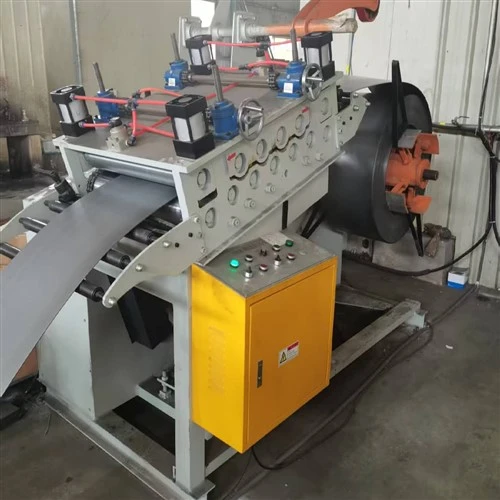
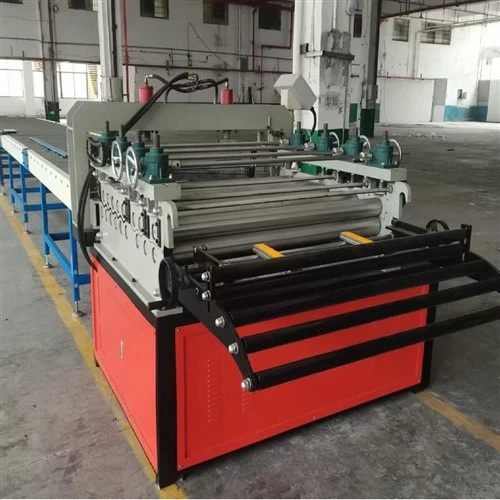
First, let’s start with what a coil fed laser line actually is, because a lot of people who ask me this don’t totally get the whole system—they just see a laser cutter and a big roll of steel nearby. It’s not just a laser bolted to a table. A full line comes with three core parts: the uncoiler (that’s the big thing that holds your raw coil, usually 10k to 40k lbs, depending on your material), the leveler (it’s like a giant iron that smooths out the wavy edges and warps in the coil, otherwise your cuts will be off), the feeder that pulls the metal through, and the laser cutting head itself, plus a parts catcher or stacker at the end to collect finished parts. When I say “installation time,” I’m talking about the whole system, not just hooking up a laser. That’s a key point I see a lot of people miss.
Now, the first thing that impacts time: the type of line you’re getting, and how customized it is. A standard off-the-shelf entry-level line (think 1.5kW or 2kW laser, for thin gauge steel or aluminum under 1/4 inch) is going to be way faster to set up than a heavy-duty line for thick material (10kW+, 3/4 inch or more) with automated changeover for different coil widths. I’ve had a customer last quarter who ordered a standard line for their small appliance shop—they were running 20ga steel, 48 inch wide coils. That install took us 3 days. Another customer, a heavy equipment maker, got a custom line that can handle 72 inch wide coils, 1 inch thick steel, plus an automated stacker that sorts parts by size and marks them for assembly. That one took 12 days. Huge difference, right? It’s not just the laser size—it’s how many extra bells and whistles you add.
Then there’s your facility prep. This is the part most customers sleep on, and it’s the number one reason install times blow out. If your shop has a dedicated, level concrete pad for the line (most coil lines weigh 20k to 50k lbs total, so the pad needs to support that, at least 6 inches thick), and you’ve got power run to the exact spot—usually 480V 3-phase, 100A minimum, but for big lines it’s 200A or more—and a way to bring the coil in (forklift access, loading dock big enough to fit the uncoiler’s frame) then we can show up and start work immediately. But if your concrete pad is cracked, or you’re running power from 100 feet away, so you have to trench for cable, or your loading dock is too low and we have to bring in a crane to offload 15k lb uncoiler parts, that adds days, sometimes a week or more. Last year we had a customer who waited 10 days just to get their concrete pad fixed after they found out it was too soft to support the line. That pushed their install from 5 days to 15 total. Don’t skip the prep.
Next, the actual on-site install steps, and how long each takes. Let’s walk through a typical mid-tier line (5kW laser, 60 inch max coil width, medium gauge) to make this real. First, offloading the equipment. Most of the line comes in skids, right? The uncoiler is one skid, leveler another, feeder/laser table another, stacker another, and control panels. Depending on your setup, offloading takes 4 to 8 hours, more if you need a crane. I always tell customers to make sure they have a forklift with enough capacity (minimum 10k lbs) or a crane on site day one.
Then, alignment. This is the secret sauce, the part that makes or breaks the line. If the uncoiler, leveler, feeder, and laser table aren’t perfectly aligned, you’ll get bad cuts, material jams, and downtime for years after install. We use laser alignment tools for this now, not just spirit levels, because metal warp throws off old methods. Aligning a mid-tier line takes 1.5 to 2 days. No cutting corners here—we’ve seen a customer who tried to rush alignment, and three weeks later their line was jamming every 10 minutes, costing them $2k an hour in lost production. That’s not worth it.
Once alignment is done, it’s time to hook up all the utilities. Power, obviously—wire runs, grounding for the laser (super important, static can blow a laser head if it’s not grounded right), compressed air for the assist gas (nitrogen or oxygen, depending on material), and exhaust for the fumes from cutting metal. This part usually takes 1 day for a mid-tier line, longer for bigger ones with more tools. We test all connections here first—no one wants to fire up a $500k line and find a loose wire that fried the laser.
Then, the big test: coil and cutting trials. We bring in a sample coil from your material, run it through the line, cut a few test parts, check for accuracy, adjust the leveler if the metal is still warping, tweak the feeder speed, make sure the parts stacker is sorting right. For a standard line this takes 1 to 2 days. For a custom line with automated changeovers for different coil thicknesses, that can take 3 to 4 days—we have to test every material type you run, every width, every cut pattern, so there’s no surprises when your crew takes over.
Wait, and don’t forget training. Once the line is running, we don’t just leave. We train 2 to 4 of your operators on how to change coils, clear jams, do basic maintenance, adjust cut parameters. For a simple line, that’s 4 to 6 hours. For a complex line with automation, that can be a full day or more. That’s a hidden part of installation time, but it’s non-negotiable—if your crew doesn’t know how to use it, a fast install is useless.
Now, let’s do the math for the mid-tier line I mentioned earlier: 4 hours offload, 2 days alignment, 1 day utilities, 1 day trial runs, half day training. That adds up to about 5 total on-site days, right? But add in facility prep time (if they did that right, it’s 1 to 2 days before our crew arrives) so total time from order to first production is 6 to 7 days. That’s a standard timeline for most of our mid-tier lines. But like I said, a heavy-duty custom line? That’s 10 to 14 on-site days, plus 2 weeks of order-to-delivery time before install even starts, because we have to build the custom parts. A super small, entry-level line for a startup fabricator? We can have that installed and running in 2 to 3 days total, if their facility is ready.
But here’s the thing I wish more people understood: it’s not just about the days on site. There’s also the time between when we deliver the line and when it’s ready to run, which is mostly dependent on you. Let me give you a real example from my team last year: a customer in Chicago ordered a standard line back in March. They were supposed to have their concrete pad done in 2 weeks, but they waited 3 weeks because their general contractor got delayed on another job. Then, when the equipment arrived, their forklift was broken, so they had to rent one, which took another 5 days. Total time from order to first production was 8 weeks, instead of the planned 3. That’s avoidable. We can’t speed up your facility prep, and we can’t work around your broken equipment.
Now, what about common mistakes that add time? Let’s list them out, so you can avoid them: First, not measuring your space properly. I had a customer last year who ordered a line that was 10 feet too long for their shop. We had to modify the laser table, which added 2 weeks. Second, wrong power. Most people don’t realize coil fed laser lines need 3-phase power, not 1-phase. We had a customer who tried to use their existing 1-phase outlet, so they had to upgrade the electrical panel, which added a week. Third, forgetting exhaust. Laser cutting makes fumes, and if you don’t have a proper exhaust hood and ductwork installed, we can’t run the line for long, so that adds time to adjust. Fourth, not having enough space for coil storage. Uncoilers can hold coils that are 5,000 lbs, so you need space to bring the coil in, load it, no tight corners. If you have to move stuff around in your shop on install day, that delays things.
Wait, also, what about retrofitting an old laser into a coil fed line, instead of buying a new one? That’s a different story. If you already have a standalone laser cutter, and you just want to add the uncoiler, leveler, and feeder to make it coil fed, that install is way shorter. Usually 2 to 4 days, depending on how compatible your existing laser’s control system is. If your old laser is 10 years old, you might have to update the software to sync it with the new feeder, which adds a day or two, but it’s way faster than a full line install.
Let me also address a question I get all the time: can we install it overnight? No. It’s not just hooking up a plug. You need a team of 3 to 4 skilled technicians, and alignment, testing, training can’t be rushed. We’ve tried to do quick installs before, and it always ends up with the customer having downtime a week later because something was misaligned. Cutting corners on install time is a false economy. A $10k saved now can cost you $10k a day in lost production later.
Another thing: seasonal delays. If you order a line in December, around the holidays, our install teams are stretched thin, so it might take a few extra days to schedule the install. Same for summer, when a lot of shops do facility upgrades. We always tell customers to plan 4 to 6 weeks lead time for a standard line, 8 to 12 weeks for custom, that includes the build time and install time. If you need it faster, we can push for expedited build, but on-site time won’t change much—you can’t rush alignment.
Now, let’s wrap this up. The short answer for most coil fed laser lines: standard entry-level, facility ready, 2 to 3 days on-site; mid-tier, 4 to 6 days on-site; heavy-duty custom, 10 to 14 days on-site. But the total time from when you decide to buy to when you’re cutting production parts depends way more on your shop prep than the install itself. Do your concrete, power, space check before we show up, and you’ll be up and running in no time.
If you’re thinking about upgrading to a coil fed laser line, or you have questions about your specific setup, hit me up. I’m here to help you avoid the mistakes that make install take longer than it should, not just sell you a line. We can walk through your shop, figure out what you need, and give you a timeline that’s actually realistic, not the sales fluff you’ve heard before. Don’t wait until your old line is failing to plan—reach out, and let’s get your new production up and running smoothly.
Coil Fed Laser Cutting Production Lines References
- FANUC America Corporation. (2022). Installation and Startup Guidelines for Coil Fed Laser Cutting Systems.
- American Society of Mechanical Engineers (ASME). (2021). Safety Standards for Industrial Laser Cutting Equipment Installation.
- Fabricators & Manufacturers Association (FMA). (2023). Pre-Installation Checklist for Metal Processing Lines.
- Laser Institute of America. (2020). Best Practices for Aligning Coil Fed Laser Cutting Lines.
Yongkang City Bohong Intelligent Equipment Co., Ltd.
As one of the most reliable coil fed laser cutting production lines manufacturers and suppliers in China, we also support customized service. With abundant experience, we warmly welcome you to buy advanced coil fed laser cutting production lines from our factory. If you have any enquiry about quotation, please feel free to email us.
Address: No. 176 Yinggui North Road, Chengxi New Area, Yongkang City, Zhejiang Province
E-mail: bohonglasertech@Outlook.com
WebSite: https://www.bohonglasertech.com/
