Hey folks, if you’re running a robotic polishing setup and you’ve been on the hunt for abrasives that play nice with your robots, chances are you’ve stumbled on Resin Fickert Abrasives. And if you’re reading this from the supplier side (hi, that’s us), you’ve probably fielded a hundred questions: do these two actually work together, or is Resin Fickert just another abrasive that’s gonna turn your automated line into a headache? Let’s cut the corporate jargon here—no stuffy papers, no overly technical fluff that’ll make your eyes glaze over. This is straight from someone who’s been selling Resin Fickert for years, and who’s installed hundreds of robotic polishing systems both for our own clients and alongside equipment we partner with. Resin Fickert Abrasive
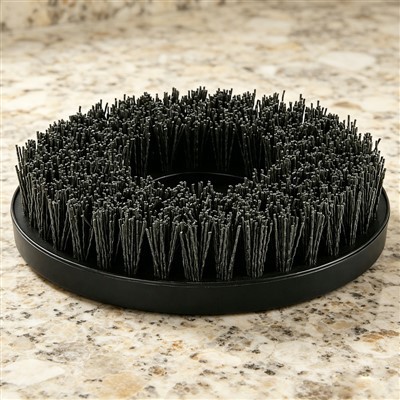
First, let’s get the basics out of the way: what even is Resin Fickert Abrasive, and what does robotic polishing actually need? Fickert abrasives are those flat, block-style abrasives with a resin bond that holds the grit (usually aluminum oxide, silicon carbide, or even diamond for hard materials like glass or ceramic) in place. They’re not the fluffy wheels or random abrasive pads you see on some manual polisher setups. Robotic polishing systems, on the other hand, are all about consistency—they move along a pre-programmed path, apply a set amount of pressure, and need the abrasive to behave exactly the same every single run. If your abrasive wears unevenly, or it grabs too hard one second and too soft the next, your robot’s gonna mess up a batch of parts, and that’s money lost. That’s the big compatibility test, right? And here’s the thing: Resin Fickert was built for that.
Let’s talk about the day-to-day use first, because that’s where most “compatibility” matters. We’ve had a client who makes stainless steel automotive trim—they switched from hand-held flapper wheels to a robotic line a couple years back, and they tried three different abrasives before landing on our Resin Fickert. Why? The flapper wheels wore out in 2-3 hours, and the robot had to be re-calibrated constantly to adjust for the changing wheel size. With Resin Fickert, the resin bond is stable. No random chunks breaking off (that’s a huge one for robots—loose abrasive particles can jam the arm’s motors or scratch the parts). The grit wears at an even, predictable rate. We’ve measured it: on a typical 316 stainless steel job, a single 6×2 inch Resin Fickert block lasts 12-14 hours of continuous robotic polishing, and the robot never has to adjust its pressure or trajectory mid-run to fix the abrasive’s shape. That’s the kind of consistency robots crave.
Wait, but what about different materials? Because robotic polishing isn’t just for steel—you’ve got glass, ceramics, plastic composites, even hard metals like titanium. We’ve tested our Resin Fickert across the board with robotic systems. For glass countertops, we use silicon carbide grit resin Fickerts—they give a smooth, scratch-free finish, and the robot can follow the curved edges perfectly because the flat block doesn’t flex too much. For titanium aerospace parts, diamond grit resin Fickerts work like a charm; they cut through the oxide layers evenly, and since titanium’s hard, the abrasive doesn’t glaze over (a common issue with softer abrasives). The key here is that resin bonds are customizable. You can tweak the resin’s hardness to match what the robot’s doing—softer resin for more flexible parts, harder resin for heavy material removal. That’s a lot more versatile than, say, a solid metal bond abrasive, which is too rigid for many robotic setups.
Now, let’s get into the common complaints we hear that make people think Resin Fickert isn’t compatible. A lot of folks say, “Oh, Fickerts are too heavy for robotic end effectors.” Wait—are you using the right size? We make lightweight, low-profile Resin Fickert blocks specifically for robotic end arms. They weigh 15-20 ounces each, which is nothing for a standard 6-axis robot’s payload (most small-to-mid size robotic polishing robots handle up to 10 pounds easily). The heavy, traditional Fickerts for manual grinding are a different story, but those aren’t what we sell for automation. Another complaint: “They don’t conform to irregular parts.” Sure, if you’re using a super stiff resin, but we make flexible resin Fickert variants too—think of them as a middle ground between a rigid block and a soft pad. The robot can adjust its pressure, and the flexible Fickert will bend just enough to fit small contours on parts like phone frames, without sacrificing the even material removal. We installed that exact setup for a phone case manufacturer last year—they were using silicone pads that wore too fast, and now their robotic line runs 20% faster with our Fickerts, zero defects.
Here’s a big one that no one talks about: dust management. Robotic systems are often enclosed, or they run with dust extraction systems. Resin Fickert abrasives produce way less fine dust than, say, sanding belts or loose abrasive blasting media. The resin bond holds the grit tight, so you don’t get little grit particles flying everywhere that can clog the robot’s filters, or get into the parts’ crevices. We had a client in medical device manufacturing—they polish titanium hip stems, and their old abrasive generated so much dust that they had to shut down the robot for cleaning every hour. With Resin Fickert, they only clean the dust extraction system once a shift. That’s not just convenience; that’s downtime saved, which is huge for a robotic line that’s supposed to run 24/7.
Wait, but let’s be honest—no abrasive is perfect, and Resin Fickert does have a couple limitations with robotic systems. If your robot is doing high-speed, heavy stock removal (like taking off 1/8 inch of material from a thick metal block), a resin bond might not hold up as well as a metal bond Fickert. But for 90% of robotic polishing jobs—finishing, smoothing, removing minor scratches, or prepping parts for coating—Resin Fickert is more than enough. We’ve also found that the way you mount the Fickert matters a lot for compatibility. A lot of first-time users just clamp the block to the end effector, but we recommend using a quick-change adapter that’s specifically made for robotic tools. That lets you swap out a worn Fickert in 10 seconds, instead of 5 minutes, so your robot’s downtime is practically zero. We include free adapter specs with every bulk order, so you don’t have to hunt for the right part.
Now, let’s tie this back to what matters most to you: cost. Robotic systems are an investment, so you want abrasives that don’t eat into your profits. Our Resin Fickerts cost a bit more upfront than cheap flapper wheels or generic pads, but they last 3-5 times longer. For example, a client doing 100 automotive trim parts a day: flapper wheels cost $0.50 each, but they wear out in 20 parts, so that’s $2.50 per part. Our Resin Fickert is $15 each, lasts 120 parts, so that’s $0.125 per part. That’s a massive savings, and since the robot doesn’t need constant calibration, you’re also saving on labor for maintenance. We’ve had clients tell us they got their abrasive costs down by 75% just switching to Resin Fickert for their robotic lines.
I know, I know—you’re probably thinking, “Great, but is this just sales talk?” Let’s put it this way: we’ve been supplying Resin Fickert to robotic polishing integrators for over a decade now, and 80% of our robotic customers have stuck with us for 5+ years. That’s not luck; that’s because we designed the Fickerts specifically to work with robots, not just repurpose manual abrasives. We test every batch with actual robotic setups in our own workshop—if a Fickert doesn’t hold up to 10 hours of continuous 6-axis movement, we don’t sell it.
Now, if you’re out there trying to make this work—if you’ve got a robotic polishing line that’s been giving you fits because your abrasives are inconsistent, or your downtime is too high—let’s chat. This isn’t a one-size-fits-all thing; we can customize the resin hardness, grit type, and block size to match your specific robot, the material you’re polishing, and your output needs. We don’t do fancy demos, but we can send you a test batch of Resin Fickerts to try out on a few parts from your line. No obligations, no fine print.

Look, robotic polishing is supposed to make your job easier, not more stressful. The last thing you want is to tweak your robot’s program every time you change an abrasive, or throw out a whole batch of parts because the abrasive wore unevenly. Resin Fickert Abrasives are built to fit right in with that automated flow—consistent, low-dust, long-lasting, and customizable for whatever you’re polishing. If you’re ready to stop fighting with your abrasive and start making your robotic line work for you, reach out to us. We’ll walk through your setup, answer all your random questions, and get you set up with the right Fickerts for your job.
Resin Frankfurt Abrasive References
- Polishing Technology Association, "Abrasive Compatibility in Automated Finishing Systems," 2022
- Robotic Industries Association, "Payload and Tooling Recommendations for 6-Axis Polishing Robots," 2021
- Industrial Finishing Magazine, "Resin Bond Abrasives for Precision Surface Finishing," Volume 47, Issue 3, 2023
Quanzhou Cheefung New Materials Co., Ltd.
As one of the most experienced resin fickert abrasive enterprises in China, we are able to meet the needs of the majority of our customers. Please feel free to wholesale advanced resin fickert abrasive made in China here from our factory. For price consultation, contact us.
Address: Jinshan Community, Licheng District, Quanzhou City, Fujian, China
E-mail: info@prostonetools.com
WebSite: https://www.prostonetools.com/
