If you’re in industrial piping, process automation, or fluid control, you’ve definitely seen pneumatic actuated ball valves popping up—on oil rigs, in food processing plants, even in wastewater treatment facilities. As a supplier of these valves, I get questions all the time from folks who know they need one but don’t quite grasp how it works. Let me break it down like I would with a regular at a trade show, no stuffy engineering jargon (well, just enough to make sense). Pneumatic Actuated Ball Valve
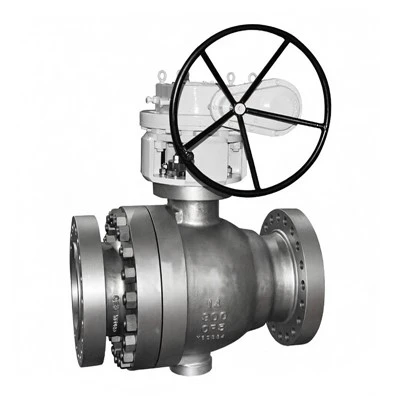
First, let’s start with the two main parts that make this valve tick: the ball valve itself and the pneumatic actuator. Most people mix them up, but they’re totally separate pieces that work together. The ball valve is the “stopcock” part—inside the pipe, there’s a hollow, perforated ball, right? When the hole lines up with the pipe, fluid flows through; when it’s turned 90 degrees, the solid part of the ball blocks the flow. That’s the basic ball valve job. The pneumatic actuator is the “muscle” that spins that ball. No electricity needed here—just compressed air. That’s why pneumatic actuated valves are so popular in industries where spark hazards are a big deal (like chemical plants) or where power outages don’t mess with compressed air lines as much.
Now, let’s get into the actuator, because that’s the magic. There are two main types of pneumatic actuators we use: spring return and double acting. Spring return is the simpler one for most small to mid-sized jobs—think turning a water line on or off. It’s got a sealed cylinder, a piston inside it, and a spring on one end. When compressed air comes into the top of the cylinder, the piston pushes down. That piston’s connected to a rack and pinion gear system—basically, a straight toothed bar (the rack) that attaches to the piston, and a round toothed gear (the pinion) that’s glued to the ball valve’s stem. When the piston moves down, the rack slides, which spins the pinion—and that spins the ball 90 degrees. Want it to shut off? Just vent the air out of the top of the cylinder. The spring pushes the piston back up, reversing the motion and turning the ball the other way. Super straightforward, no fancy wiring.
Double acting actuators are for heavier, more consistent use—like controlling large pipelines where you need to keep the ball in a specific position, not just open or closed. Instead of a spring, they have compressed air coming into both ends of the cylinder. Push air to one end, piston moves that way; push air to the other, it moves back. No spring, so you don’t get that automatic fail-safe if air pressure drops, but you can hold the ball halfway—perfect for throttling flow instead of just on/off. I’ve seen these on natural gas transmission lines where you need to adjust pressure gently, not just slam it shut.
Wait, let’s talk about the ball itself, because it’s not just a metal sphere. We use different materials depending on what’s flowing through the pipe. If it’s drinking water? Brass or stainless steel, easy. If it’s corrosive chemicals? We line the ball with PTFE (Teflon) to keep it from rusting or reacting. And the seal—around the ball, there’s a rubber or PTFE seat that presses against the ball to make a tight leak-proof seal. That’s why when the valve’s closed, nothing seeps through. If you get a bad seal, it’s usually because the seat’s worn out, not the ball—another thing I tell customers when they call with issues.
Now, how does it all work in a real setup? Let’s say you have a food processing plant that needs to shut off milk flow if a pressure gauge detects a blockage. The control system sends a signal to the solenoid valve— that’s the tiny, quick switch that directs compressed air to the actuator. If the blockage alert goes off, the solenoid valves vent air from the actuator’s top, the spring pushes the piston back, and the ball turns to closed. If everything’s normal, air stays in, and the valve stays open. No human touching it, no electricity running to the valve—just air, which is cheap and reliable for these jobs.
I get asked a lot: “Why not just use a manual ball valve?” Well, if you’re turning a valve that’s 10 inches wide, manual would take a crew of two with wrenches. Pneumatic actuators do that in a few seconds. And for remote locations? You can hook up a solenoid to a PLC (programmable logic controller) so someone in a control room 10 miles away can open or close it. That’s a game-changer for pipelines or remote mining sites.
But it’s not all perfect—let’s be real. Compressed air can have moisture or debris in it, right? If that gunk gets into the actuator cylinder, it can gum up the rack and pinion, making the valve stick. That’s why we always tell customers to add an air filter regulator to their system—cleans the air and keeps pressure steady. Also, if your air supply drops below the minimum PSI (usually 80 to 100 PSI for standard actuators), the actuator won’t have enough force to turn the ball. That’s why spring return models are nice for fail-safes—if air cuts out, they default to open or closed, depending on how you set them.
As a supplier, I’ve seen firsthand how often these valves get overlooked, but they’re the quiet workhorses of industrial fluid control. Last year, a local wastewater treatment plant came to me because their old electric actuated valves kept shorting out when they had floods. Swapping to pneumatic ones fixed it in a week—no more downtime, no more spark risks near the wet piping. That’s the kind of win we love.
If you’re in the market for a pneumatic actuated ball valve, don’t just pick the first one you see. Think about what you’re controlling: is it clean water, corrosive chemicals, thick slurry? What size pipe do you need? Do you need a fail-safe if air goes out? Those are the questions we ask every time someone reaches out, and we don’t push a one-size-fits-all valve—we help them pick the right one. No pressure, no confusing sales pitches, just honest answers.
If you’ve got questions about sizing, materials, or how they’d work for your setup, reach out—we’re here to help get you the right valve for your needs. No hidden fees, just straight talk on what works.
Ball Valve References:
- Engineering ToolBox. Pneumatic Actuated Valves.
- ISA Automation Standards. Fluid Control Valve Fundamentals.
- Emerson. Industrial Pneumatic Actuator Technology.
- ASTM International. Materials for Ball Valve Components.
Zhejiang Chenxiang Valve Co., Ltd.
We are one of the most professional pneumatic actuated ball valve manufacturers and suppliers in China, also support customized service. We warmly welcome you to wholesale high quality pneumatic actuated ball valve in stock here from our factory. If you have any enquiry about quotation, please feel free to email us.
Address: No. 126 Zhongxing Road, Wenzhou Industrial Park, Longwan District, Wenzhou City, Zhejiang Province
E-mail: vip@chenxiangvalve.com
WebSite: https://www.cxindustrialvalve.com/
