When I first started out as a chemical woven bags supplier, I got asked this question at least three times a week from people in the granular chemical industry: “Can chemical woven bags really hold our products safely?” At the time, I’ll admit I didn’t have a ready, comprehensive answer— I was too busy building relationships and refining our products to dig into the specifics. But over the past eight years, as I’ve stood on our production floor, tested each batch of bags ourselves, and sat across from plant managers, formulation chemists, and logistics coordinators, I’ve come to see that this isn’t a yes-or-no question. It’s a question that depends on three things: what the granular chemical is, what the bag is made to withstand, and how you use it. Chemical Woven Bags
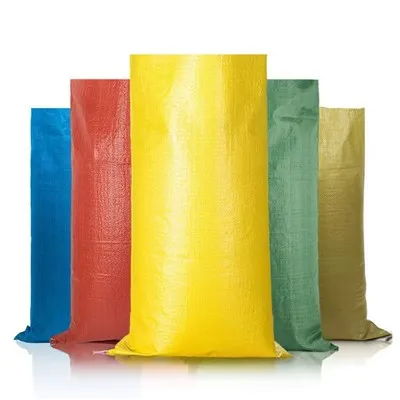
Let’s start with the most basic part: what is a chemical woven bag, anyway? For years, people think they’re just generic woven polypropylene bags— the kind you’d use for flour or animal feed. But that’s not true. Our chemical woven bags start with 100% virgin polypropylene (PP) resin, not recycled, because recycled resin can have unexpected chemical residues that might leach into the product or react with it. We extrude that resin into thin tapes, then weave it into a tight, uniform fabric. But the real difference comes next: the finish. We line some of our bags with low-density polyethylene (LDPE) or linear low-density polyethylene (LLDPE) film, which acts as a barrier. For products that need extra protection, we add a coating of ethylene vinyl alcohol (EVOH), which blocks moisture and even some chemical vapors. And we can treat the exterior to resist UV light, since a lot of chemical products are stored or shipped outdoors.
Now, back to the core question: can these bags hold granular chemicals? The short answer is yes— but only if you match the bag’s specifications to the product. Let’s break down what works and what doesn’t, because that’s where most people run into problems.
First, let’s talk about granular chemicals that are perfect for chemical woven bags. Take industrial fertilizers, for example. Granular urea, ammonium sulfate, and potassium chloride are all common here. We supply bags to a midwestern agricultural chemical plant that ships 50,000 tons of granular fertilizer a year. Their old packaging was multi-layer paper bags, which would tear easily when stacked in railcars, and they had issues with moisture getting in during rainy shipping seasons. When they switched to our chemical woven bags, lined with LDPE, they cut bag failures by 78% in the first six months. The lining keeps moisture out, which is critical because even a tiny amount of water can cause granular fertilizer to clump together, making it hard to empty at the farm. Another example is industrial salt— sodium chloride used for water treatment or snow melting. Granular salt is corrosive, but our bags are treated with a corrosion-resistant coating on the exterior. A municipality in the Northeast has been using our 50-pound bags for their road salt since 2019, and they haven’t had a single report of bags breaking during delivery to storage lots. Even food-grade granular additives— like citric acid or sodium bicarbonate used in beverage processing— work great in our food-safe lined woven bags, since we test each batch for residual chemicals that could contaminate the product.
But here’s the catch: not all granular chemicals are a match. Let’s talk about what to avoid, because misapplication is the most common mistake we see. Highly reactive granular chemicals, for example, are a no-go for standard woven bags. Think granular sodium metal, which reacts violently with water. Even a pinhole in a bag’s lining can let in moisture from the air, causing a dangerous reaction. Or granular oxidizers like ammonium nitrate in its pure form— while fertilizer-grade ammonium nitrate is safe when handled properly, pure granular oxidizers require specialized packaging like steel drums or high-density polyethylene (HDPE) rigid containers, because the woven fabric’s weave is too porous to prevent friction sparks between particles from igniting a reaction. We always ask new clients a set of critical questions before we quote a bag: what’s the chemical name of the granular product, its pH level, its particle size, its moisture content, and will it be stored or shipped in extreme temperatures? Those questions tell us exactly what grade of woven bag they need. If a client brings us a request for a bag for pure granular oxidizer, we don’t try to oversell them on our standard line— we’ll recommend the right packaging, even if it doesn’t come from our factory. Trust, to me, is more important than a sale.
Now, let’s get into the science that makes chemical woven bags work for the right products. This is stuff I learned from our third-party testing lab, not just from on-the-job experience. First, the tensile strength of woven PP: our bags have a tensile strength of over 500 lbs per square inch, which means they can hold up to the weight of 50 lbs (or even up to 100 lbs for heavy industrial products) without tearing. But that’s not enough. The key for chemical packaging is chemical resistance testing. We test each batch of bags by exposing them to the specific granular chemical the client will package, then check for signs of degradation— brittleness, cracking, or leaching. For example, when we test bags for granular calcium chloride, we use a 14-day immersion test where we submerge the bag’s fabric in a 30% calcium chloride solution, then measure how much the tensile strength drops. If it drops more than 10%, we adjust the lining or coating until it meets our standards.
Another big factor is particle size. Chemical woven bags work best for granular chemicals that have a particle size between 0.1 mm and 10 mm. If the particles are smaller than that— like powdered detergent or fine graphite— they can sift through the weave of the PP fabric, even if it’s tight. For those products, we recommend a woven bag with an extra inner liner, or a different type of packaging entirely. If particles are larger than 10 mm, like coarse gravel or large prills of fertilizer, they can put too much stress on the seams of the bag during stacking and shipping, leading to splits. We’ve designed special reinforced seams for clients who package larger granular particles, adding an extra strip of woven PP along the bottom and top to distribute weight more evenly.
I also want to talk about practical use cases, because a bag is only as good as how you use it. A few years back, a client in the chemical industry bought our standard lined woven bags for granular copper sulfate, but they were having a lot of issues with bags breaking. When we visited their warehouse, we found out they were stacking 10 bags high on wooden pallets, and they were using forklifts with forks that were too sharp, puncturing the bottom bags. That wasn’t the bag’s fault— it was improper handling. We recommended they add pallet covers to protect the bottom layers, and switch to forklift forks with rubber guards. The broken bag count dropped to zero after that. Another common mistake is leaving bags open too long before sealing. Granular chemicals can absorb moisture from the air even through the lined bag, especially in humid climates. We always tell clients to seal the bags immediately after filling them, either with heat sealer or staples that are coated in corrosion-resistant material.
What about regulatory compliance? This is a huge one for the chemical industry, because there are strict rules about packaging for hazardous materials. Our chemical woven bags are tested and certified for compliance with OSHA, REACH, and FDA standards, depending on the product. For example, if a client is packaging granular chemicals that are considered hazardous under OSHA’s Hazard Communication Standard (HCS), we can design bags with UN certifications for specific hazard classes. A few years ago, we worked with a company that produced granular herbicides, which are classified as Class 9 hazardous materials. We modified our bags to meet UN 1H2/Y certification, which means they can hold up to 40 lbs of product, resist impact during transport, and prevent leakage. That certification let the client ship their herbicides internationally, which was a big win for their business.
Over the years, I’ve seen a lot of misinformation online about chemical woven bags. Some people say they’re not durable enough, others say they can’t be used for any chemical products, and still others claim they’re only good for low-grade agricultural use. But that’s not true. It’s all about matching the bag to the product. I’ve seen our bags hold granular chemicals in temperatures ranging from -20°F to 140°F, in humid coastal regions and dry desert climates, without failing. I’ve seen them used for everything from food-grade granular vitamin additives to industrial water treatment chemicals. The key is working with a supplier who understands the science behind the bags, not just selling a standard product.
If you’re in the granular chemical industry and you’re still using outdated packaging— like multi-layer paper bags that tear easily, or expensive rigid plastic drums that are heavy and hard to transport— chemical woven bags might be the solution you’re looking for. They’re lighter than paper or plastic, which lowers shipping costs, they’re reusable (if you don’t have hazardous residue), and they’re much more durable than traditional packaging for the right products. But if you’re handling highly reactive or oxidizing granular chemicals, standard woven bags aren’t the right fit, and that’s okay— a good supplier will be honest about that.
At the end of the day, our job as a chemical woven bags supplier isn’t just to sell bags. It’s to help our clients find the right packaging that keeps their products safe, meets regulatory requirements, and saves them money. I’ve been in this business long enough to know that there’s no one-size-fits-all answer to whether chemical woven bags can be used for granular chemical packaging. But with the right specifications, testing, and handling, they’re one of the most reliable, cost-effective packaging solutions on the market for most granular chemical products.

If you’re currently struggling with packaging failures for your granular chemicals, or you want to learn more about what our chemical woven bags can do for your operation, we’d love to hear from you. We can provide custom samples, run testing for your specific product, and help you find the right packaging solution that fits your needs.
PP Woven Bags References
- Plastics Industry Association. (2022). Chemical Resistance of Polypropylene Woven Fabrics.
- Occupational Safety and Health Administration (OSHA). (2021). Hazard Communication Standard: Packaging Requirements.
- European Chemical Agency (ECHA). (2020). Guidelines for Packaging of Granular Chemical Substances.
- International Organization for Standardization (ISO). (2019). ISO 14890: Woven Polypropylene Bags for Packaging.
Liaoning Xunlian Packaging Products Co., Ltd.
Liaoning Xunlian Packaging Products Co., Ltd. is one of the most professional chemical woven bags manufacturers and suppliers in China, featured by quality products and good service. Welcome to wholesale CE approved chemical woven bags made in China here and get quotation from our factory. Customized orders are welcome.
Address: Chaoyang Industrial Park, Kangping, Shenyang, Liaoning, China.
E-mail: info@xunlianpack.com
WebSite: https://www.xunlianpack.com/
