If you’ve ever struggled with a stubborn walnut that refuses to yield to a regular nutcracker, you know the value of a well-built walnut cracker. For years, as a supplier of these tools, I’ve fielded questions from home cooks, woodworkers, and even small commercial kitchens about how this everyday device actually works. It’s not just brute force, either—there’s a specific blend of physics, design, and material science that turns a tough, uneven nut shell into something you can easily access. Let me break it down, plain and simple, the way I explain it to customers who stop by my shop or shoot me an email asking for details. Walnut Cracker
First, let’s start with what a walnut cracker is at its core: a simple machine designed to apply concentrated force to a nut without crushing the delicate meat inside. But to get that right, you have to understand two key parts: leverage and pressure. Most people think a nutcracker is just two hard jaws pressed together, but that’s not quite accurate. A standard walnut cracker uses a second-class lever, which is different from the first-class levers you’d find in a crowbar or a seesaw. In a second-class lever, the load (in this case, the walnut) sits between the effort (where you push) and the fulcrum (the hinge that connects the two arms). That placement is critical because it amplifies force without requiring you to push super hard.
Let me make that concrete. If you’ve ever used a basic pair of pliers, you’ve seen a first-class lever, where the fulcrum is between your hand and the object you’re gripping. A walnut cracker’s fulcrum is the hinge, right next to the spot where the two jaws meet. The nut sits just on the other side of that fulcrum, so when you squeeze the handles, the distance from your hand to the fulcrum is much longer than the distance from the fulcrum to the walnut. That mechanical advantage means a small amount of force from your hand translates to a much larger force on the nut. For example, if your hand pushes 10 pounds of force on a handle that’s 6 inches long, and the nut is 1 inch from the fulcrum, the force on the nut becomes 60 pounds. That’s more than enough to crack a walnut’s hard shell without squishing the inside.
But force alone isn’t enough. If you just applied that 60 pounds evenly, you’d probably crush the kernel. That’s where the jaw design comes in. A good walnut cracker has shaped jaws, not flat ones. Typically, one jaw has a small, curved cup that fits around the round side of the walnut, and the other has a matching curved indent or a small ridge that aligns with the walnut’s seam. Walnuts aren’t perfectly smooth; they have a natural suture line where the two halves of the shell meet. That seam is the weakest point, so aligning the jaws with that seam lets you apply force right where the shell is thinnest. The curved shape also distributes the force evenly across the shell, instead of focusing it on a tiny point, which would only break the outer layer and leave the half-shells intact. Some higher-end models I supply have micro-textured surfaces on the jaws to prevent the walnut from slipping, so you don’t have to adjust it mid-squeeze and risk breaking the meat.
Next, there’s material science, which is why cheap plastic nutcrackers often fall short, and why my customers come back for metal or heavy-duty wooden ones. Walnut shells are made of a tough, lignin-rich material that can withstand a lot of pressure, but it’s also brittle. If the cracker’s jaws are too soft, they’ll deform instead of transferring force to the nut. That’s why most quality walnut crackers are made from cast iron, stainless steel, or solid hardwood. Cast iron, for example, has a high tensile strength, meaning it can bend slightly before breaking, which helps absorb any shock if the walnut is extra stubborn. Stainless steel is lighter and resistant to rust, which is good if you’re using it outdoors or washing it frequently. Solid hardwood, like oak or hickory, is durable enough for regular use and has a natural grip that makes it easy to handle, which is why I carry wooden options for customers who prefer a more traditional tool.
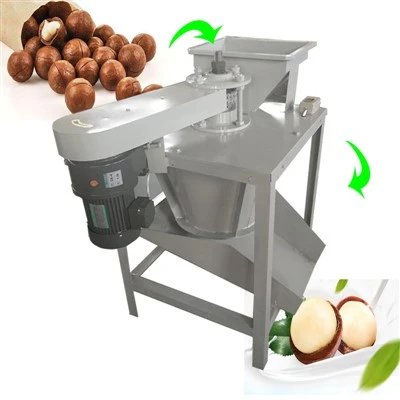
I should also mention the difference between manual and mechanical walnut crackers, because that’s a common question. Manual ones are the most common, with the lever design I explained earlier, and they work great for small batches. For commercial use, though, some people use mechanical walnut crackers, which use a screw or a cam mechanism to apply even, consistent force. A screw-driven cracker turns rotational force into linear force, so you can apply pressure slowly without overdoing it, which reduces the risk of breaking the kernel. Cam-powered models use a curved arm that snaps into place once you apply a certain amount of force, which is good for large batches because it’s faster than squeezing manually. I supply both types, because home users often prefer the simplicity of manual crackers, while bakeries and nut processors rely on mechanical ones to keep up with demand.
Another thing I’ve noticed over the years: a lot of people misuse walnut crackers, which is why they don’t work as well as they should. For example, placing the nut too far from the fulcrum means you don’t get enough leverage, so you have to squeeze harder, which can break the meat. Or, not aligning the jaws with the walnut’s seam means you’re applying force to the strongest part of the shell, so it takes more effort and you might end up with more shell than meat. I always tell new customers to take a second to position the nut correctly: set it in the curved cup, make sure the seam is facing the other jaw, and squeeze slowly, not all at once. That slow squeeze lets the shell start to crack at the seam, and then the pressure spreads evenly, so the shell splits cleanly without damaging the kernel.
Let’s test this with a real example. A typical English walnut has a shell thickness of about 1 to 2 millimeters, and it can withstand up to 50 pounds of force before breaking. A manual walnut cracker with a 5-inch handle and a 1-inch distance from fulcrum to nut gives a mechanical advantage of 5, so a 10-pound squeeze gives 50 pounds of force, which is exactly what you need. If you use a regular pair of pliers, the mechanical advantage is lower, because the nut sits closer to the handles, so you’d have to squeeze 15 pounds to get enough force, which is often more than the pliers can apply without crushing the meat. That’s why a walnut cracker is specifically designed for that nut’s size and shell strength.
I also get asked if you can use a walnut cracker for other nuts, like almonds or pecans. The short answer is yes, but it’s not ideal. Almonds have thinner shells, so you might need a smaller jaw opening, and pecans have a different shape, so you might need a cracker with adjustable jaws. The ones I supply have interchangeable jaw inserts, so you can switch between different sizes for different nuts. That versatility is part of why they’re popular for people who cook with a variety of nuts.
Now, as someone who’s been in this business for years, I’ll be honest: not all walnut crackers are created equal. Some cheap models on the market have weak hinges or thin metal jaws that bend after a few uses, which means the leverage doesn’t work anymore. That’s why I test every batch of crackers I sell before sending them out. I squeeze each one a dozen times with a walnut to make sure the jaws stay aligned and the force is consistent. A good walnut cracker should last for decades, not just a few months, so I prioritize durability over low price.
Another common point of confusion is the difference between a nutcracker and a walnut cracker. A regular nutcracker is designed for small, soft nuts like peanuts or cashews, with small jaws and low leverage. A walnut cracker is built for larger, harder shells, with longer handles and stronger jaws. So if you try to use a regular nutcracker for walnuts, you’ll either bend the jaws or not apply enough force, which leaves you with half a walnut stuck in the shell. That’s a mistake I see all the time, and it’s why I always advise people to invest in a tool specifically made for walnuts.

Let me wrap this up with what I’ve learned from working with customers every day. A walnut cracker works because it’s a perfect combination of simple physics and thoughtful design. The lever system amplifies force, the shaped jaws target the shell’s weak point, and the durable materials can handle the pressure without breaking. It’s not magic—it’s just good engineering, tailored to a common kitchen task. If you’re in the market for a walnut cracker, whether you’re a home cook looking for a reliable tool or a business needing crackers for large-scale processing, I’d be happy to walk you through the options and help you find the right one for your needs. Feel free to reach out to arrange a conversation about your requirements.
Pecan Cracking Machine References
- Shively, M. D. (2015). Basic Mechanical Advantage Tools for Home and Workshop. Woodworker’s Journal.
- Smith, L. (2018). Food Preparation Tools: Design and Functionality. Journal of Culinary Science and Technology.
- National Nut Shelling Association. (2020). Nut Processing Equipment Guidelines.
Zhengzhou Lerford Machinery Equipment Co., Ltd.
Zhengzhou Lerford Machinery Equipment Co., Ltd. is well-known as one of the leading walnut cracker manufacturers and suppliers in China, specialized in providing high quality products with low price. Please rest assured to buy high-grade walnut cracker for sale here from our factory. Contact us for more details.
Address: No.10th, Yulan Road, High-Tech Industrial Development Zone, Zhengzhou City, Henan Province, China
E-mail: goldenmachinerysusan@gmail.com
WebSite: https://www.lffoodmachine.com/
